Development of an HTS FabD inhibition assay using a new 384-well filter plate to screen novel antibiotics by Dr Gatan Touyer, Dr Christine Miossec, and Dr Irvin Winkler Several enzymes are involved in the fatty acid biosynthesis (Fab) system of bacterial organisms. Unlike the mammalian FAS enzyme system in which… Read More
Next Generation HIV Drugs move into late stage development By Dr Graham P. Allaway and Dr Jeffrey M. Jacobson There are currently 24 drugs approved for treating HIV infection. Of these, 23 are small molecule orally available drugs, or drug combinations, targeting the virus' reverse transcriptase and protease enzymes, targets… Read More
New Options for Cell-Based Assay Automation By Dr John Comley The findings of a recent survey on cell-based assay automation revealed that no single factor stands out as the predominant reason productivity is limited in current cell-based automation. However, improving the quality of assay results and enhancing throughput were seen… Read More
High Content Screening - Emerging importance of novel reagents/probes and pathway analysis By Dr John Comley The number of high content screens will increase by 50% over the coming year; signal pathway analysis was seen as the most relevant high content screening (HCS) application; with greatest interest in applying HCS… Read More
By Dr Y. Douglas Dolginow The art and science of prediction is a risky and humiliating exercise. As bad as we are at it, predicting things remains one of the fundamental human instincts, undoubtedly linked to a Darwinian selective advantage for our species. So no matter that the umbrella was… Read More
Nanotechnology approaches to solving the problems of poorly water-soluble drugs By Dr Roghieh Saffie-Siebert, Dr Jill Ogden and Dr Mark Parry-Billings Traditionally, almost half of new molecular entities identified by pharmaceutical industry screening programmes have failed to be developed because of poor water-solubility, which makes their formulation difficult or even… Read More
Creating a productive R&D culture By Janet White Increasing R&D productivity is the current mantra of pharmaceutical industry executives. The promise of new technologies and process improvements has been extensively discussed. However, fundamental culture change within research organisations remains the final unexplored frontier to increased productivity. This article introduces the… Read More
Cryo Electron Microscopy and Electron Tomography By Dr Jack Elands and Dr Ulf Skoglund Cryo electron microscopy and electron tomography will play a crucial role in the future of drug development. The completion of the human genome project has focused tremendous interest in determining the structure and function of the… Read More
The Impact of RNAi on Drug Discovery By Dr Christopher P. Miller RNAi (RNA interference) is an important target validation tool that has risen to prominence since 2001. For a number of reasons, it has supplanted other pre-existing target validation tools and is now the method of choice for target… Read More
Patent Pools as a Solution to the licensing problems of diagnostic genetics - United States and European perspectives By Dr Jorge A. Goldstein, Dr Ted J. Ebersole, Marvin C. Guthrie, Annette A. Hirschfeld and Bart J. van den Broek Advances in diagnostic genetic testing have resulted in the ability to… Read More
The Use and Usefulness of Transgenic Systems in the Discovery of New Medicines By Professor Jan Tornell The pharmaceutical industry is faced with the challenge to deliver truly novel medicines to a market under financial pressure when pharmaceutical R&D becomes increasingly difficult and complex. This review will mainly focus on… Read More
By Dr Ashok R Dongre, Dr Douglas Robinson, Dr Mark E Curran and Dr Nicholas C Dracopoli Molecular profiling is becoming increasingly important as a tool for the discovery and implementation of novel biomarkers for use in drug development. Modern profiling methods permit comprehensive analysis of biological systems that allow,… Read More
A multi-faceted approach to the advancement of cell-based drug discovery By Dr Ralph J. Garippa Cell-based assays, particularly those involving the use of microscopic imaging, are undergoing a renaissance within many pharma and biotech drug development programmes. Much of this has to do with the licensing, partnering and co-development of… Read More
Label-Free Detection - New biosensors facilitate broader range of drug discovery applications By Dr John Comley This article highlights some of the findings of a recent market report on labelfree detection trends. In particular, it looks at the current perception, main use and biggest benefit of label-free detection today. It… Read More
Tissue Microarray (TMA) - A step ahead in drug discovery By Dr CR Camozzi Estimation of the clinical importance, market size and therapy-related side-effects are key questions in drug development. The ever-rising costs of drug discovery and development ($800-1,500 million for a successful drug research project) together with demonstrated uncertainty… Read More
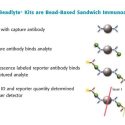
The Case for Multiplex Protein Assays By Dr Robert Huang and Dr Diem Nguyen Multiplex testing has gained a growing popularity among scientists, mainly due to financial and competitive pressures forcing companies to narrow their targets and validate their leads as quickly as possible. We discuss how multiplex assays can… Read More