2030 Life Sciences and Health in the Digital Age (Part 1) By Dr Steve Arlington and John Wise One of the key ways in which The Pistoia Alliance works with its members is to help them not just deal with the problems of today, but also to look ahead, to… Read More
From human genome to global genome - why precision medicine must address genetic diversity By Sumit Jamuar, et al. The publication of the first human genome sequence more than 15 years ago marked the start of a new era in medicine. In the years since then, researchers have greatly expanded… Read More
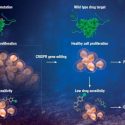
Fail Early, Fail Fast - A phenotypic rescue approach By Dr Anne-Marie Zuurmond, et al. New disease targets frequently emerge in literature, but the thorough target validation required to consider these targets for a drug discovery programme is often lacking. In pharmacological or genetic perturbation studies using complex biological assays,… Read More
Automating Automation - How close are we to Artificial Intelligence impact? By Dr Michael A. Tarselli, Dr Yohann Potier and Dr Alan E. Fletcher In terms of consistency, repeatability, known errors and sheer volume, there exists perhaps no better collection of data for computer learning than that emerging from automated… Read More
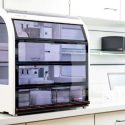
Automated Cell-based Assays: Novel tools overcome the barriers to drug discovery success By Helen Stewart-Miller and Kate Tointon In this article, we look at how commercial products and services are facilitating the automation of cell-based assays to advance drug discovery and accelerate the delivery of new medicines to patients. Cell-based… Read More
The Reality of Virtual Pharmaceutical Companies By Dr Stephen Naylor and Dr Kirkwood A. Pritchard Jr We discuss the oxymoronic proposition of a Virtual Pharmaceutical Company (VPC) and the typical adopted business model, as well as provide examples of such companies currently trying to undertake this adventurous task. The vagaries… Read More
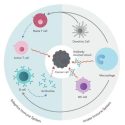
By Dr Mark Chao, et al. New immunotherapies that integrate innate and adaptive immune responses may increase efficacy against many cancers, and have the potential to expand the range of tumours and patients that can be treated with immunotherapy. Over the past decade, insights into the molecular mechanisms that cancer… Read More
Flow Cytometry - The advanced systems overcoming drug discovery pain points By Helen Stewart-Miller and Dr Richard Massey Flow cytometry is an invaluable technique for the characterisation of highly heterogeneous cell populations. Thanks to improvements in throughput, automation and multichannel detection capabilities, recent years have seen its use expand across… Read More
How Mergers and Acquisitions Will Drive Oncology Research in 2019 By Dr Michael Seiler 2019 got off to a fast start for oncology drug discovery, with numerous mergers, acquisitions and collaborations announced in quick succession. These ventures provide a window into key trends in oncology research, where investigators are likely… Read More
Mining Plant Genomes - A modern approach to herbal healing By Michelle Vierra Plants are stationary soldiers. Rooted to one spot, they are not able to chase nutrients or flee from herbivores and pathogens. So in addition to the basic metabolites they synthesise for their survival, they produce a diverse… Read More
From Genotype to Phenotype: Leveraging functional genomics in oncology By Dr Menelas Pangalos & Steve Rees et al. A challenge in drug discovery is that, at best, only around one in five drug candidates will lead to the launch of a medicine. In 2011, AstraZeneca initiated a strategic ‘5R Framework’… Read More
Fostering Multidisciplinary Collaboration in Drug Discovery By Professor Zeynep Erden, et al. Drug discovery teams combine specialists with in-depth knowledge from a variety of scientific disciplines. Such diversity in thought worlds poses a challenging exercise in cross-disciplinary collaboration and project coordination. Based on a longitudinal field study of five projects… Read More
3D Organoid Cell Culture - Optimising disease models for research and drug discovery By Dr Amanda Linkous, Hilary Sherman, Iris Li and Dr Richard M. Eglen The use of human-induced pluripotent stem cells (HiPSCs) continues to grow in three-dimensional (3D) spheroid and organoid culture. Although advances in 3D cell culture… Read More
Systems Pharmacology: When multi-targeting is advantageous By Dr Kirkwood A. Pritchard Jr, Dr Dustin P. Martin and Dr Stephen Naylor The safety and efficacy of therapeutic drugs still requires improvement. In part this is due to the promiscuity of individual drugs, which on average can interact with an estimated 6-28… Read More
The Growth of Organoids in Cancer Drug Discovery By Dr J. Mark Treherne, et al., Will the automated expansion of organoids help improve the productivity of cancer drug discovery? Increasingly, complex cell-based assays and tissues are routinely used as part of cancer drug discovery. However, conventional monolayer or suspension cultures… Read More
Beyond SEND: Leveraging non-clinical data to drive translational research forward By Katherine Briggs, et al., This article will discuss some of the potential use cases that Standard for Exchange of Nonclinical Data (SEND), datasets can support. Both to advance translational research across multiple research sites and also to drive efficiencies… Read More