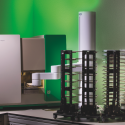
High-throughput flow cytometry technologies have revolutionised drug screening, says Bio-Rad. This application note explains how you can take throughput and reproducibility to the next level using the ZE5 Cell Analyzer. In the current environment, with increased pressures on drug companies, Bio-Rad believes using effective automation is critical. This application note… Read More
This paid-for app note by Bio-Rad appeared in DDW Volume 22, Issue 1 – Winter 2020/21. As COVID-19 has taken the world by storm, much has been learnt about the various aspects of viral infections ranging from immune surveillance to the therapeutic development of vaccines. One of the technologies that has… Read More
Capable of boasting high-throughput, accurate, multiparameter and highly reproducible results, Urmi Roy, Global Product Manager Miltenyi Biotec outlines the benefits of flow cytometry offering case study examples for its use. Increasing numbers of drug discovery programmes are targeting cellular mechanism and phenotype as a promising avenue for new therapies. The… Read More
The human body has the capacity to produce an array of specialised T cells, which provide unique responses to a diverse range of tumour cells and pathogens. In its latest white paper, biopharmaceutical expert, Sartorius, explains why the modulation of T cells is an exciting prospect for the development… Read More
Bio-Rad Laboratories has launched three StarBright Dyes specifically developed for flow cytometry. StarBright Blue 700, StarBright Violet 440, and StarBright Violet 610 are fluorescent nanoparticles that are conjugated to Bio-Rad’s highly validated flow antibodies, providing maximal brightness and improved resolution. Brighter than other fluorescent dyes with similar excitation and emission… Read More
Tariq E. Khoyratty DPhil, Computational Biologist, Aigenpulse, and Satnam Surae PhD, Chief Product Officer, Aigenpulse, discuss the challenge of the large volume of data generated and how automation/AI/ML can help to manage this. As pharmaceutical companies expand their research and development (R&D) efforts to meet the growing global demand for new drugs,… Read More
By Richard Gray The recent outbreak of COVID-19 has highlighted the need for fast and efficient development and production of vaccines for a whole gamut of pathogens, old and new. Microfluidics technologies can be used to accelerate the vaccine development process in a number of ways, not least in the… Read More
Advanced Therapeutic Antibody Discovery with Multiplexed Screening Sponsored by Sartorius Antibody-based therapeutics are the fastest growing and most successful therapeutic modality for treating diseases such as cancer, cardiovascular disease, autoimmune disorders and infectious disease. It is predicted that by the year 2020 there will be 70 therapeutic antibodies on the… Read More
New antibody internalization advanced screening method provides greater speed & insight 26 May 2020 Sponsored by Sartorius Researchers abilities to improve the breadth of therapeutic antibodies have been aided by innovative technologies for antibody discovery, for instance, through humanization of mouse antibodies and phage display. However, advanced antibody… Read More
Unlocking the potential of Extracellular Vesicles: from single molecules to novel therapeutics By Dr Anna Caballe and Dr Katarzyna Ginda-Makela As part of normal homeostasis, cells release different types of small-sized membrane vesicles to traffic analytes across membranes, communicate with other cells and remove unwanted cell content. These vesicles can… Read More
Flow Cytometry - The advanced systems overcoming drug discovery pain points By Helen Stewart-Miller and Dr Richard Massey Flow cytometry is an invaluable technique for the characterisation of highly heterogeneous cell populations. Thanks to improvements in throughput, automation and multichannel detection capabilities, recent years have seen its use expand across… Read More
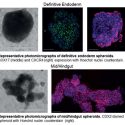
3D Organoid Cell Culture - Optimising disease models for research and drug discovery By Dr Amanda Linkous, Hilary Sherman, Iris Li and Dr Richard M. Eglen The use of human-induced pluripotent stem cells (HiPSCs) continues to grow in three-dimensional (3D) spheroid and organoid culture. Although advances in 3D cell culture… Read More
Microfluidics - Driving Innovation and Streamlining Single Cell Analysis By Dr Frank F. Craig Microfluidics platforms that harness picodroplet technology (picolitre volume aqueous droplets in stabilised oil emulsions) are unlocking the potential of single cell analysis to enable exciting new discoveries and advances with the potential to transform scientific research,… Read More
By Paul Avery & Richard Massey Flow cytometry is a powerful tool for cell quantitation and analysis across a wide range of clinical and research applications. Most commonly used in the fields of immunology and haematology, recent improvements in instrument automation and throughput mean that the technique is now emerging… Read More
A Strategic Vision For 21st Century Drug Discovery By Dr Wayne Bowen, Dr Giles Sanders, Dr Andreas Werdich, Dr Brian Warrington and Dr Elizabeth Farrant Delivering genuine therapeutic innovation is more challenging and complex than ever. Despite major scientific breakthroughs and technological advances leading to a greater understanding of the… Read More
3D Cellular Imaging - Advances and Considerations for High-Content Screening By O. Joseph Trask, Dr Daniel V. LaBarbera and Dr Kevin Quick Commercially available high-content imaging (HCI) systems, introduced in the 1990s, have provided the scientific community with a platform that offers a unique set of tools ideal for advancing… Read More