
Diana Turner takes a look at drug discovery in India, a country making the shift from scale to innovation. While the Indian pharmaceuticals sector has long held a key global position as a centre for generics development and manufacturing, the country is beginning to make a significant name for itself as a… Read More

Antibody discovery is being reshaped by two forces: an explosion of novel formats and the growing role of AI across the DBTL loop. But most teams are still running antibody programmes on software that hasn’t kept pace with science, leaving data siloed and relationships missing. In this webinar on 11… Read More

DDW Editor Reece Armstrong speaks to Michelle Carlson about overall advances in genomics and the integration of emerging technologies to create more drug discovery and development opportunities. RA: How is long-read sequencing enabling greater clinical research in genomics? MC: Short-read sequencing is effective for identifying single-nucleotide mutations and other small variants that can cause genetic disease. Read More

Cyclic peptides have a special power in the therapeutic space — they’re larger and more specific than small molecules, and more permeable and cost-effective than antibodies. These qualities enable them to conquer two of the biggest challenges in modern drug development: prosecuting flat intracellular protein-protein interactions (PPIs) and achieving oral… Read More


Surface plasmon resonance (SPR) has long been the gold standard for characterising molecular interactions in drug discovery, but throughput limitations have historically constrained its use in early-stage screening campaigns where large numbers of compounds or biologics candidates require rapid triage. The Carterra Vega changes that equation. … Read More

Although the cancer mortality rate has dropped by 34% since its peak in 1991, the incidence continues to increase for many common cancers. This new DDW InFocus eReport, sponsored by Evotec, provides a full understanding of the current market for oncology drug discovery and the areas… Read More
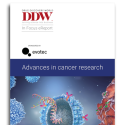
Download this In Focus eReport to gain a full understanding of the current market for oncology drug discovery and the areas of greatest commercial potential for the future.
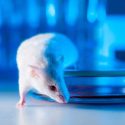
Professor Mark Lewis, CEO of Myomaker Bio explores how animal testing is being reduced through a new era of drug development. Across the world, there is growing evidence that the long-standing reliance on animal testing in scientific research could be entering a period of significant change. For decades, scientists, regulators and policymakers have worked toward the… Read More

Antibody discovery is being reshaped by two forces: an explosion of novel formats and the growing role of AI across the DBTL loop. But most teams are still running antibody programmes on software that hasn’t kept pace with science, leaving data siloed and relationships missing. In this webinar, hosted by… Read More
Antibody discovery is being reshaped by two forces: an explosion of novel formats and the growing role of AI across the DBTL loop. But most teams are still running antibody programmes on software that hasn’t kept pace with science, leaving data siloed and relationships missing. In this webinar on 11… Read More

Cyclic peptides have a special power in the therapeutic space — they’re larger and more specific than small molecules, and more permeable and cost-effective than antibodies. These qualities enable them to conquer two of the biggest challenges in modern drug development: prosecuting flat intracellular protein-protein interactions (PPIs) and achieving oral… Read More

Surface plasmon resonance (SPR) has long been the gold standard for characterising molecular interactions in drug discovery, but throughput limitations have historically constrained its use in early-stage screening campaigns where large numbers of compounds or biologics candidates require rapid triage. The Carterra Vega changes that equation. … Read More
Surface plasmon resonance (SPR) has long been the gold standard for characterising molecular interactions in drug discovery, but throughput limitations have historically constrained its use in early-stage screening campaigns where large numbers of compounds or biologics candidates require rapid triage. The Carterra Vega changes that equation. This… Read More
