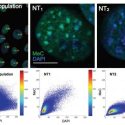
Utilising 3D nuclear DNA methylation patterns in cell-based assays for epigenetic drug screening By Professor Jian Tajbakhsh, Professor Arkadiusz Gertych and Professor Daniel L Farkas Since epigenetic changes are thought to underlie a wide range of complex diseases, the scope of epigenetic drug therapy is likely to expand, as epigenetic… Read More
The Healthcare Industry's Evolving Role in Translational Research an Opportunity for Competitive Advantage By Gregory Venters During the 20th century, medical research has observed enormous advances in basic science discovery, highlighted by the sequencing of the human genome. However, we have not witnessed a corresponding success in the widespread application… Read More
Free Online Resources Enabling Crowd-Sourced Drug Discovery By Dr Antony J. Williams, Valery Tkachenko, Dr Chris Lipinski, Professor Alexander Tropsha and Dr Sean Ekins The availability of freely accessible online resources to enable and support drug discovery has blossomed in recent years. The PubChem platform is now accompanied by a… Read More
Leveraging Research Informatics to Accelerate Drug Discovery By Dr Anirban Ghosh and Siddharth Sawhney Research informatics has a vital array of tools which can advance the speed and success rate of drug discovery. This article discusses that if pharma companies want to benefit from these tools and are serious about… Read More
Custom Carbon-14 Radiolabelling: Investing to meet new challenges By Dave Roberts One consequence of an increasing demand from regulators for robust quantitative data on the behaviour of new drugs in man and for information on the fate of pharmaceuticals in the environment, has been an increase in demand for carbon-14… Read More
Singapore Strengthens Position as Leading Site for Biopharmaceutical R&D By Kian-Teik Beh Globally, pharmaceutical and biotech companies are confronted by an impending patent cliff, while being challenged with declining research and development (R&D) productivity and the need to integrate multidisciplinary scientific capabilities. Against this backdrop, Asia presents… Read More
Multiplexing for biological relevance in high throughput screening By William P. Downey, Dr Jennifer Hartigan and Cindy Liu The multiplexed assay is a technique used increasingly in high throughput screening (HTS) labs to study the complex environment of a target, according to HighTech Business Decisions’ (HTBD) industry report High Throughput… Read More
By Dr John Comley After nearly 15 years of challenging maturity 1536 plate adoption (particularly in primary screening), finally appears to have taken hold. There is now available a broad range of 1536 plate types; an ever expanding variety of tools that make most assays types and profiling approaches doable… Read More
Structure-Based Drug Design - Will crystallisation 'chaperones' make all proteins crystallisable? By Dr Chun-wa Chung Macromolecular x-ray crystallography is usually an integral part of small molecule drug discovery for soluble targets. Recent advances in the crystallography of membrane proteins, such as ion channels and G-protein-coupled receptors, have opened up the… Read More
By Dr Susanta K. Sarkar The current challenges facing drug discovery and development in terms of attrition are well documented. This article discusses how molecular imaging approaches from bench to bedside can not only streamline drug development, but also open up new opportunities in the treatment management of targeted therapies. Read More
Share Share Tweet Email A perspective on scientific innovation in the pharmaceutical industry A perspective on scientific innovation in the pharmaceutical industry By Dr Joseph B. Bolen With a tarnished reputation and a lack of sustainable innovation this article argues that, maybe, it is time for the pharmaceutical industry to… Read More
Bringing Cost and Process Efficiency to Next Generation Sequencing By Dr Fred P. Ernani, and Dr Emily M. LeProust While next-generation sequencing has revolutionised the way genomes are sequenced, this technology possesses a fundamental weakness - the inability to easily target specific regions of a genome. To address this, a… Read More
Automation Of Solid/Powder Dispensing: Much needed, but cautiously used! By Dr John Comley This article investigates solid/powder dispensing in pharma and biotech, examines where it is most used, whether there exists a need to apply automation and what is motivating its wider use today. It reveals how concerns over problematic… Read More
LIMS vs ELNs - Arch enemies or best of friends? By David Morris Since the first appearance of laboratory information management systems (LIMS) in the late 1960s, this technology has become commonplace in many, if not most, research and commercial laboratories. This considerable development in LIMS is in response to… Read More
Recent Technology Advances Transforming Pharmaceutical Drug Discovery and Development By Dr Coiln Brenan, and Dr Bill LaMarr The last decade has seen rapid technological progress but with increasing demands for safe and efficacious drugs, technological solutions that reduce the barriers to clinical success will be of more interest than those… Read More
The Benefits of Biological Modelling By Gordon Webster The enormous challenge posed by the complexity of biological systems represents a potential intellectual impasse to researchers and threatens to stall future progress in basic biology and healthcare. In recent years, increasing reliance on correlative approaches to biology has failed to resolve… Read More