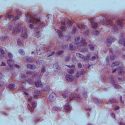
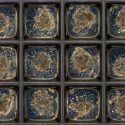
3D Cell Culture Developments to Improve In Vitro Analyses By Prof Stefan Przyborski Improved in vitro models are required to aid the identification and assessment of candidate molecules for pharmaceutical development. Conventional cell culture models involve the growth of cells on two-dimensional (2D) substrates. Cells adapt to this synthetic 2D… Read More
The Post Genomic Era: What Does It All Mean? By Dr Chris Torrance Information may no longer be a bottleneck to understanding and tackling complex genetic diseases such as cancer. For those who cut their research teeth not so very long ago, before PCR was thought of by Kary Mullis,… Read More
Epigenetics: An Emerging Target Class for Drug Screening By Dr John Comley Heightened awareness of the potential importance of epigenetic targets in many disease areas, and growing vendor interest in developing new assays to screen DNA methylation and histone modifications encouraged HTStec to undertake market research in this area in… Read More
High Throughput Screening Systems: Impact of Reliability on Downtime and Drug Discovery By Dr John Comley This article reports the results of a survey on the reliability of automated HTS assay systems and the effect of reliability on output. Evidence supporting the view that high throughput screening (HTS) systems have… Read More
Protein Biomarker Immunoassays: Opportunities and Challenges By Dr M. Walid Qoronfleh and Dr Klaus Lindpaintner With the biopharma industry under heavy pressure, transforming the scientific interchange between the laboratory and the clinic is exceedingly critical. Realising the costly toll of drug attrition in late-stage development, many companies are turning to… Read More
Assessing the Value of R&D Partnerships By Dr David A Pardoe, Dr Jackie Hunter MBE, Dr Robert M Cooke and Dr Paul Barrett In response to the need to increase the return on investment in R&D, many large Pharma companies are shifting from an internal fixed resource model to more… Read More
Neutron Scattering Provides Unique Insights for Drug R&D By Dr Martyn Bull Drug discovery and development is a long and expensive process. Techniques, such as computer modelling, that make the search for promising candidates easier are usually taken up enthusiastically. Neutron scattering, an emerging technique in this field, can provide… Read More
Overcoming Bottlenecks in Drug Discovery By Dr Trevor Perrior Developing a new drug is an expensive and time-consuming process. The best current estimate puts the cost of developing a single new drug at close to $1 billion. After a drug candidate has entered the clinical trial process it takes, on… Read More
Is the Pharmaceutical Industry Open For Innovation? By Dr Jackie Hunter CBE Open innovation is the hot topic in many industries and this approach has the potential to make a radical difference to the costs of drug discovery and development in the pharmaceutical industry. But there are also barriers to… Read More
High Throughput Flow Cytometry for Discovery at UNMCMD and the NIH Molecular Libraries Initiative By Dr Larry A. Sklar and Dr Bruce S. Edwards Commercial flow cytometers became widely established in research and clinical laboratories in the 1980s. Once the domain of immunologists and hematologists for cell sorting and analysis,… Read More
Biomarkers Make Their Mark on Current Research and Drug Development Trends By Stephane Parent and Dr Gregory Cosentino Biomarkers continue to become increasingly relevant in research and healthcare applications, as evidenced by the global market for products involved in their identification, validation, and use estimated at $8.3 billion in 2007… Read More
Enterprise ELNs as a Foundation for Preclinical Drug Development By Simon Beaulah, Dr Paul Denny- Gouldson and Dr Scott Weiss To have real business impact within preclinical drug development, Enterprise ELNs (Electronic Laboratory Notebooks) must provide a secure, scalable and searchable data management backbone across all disciplines focused on development… Read More
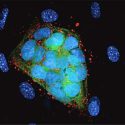
3D Cell Culture: Easier said than done By Dr John Comley The transition from cell culture on the flat surface of a conventional two-dimensional (2D) culture vessel to a three-dimensional (3D) environment, matrix or scaffold with 3D architecture has begun, and is providing much needed support for emerging applications in… Read More
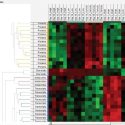
Towards Unbiased Biomarker Discovery Dr Jens Hoefkens High-throughput molecular profiling technologies are routinely applied for biomarker discovery to make the drug discovery process more efficient and enable personalised medicine. The ability to find novel biomarkers rests on large-scale data generation and unbiased data analysis. Over the past decade, biomarker discovery… Read More
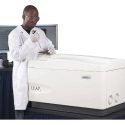
By Dr John Comley Laser scanning cytometers have matured over the past decade to meet the needs of end-users for higher throughput cell analysis, to access to previously difficult applications and to keep pace with the diversity of new fluorophores, validated high content screening (HCS) assay kits and reagents now… Read More
By Dr Mikael Kubista Quantitative real-time PCR is becoming mature technology for the quantification of nucleic acids. It is spreading wide outside its original use in the research laboratories, becoming preferred technology for a range of applications, many that require specialised so lutions and adaptations. Integration with pre-analytical steps and… Read More