New Flash Imagers: Facilitating higher throughput functional GPCR assays By Dr John Comley The recent availability of tailored automation solutions that combine liquid handling at the reading position with the latest innovations in low light imaging technology are providing screeners with new tools for the measurement of high throughput flash… Read More
Accommodating cells in HTS By Sandra Fox High Throughput Screening has become an important and integrated part of drug discovery at most pharmaceutical and many biotechnology companies worldwide, and is now entrenched in the drug discovery process. To produce high quality leads, centralised HTS laboratories are expanding their overall role… Read More
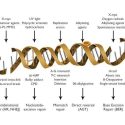
DNA repair inhibition to treat cancer and other serious illnesses By Professor Stephen P. Jackson and Cheryl L. Bishop The stability of an organism's genome is essential for healthy functioning and survival. The information content and integrity of the genome are so important that a range of maintenance and repair… Read More
PATCHERS vs SCREENERS: divergent opinion on high throughput electro-physiology By Dr John Comley The prospect of enabling higher throughput electro-physiology (patch-clamping) has created much expectation from scientists within the ion channel community. Yet there are opposing views among traditional electro-physiologists and screeners as to the needed specification and the preferred… Read More
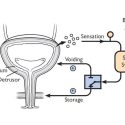
Urinary troubles for more than the ageing By Dr Anthony PDW Ford The needs of younger incontinence sufferers coupled with the ageing of the baby-boomer population portend a big boost in demand for effective and well tolerated new medicines for lower urinary-tract dysfunction. This market is under-served today, presenting a… Read More
By Dr Steven Bodovitz and Dr Scott D. Patterson The potential for parallel protein-based analyses to define a new era in diagnostics and drug development is generating considerable excitement in the field of proteomics. However, the discovery of differentially expressed proteins that correlate with a disease state or a drug… Read More
The cost and value of three-dimensional protein structure By Professor Raymond C. Stevens During the past few years we have seen the cost of protein three-dimensional structure determination begin to converge by protein family type, there has been a commoditisation of high-throughput structure based drug discovery technology components, and the… Read More
High Throughput Screening using G-protein coupled receptors as the target plate-based and biochromatographic technologies By Professor Irving W.Wainer, Dr Farideh Beigi and Dr Ruin Moaddel The G-protein coupled receptor (GPCR) family constitutes the largest class of cell surface receptors and GPCRs are the targets for more than 50% of the… Read More
The Protein Biochip Content Problem By Dr Steven Bodovitz The protein biochip industry has a content problem that is not only slowing its development as a whole but possibly the development of the entire proteomics industry. In science, for a problem to have its own name, it needs to be… Read More
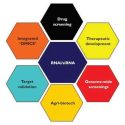
RNA interference - A technology platform for target validation, drug discovery and therapeutic development By Dr Krishnarao Appasani In the post genomic era, elucidation of the physiological function of genes has become a major rate-limiting step in the quest to develop 'gene-based-drugs'. As we advance in the 'functional omics' arena… Read More
Functional proteomics in drug discovery By Dr Stefan W. Henning and Dr Leodevico L. Ilag The critical bottleneck of the drug discovery process is developing the right drug for the right target. Today proteins represent more than 90% of druggable targets and will most likely remain the single most important… Read More
The role of ZEBRAFISH in drug discovery By Dr Paul Goldsmith and Roberto Solari The NIH has ranked the Zebrafish as the third most important experimental organism after man, the Sanger Centre is sequencing the genome and many medical researchers are shifting over to it. But will the zebrafish have… Read More
Compound Management comes of age By Ian Yates The changing role of compound management in recent years has seen an often under-valued and under-resourced function being recognised as a key part of the drug discovery process. This article examines the challenges faced by compound management teams and, at a high… Read More
Second-Generation Protein Drugs By Dr Jeffrey C.Way The first biotech revolution was catalysed in the late 1970s with the development of recombinant DNA technology. This revolution generated numerous billion-dollar protein drugs such as erythropoietin and the interferons. Now that the patents on these drugs are expiring, will second generation proteins,… Read More
Secondary Screening Workstations - The emergence of compact turnkey solutions that work By Dr John Comley With the launch of new workstations focused on secondary screening applications not only are we witnessing the shrinkage of laboratory automation but we are seeing the emergence of true walk-away solutions, ie set up… Read More
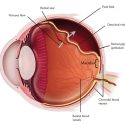
New Visions in Ophthalmic Drug Development By Dr Benjamin R. Yerxa, Dr Ward M. Peterson and Robin S.Whitsell Over the last 10 years we have seen the introduction of several new 'ophthalmology only' pharmaceutical products emerge such as Trusopt (dorzolamide, Merck) and Xalatan (latanoprost, Pharmacia). Innovative products such as these… Read More