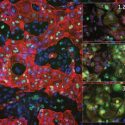
Multi-Parameter Flow Cytometry Technology Advances for Rare Cell Analysis and Sorting By David Gebhard and Dr Diether Recktenwald The study of rare cell populations is important to advance medical diagnostics and therapeutics. For many clinical studies, rare cell counts promise to provide valuable alternate end points; examples… Read More
There are approximately 7,000 rare diseases, which from a regulatory perspective are defined as those diseases where there are less than 200,000 patients in the US or that affect no more than five in 10,000 of the general population in the EU. Read More
Realising The Genome’s Potential In The Context Of The Living Cell By Dr Amr Abid A decade ago, with the completion of the Human Genome Project (HGP), scientists had the long-awaited sequence of the human genome in hand. Once decoded, this invaluable source of data was anticipated to… Read More
By Dr Nikolai Schwabe and Katherine Catchpole T cells play a crucial role in building a specialised immune response and help adapt the immune response to different challenges, whether they are intracellular bacteria, viruses or cancer or extracellular organisms such as blood-borne bacteria and… Read More
Induced pluripotent stem cells in high-throughput cellular screening By Dr Carolyn E. Peluso With the failure rates of drug candidates continuing to present phenomenal costs to the pharmaceutical industry, this article discusses how newly emerging induced pluripotent stem cell (iPSC) technologies have the potential to be an… Read More
Nanobioscience & Nanotechnology: The Future Of Personalised Medicine By Abhishek Gottipati, Joseph M. Sanders and Dr Scott A. Tenenbaum Nanotechnology has been more than a buzz word in the business world for a long time now and has been striding ahead, living up to the hype. Read More
Meeting the challenge of healthcare-associated infections with new antimicrobials: with a focus on Clostridium difficile By Professor Peter Hawkey and Dr Katie Hardy Healthcare-associated infections (HCAI), previously known as hospital acquired infections (HAI), are defined as infections resulting from medical care or treatment in hospital. Read More
The Challenges Of The Changing Drug Discovery Model By Dr Mark Downs and Dr Tom Blackburn The drug development industry is restructuring worldwide. This brings different ways of working and new challenges. As the industry moves away from internally focused research to an external model, project management… Read More
Stem Cells: Cell-Based Assays and the World of Small Molecules By Dr Christina N. Ramirez, Dr Dana C. Duré and Dr Hakim Djaballah Stem cells remain a hot topic in academia and industry alike, and with the potential to cause a paradigm shift where many believe in their… Read More
Innovate While Derisking Drug Development: Yes We Can! Taher Abbasi, Pradeep Fernandes, Dr Shireen Vali and Professor Gurkirpal Singh The outlook for the drug industry continues to remain bleak in context of productivity and success rates. In spite of ongoing increase in R&D expenses and technology revolutions in… Read More
By Dr Jeffrey Dage and Dr Kalpana Merchant While the jury is still out in terms of iPS cell technology and its ability to deliver a regenerative therapy or, indeed, contribute to the development of a clinical molecule, this paper argues that the progress by… Read More
The Information Symphony: Data orchestration for a changing industry managing data on a platform for innovation. By Chris Molloy A leading ballet conductor (1) recently told me of courses which he runs for senior business leaders. He allows them to conduct an orchestra: first, very strictly, with close… Read More
Pathway Analysis – Understanding the bridge between environmental cues and cellular response By Dr John Comley Understanding the function of a protein in the context of normal and abnormal cellular processes requires a comprehensive knowledge not only of its regulation but also of its role in signalling and… Read More
Share Share Tweet Email Stem Cell Banks: Investing in the promise of cancer stem cell science Stem Cell Banks: Investing in the promise of cancer stem cell science By Madeline Page and Rosario Isasi The… Read More
The Apocalyptic Horsemen of Drug Discovery and Development By Dr Gary J. Keil The pharmaceutical industry should consider an evolutionary disease management approach based on homeostasis, irreversibility, biological alinearity, pseudo-N-of-1 health and disease states and narrative medicine best practices in order to help secure a successful drug… Read More
SMAC Mimetics: a new class of targeted agents that activate apoptotic cell death and block pro-survival signalling in cancer cells By Dr Mark A. McKinlay SMAC mimetics are a new class of targeted drugs being developed for the treatment of solid tumours and hematologic cancers. SMAC mimetics… Read More