Emerging Real-time PCR Applications Dr Mikael Kubista Since its introduction on the commercial market little more than 10 years ago, real-time PCR has become the main technical platform for nucleic acid detection in research and development, as well as in routine diagnostics. In 2007 the real-time PCR market revenue in… Read More
The Importance of Liquid Handling Quality Assurance in Drug Discovery By Dr Nathaniel G Hentz The tug-of-war between quality and productivity is an issue facing all drug discovery companies, competing in a fierce race to bring breakthrough drugs to market before the competition. With the advance of laboratory automation… Read More
Progress in Systems-Based Analysis of Cellular Signalling By Dr Jeffrey A. Radding Drug discovery currently focuses on targeted approaches, relying on validation of the target as a disease driver. However, the underlying biological complexity of disease often frustrates these attempts at therapeutic intervention, resulting in high failure rates due to… Read More
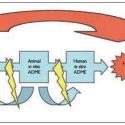
Perspectives for ADMET Integration in the Discovery Process By Dr Constance Hofer ADMET (ADME/Tox), is a relatively new symbiotic acronym for the investigation of basic compound behaviour in terms of absorption, distribution, metabolism and excretion, combined with assessments of toxicity. The emergence of ADMET instead of ADME reflects the growing… Read More
Compound Storage Evolution: Unlocking the right combination By Husam Fayez, Dr John Morin and Dr Jeff Paslay Delivering the correct compound, at the right concentration, to the correct place, at the expected time across different facilities, should be the aim of all liquid sample management teams. This article discusses how… Read More
Challenges and opportunities for the greening of separation science in the pharmaceutical industry Dr Christopher J. Welch Opportunities for reducing solvent consumption and waste generation in separation sciences used to support industrial pharmaceutical discovery and development are presented and discussed in this article. Several approaches are considered for ‘greening’ analytical… Read More
Monochromator vs Filter-based Plate Readers By Dr John Comley This article is based around feedback obtained in HTStec's recent Multi-Mode Microplate Reader Trends 2007 Report. It highlights findings on what influences reader choice, current use of different plate reader detection modalities, main target types/classes investigated using plate readers, sources of… Read More
Technology, Bane or Bonanza for the Pharmaceutical industry? By Dr Stephen Naylor, Adam W. Culbertson and Dr Stephen J. Valentine Productivity in the pharmaceutical industry has long held well-documented concerns. While the adoption of new technologies into the drug discovery and development process has often been seen as a… Read More
Automated Biobanking - The next big step for biorespositories By Dr John Comley As a significant proportion of the many newly established national, regional and disease-specific biobanks or biorespositories contemplate how they will enable enhanced sample integrity, tracking and audit trail, there has never been a more opportune time to… Read More
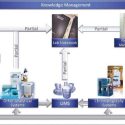
Enabling Collaborative Science via the Integration of Analytical Data into Organisational Systems By Mark Bayliss The storage of data drawn from the analytical process has for years been the stumbling block in the overall ‘knowledge management’ of the discovery process. This article argues that current scientific data management packages offer… Read More
Personalised Medicine - Technological innovation and patient empowerment or exuberant hyperbole? By Adam W. Culbertson, Dr Stephen J. Valentine and Dr Stephen Naylor The current paradigm of modern healthcare focuses on patient symptoms, subsequent diagnosis and corresponding treatment of the specific disease(s). Escalating healthcare costs and a trial and error… Read More
The evolving world of drug discovery data integration in the pharmaceutical industry Dr David Sedlock The world of drug discovery has been impacted significantly by an ever evolving use of computer systems during the past 25 years with the greatest change occurring during the past 10 years or so as… Read More
Establishment of an open access compound management facility By David Camp This article covers the establishment of an open access compound management facility in Australia to stimulate applied, basic and translational biomedical research. The paradigm for probing biological processes and drug discovery via small molecules has changed significantly over the… Read More
Emerging concepts of G protein-coupled receptor (GPCR) function and drug discovery By Dr Richard M. Eglen, Dr Roger Bosse and Dr Graham S. Long G protein-coupled cell surface receptors (GPCRs) have served a fundamental role in modern pharmacology, due to their central importance in cell communication, and have been the… Read More
The Role of Repositioning in Drug Discovery and Development By Dr Louis A. Tartaglia and Dr Lee E. Babiss The large number of drug candidate failures in recent years has been enormously costly for the pharmaceutical industry, but has also created the tremendous opportunity of repositioning these molecules into new… Read More
Kinase Inhibitor Screening - Latest technologies and techniques By Dr Richard M. Eglen and Dr Roger Bossé Kinases have become a proven target class for new drugs and have created a thirst for the development of new technology platforms for inhibitor detection. We discuss some of the latest technologies and… Read More