By Dr John Comley Laser scanning cytometers have matured over the past decade to meet the needs of end-users for higher throughput cell analysis, to access to previously difficult applications and to keep pace with the diversity of new fluorophores, validated high content screening (HCS)… Read More
By Dr Mikael Kubista Quantitative real-time PCR is becoming mature technology for the quantification of nucleic acids. It is spreading wide outside its original use in the research laboratories, becoming preferred technology for a range of applications, many that require specialised so lutions and adaptations. Integration with pre-analytical steps and… Read More
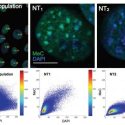
Utilising 3D nuclear DNA methylation patterns in cell-based assays for epigenetic drug screening By Professor Jian Tajbakhsh, Professor Arkadiusz Gertych and Professor Daniel L Farkas Since epigenetic changes are thought to underlie a wide range of complex diseases, the scope of epigenetic drug therapy is likely to… Read More
Free Online Resources Enabling Crowd-Sourced Drug Discovery By Dr Antony J. Williams, Valery Tkachenko, Dr Chris Lipinski, Professor Alexander Tropsha and Dr Sean Ekins The availability of freely accessible online resources to enable and support drug discovery has blossomed in recent years. The PubChem platform is now accompanied… Read More
Custom Carbon-14 Radiolabelling: Investing to meet new challenges By Dave Roberts One consequence of an increasing demand from regulators for robust quantitative data on the behaviour of new drugs in man and for information on the fate of pharmaceuticals in the environment, has been an increase in demand… Read More
Singapore Strengthens Position as Leading Site for Biopharmaceutical R&D By Kian-Teik Beh Globally, pharmaceutical and biotech companies are confronted by an impending patent cliff, while being challenged with declining research and development (R&D) productivity and the need to integrate multidisciplinary scientific capabilities. … Read More
Multiplexing for biological relevance in high throughput screening By William P. Downey, Dr Jennifer Hartigan and Cindy Liu The multiplexed assay is a technique used increasingly in high throughput screening (HTS) labs to study the complex environment of a target, according to HighTech Business Decisions’ (HTBD) industry… Read More
By Dr John Comley After nearly 15 years of challenging maturity 1536 plate adoption (particularly in primary screening), finally appears to have taken hold. There is now available a broad range of 1536 plate types; an ever expanding variety of tools that make… Read More
Automation Of Solid/Powder Dispensing: Much needed, but cautiously used! By Dr John Comley This article investigates solid/powder dispensing in pharma and biotech, examines where it is most used, whether there exists a need to apply automation and what is motivating its wider use today. It reveals how concerns… Read More
LIMS vs ELNs – Arch enemies or best of friends? By David Morris Since the first appearance of laboratory information management systems (LIMS) in the late 1960s, this technology has become commonplace in many, if not most, research and commercial laboratories. This considerable development… Read More
The Microplate Market Past, Present and Future By Dr Peter Banks Microplates and the peripheral markets of liquid handling and detection technologies exist within almost all laboratories performing assays. This article discusses what, if any, are their growth expectations and whether there are new technologies on the… Read More
Biomarker Signal Definition By Dr Gordon F. Kapke and Dr Nigel Brown Due to the numerous challenges in the industry, pharmaceutical companies are examining all aspects of the drug development process and rebuilding their associated business models as necessary. Companies need to improve… Read More
qPCR Assays – End user practices and latest vendor offerings By Dr John Comley This review provides an insight into real-time quantitative PCR (qPCR) assays today. Using end-user feedback it investigates interest in the targets for qPCR applications; primary application areas for qPCR… Read More
By Dr Anil Vasudevan Since the original publications on the benefits of conducting organic reactions in a microwave by Gedye (1) and Majetich (2) in the mid-80s, the uptake of this technique was sluggish at best for the next 12-14 years. Read More
High Throughput Screening in Academia – Drug discovery initiatives at the University of Kansas By Dr P McDonald, Dr Roy, Byron Taylor, Ashleigh Price, Dr Sittampalam, Dr Scott Weir, Dr Chaguturu Academia has historically been involved in exploring the fundamental aspects of the disease targets and in… Read More
Prediction versus Attrition in Drug Discovery & Development By Professor Malcolm Young The research-intensive part of the pharmaceutical industry is facing unusual commercial difficulties, whose elements are now well-known. A substantial number of very valuable drugs have gone, or are about to go,… Read More