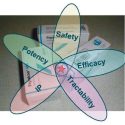
Personalised Medicine: What’s in it for big pharma? By Dr Stephen Little There is nothing more difficult to take in hand, more perilous to conduct, or more uncertain in its success, than to take the lead in the introduction of a new order of things. Because the… Read More
Building a uHTS laboratory communications from the frontier By Dr Peter Hodder Through sheer commercial need to conduct HTS reliably, rapidly and economically, science and technology have partnered to move laboratories from semi-automated craft guilds to industrialised uHTS research operations. To the benefit of… Read More
Share Share Tweet Email Automated Patch Clamping: Setting a new standard for early hERG Automated Patch Clamping: Setting a new standard for early hERG By Dr John Comley Ion channel targets remain a top… Read More
Advances in the imaging of biomolecules: the label-free intrinsic imaging approach By Dr Stuart Hassard, Dr Anthony D. Baxter and Dr John Hassard Many stages in the process of drug discovery require the separation, identification and analysis of biomolecules such as proteins, peptides and nucleic acids. Such… Read More
New Options for Cell-Based Assay Automation By Dr John Comley The findings of a recent survey on cell-based assay automation revealed that no single factor stands out as the predominant reason productivity is limited in current cell-based automation. However, improving the quality of… Read More
The market for RNA purification products and services By Dr Cynthia Beam Purified RNA is crucial for use in a range of downstream applications performed by life scientists, most notably reverse transcription PCR (RT-PCR), quantitative real-time PCR (qPCR) and cDNA synthesis. RNA purification is… Read More
Applying the semantic web to drug discovery and development By Dr Eric Neumann There is much happening in drug development these days: new target classes, increasing costs, new forms of high throughput screening, and the promise of personalised medicine. But of all the issues, the one that… Read More
High Content Screening – Emerging importance of novel reagents/probes and pathway analysis By Dr John Comley The number of high content screens will increase by 50% over the coming year; signal pathway analysis was seen as the most relevant high content screening (HCS) application; with greatest interest in… Read More
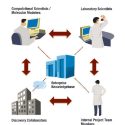
Redefining Drug Discovery Informatics By Bryan S. Koontz As the pharmaceutical industry changes in response to unprecedented challenges, information technology supporting the drug discovery process must evolve and be redefined in order to improve research productivity and success rates. Improvements to traditional computational… Read More
Computer-aided design: progress towards more rational drug discovery By Dr Wolfgang H.B. Sauer Drug discovery is a science, a craft and an art, and often it requires a fair amount of serendipity or plain luck to succeed. Success is rare and costly, as evidenced by numerous reports and… Read More
By Dr Y. Douglas Dolginow The art and science of prediction is a risky and humiliating exercise. As bad as we are at it, predicting things remains one of the fundamental human instincts, undoubtedly linked to a Darwinian selective advantage for our species. Read More
Ion Channels – New opportunities for an established therapeutic target class By Dr Andrew Southan, Iain F. James and David Cronk There is an increasing recognition within the pharmaceutical industry of the immense potential for ion channels as a drug target class. Advances in the understanding of… Read More
Creating a productive R&D culture By Janet White Increasing R&D productivity is the current mantra of pharmaceutical industry executives. The promise of new technologies and process improvements has been extensively discussed. However, fundamental culture change within research organisations remains the final unexplored frontier to… Read More
Ontologies – Semantic networks of pharmaceutical knowledge By Dr Stephen P. Gardner In the current climate making information more transparent to internal R&D staff and to external audiences such as regulators and consumers is crucial to business effectiveness. A new generation of semantic technologies capable of generating a… Read More
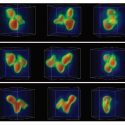
Cryo Electron Microscopy and Electron Tomography By Dr Jack Elands and Dr Ulf Skoglund Cryo electron microscopy and electron tomography will play a crucial role in the future of drug development. The completion of the human genome project has focused tremendous interest in determining… Read More
Exposure response modelling a safe and profitable way to speed drugs to market By Dr Gregory Fisher and Dr Arthur L. Craigmill The applicability of physiologically-based pharmacokinetic modelling (PBPK) far exceeds that of classical PK in predictive pharmacokinetics, tissue dosimetry, drug efficacy, and drug safety. This in… Read More