Miniaturisation of Assay Development and Screening By Andreas Boettcher and Dr Lorenz M. Mayr In recent years we have seen a strong increase in the number of chemical compounds and molecular targets used for lead discovery by high-throughput screening among most Pharma and Biotech companies. This has caused… Read More
Immunogenicity of Therapeutic Proteins By Dr Ivo Van Walle, Dr Ignace Lasters and Philippe Stas Therapeutic proteins enter the market in increasing numbers, and current observations confirm that most of these biopharmaceuticals are to a variable extent immunogenic. This may compromise the efficacy,… Read More
Current Biosensor Technologies in Drug Discovery By Dr Matthew A. Cooper Over the past two decades the benefits of biosensor analysis have begun to make an impact in the market, and systems are beginning to be used as mainstream research tools in many laboratories. Biosensors are… Read More
Changing Dynamics in Dispense and Imaging Assays By Dr John Comley The prospects for a significant shift in dispense and imaging (D&I) assays towards a greater utilisation of calcium-mediated flash luminescence readouts appears to be finally under way. Driving this changing dynamic is the acceptance that… Read More
The Timetable of Invention and it’s Relevance to Drug Discovery By Dr William Bains The most critical question to any investor in new technology should not be whether a technology will work. Technologies nearly always work in the end, providing they do not break fundamental laws of physics,… Read More
Silence For Health – Development of RNA interference based cancer therapy By Dr Ansgar Santel RNA interference (RNAi) has become an invaluable tool for biomedical research. It is already routinely used as an indispensable approach for gene function analysis in basic biological research and for target identification as… Read More
Advances in laboratory automation for drug discovery By Charanya Ramachandran Laboratory automation has metamorphosed the realm of drug discovery over the years through two of major influential factors – cost benefit and error reduction. Automation has reframed the traditional drug discovery process by making feasible… Read More
PLAYING WITH TIME – Digital imaging comes of age By Dr Pam Pickering Seeing dynamic intra- and extra-cellular events as they happen is central to revealing the mechanisms of disease, identifying key targets for drug intervention and assessing the impact of drug treatment on living cells. Interpreting these… Read More
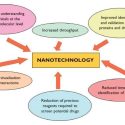
By Dr Amarpreet S Dhiman In terms of drug discovery and development, the role of nanotechnology currently lies in improving diagnostic methods, developing improved drug formulations and drug delivery systems for disease therapy. The breakthrough format of nanotechnology offers innovative solutions, giving researchers greater… Read More
TR-FRET Based Assays – Getting better with age By Dr John Comley Despite having been available for nearly 15 years, TR-FRET based assays are still the preferred fluorescent assay format for many screeners. A recent survey ranked Cisbio’s TR-FRET product (HTRF) as the most frequently used generic… Read More
Share Share Tweet Email Understanding the strategic importance of BIOMARKERS for the discovery and early development phases Understanding the strategic importance of BIOMARKERS for the discovery and early development phases By Dr Orest Hurko… Read More
By Dr George G. Harrigan The potential of metabolomics, a systems approach to biochemical pathway analysis, to yield scientific and commercial benefits to healthcare and biotechnology enterprises is increasingly recognised. This article discusses current applications and future developments and places an emphasis… Read More
The Time is Right for Labs to Embrace the principles of Industrial Automation By John Dulchinos and Peter Massaro The pharmaceutical industry has never been a harbinger to change and modernisation, indeed, it is readily accepted that it is a good decade behind other industries in terms of… Read More
High Throughput Screening: meeting the challenges of more cell-based assays and HCS By Sandra Fox, MBA The use of high content screening and cell-based assays within high throughput screening (HTS) laboratories is on the increase but there are still many challenges to overcome. Read More
Development of an HTS FabD inhibition assay using a new 384-well filter plate to screen novel antibiotics by Dr Gatan Touyer, Dr Christine Miossec, and Dr Irvin Winkler Several enzymes are involved in the fatty acid biosynthesis (Fab) system of bacterial organisms. Unlike the mammalian FAS enzyme system… Read More
The Role of the Medicinal Chemist in the Drug Discovery Process: current status and future prospects By Dr Stevan W Djuric The need for the pharmaceutical industry to produce a constant stream of new NCEs has never been more paramount but with constantly changing R&D paradigms what is… Read More