Realising The Genome's Potential In The Context Of The Living Cell By Dr Amr Abid A decade ago, with the completion of the Human Genome Project (HGP), scientists had the long-awaited sequence of the human genome in hand. Once decoded, this invaluable source of data was anticipated to reveal the… Read More
Adoption Of High Content Screening At High Throughput Screening Laboratories By William Downey and Dr Jennifer Hartigan Over the past five years, a majority of HTS laboratories have adopted high content screening (HCS) in their operations. As HTS laboratories have sought more biologically-relevant assays, cell-based assays and high content screening… Read More
An Automated Approach To Solving Pharma's Cardiac Toxicity Conundrum By Dr Walter Westerink, Dr Nuria Piñeiro Costas, and Beppy van de Waart The pharmaceutical industry is facing ever-growing difficulties in developing new drugs and bringing them to market (1,2). Many factors stand in the way of R&D productivity, not least… Read More
Carbon-14 Labelled API Manufacturing By Dr Sean L. Kitson and Dr David Speed Carbon-14 labelled API and IMP requirements for Phase 0/I to Phase III mass balance and micro-dosing clinical trials can be met by contract manufacturing in compliance with MHRA and FDA Phase I cGMP guidelines. The short supply… Read More
Fragment Library Design - The Evolution Of Fragment Based Lead Discovery By Dr Edward Zartler, Dr Chris Swain and Simon Pearce With the growing need to streamline the drug discovery process, screening against fragment libraries rather than drug-like molecules has become increasingly adopted as an integral part of many drug… Read More
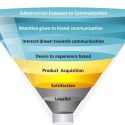
Simultaneous Visualisation of Attrition and Timelines: Funnel Diagrams. By Dr Linda Hirons, Dr Craig Johnstone and Colin Sambrook-Smith In drug discovery both attrition and timelines are important factors to consider when applying process improvement to lead optimisation. In our attempts to improve the visualisation of both of these factors simultaneously,… Read More
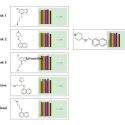
Combining chemists expertise and a computer's advanced capabilities to generate good ideas. By Dr Matthew Segall, Edmund Champness, Dr Chris Leeding, Dr Ryan Lilien, Dr Ramgopal Mettu and Dr Brian Stevens Drug One of the defining challenges of drug discovery is the need to make complex decisions regarding the design… Read More
Dr Wilma Keighley Generally kinetics are only investigated late in a programme by which time many compounds, slightly less potent but with a much better kinetic profile, have already been discarded. This paper argues that having kinetic information at the early stages of drug discovery can bring numerous benefits to… Read More
Enabling the Promise of Stem Cells By Robert Shaw and Dr Jeff Till The remarkable potential of stem cells to generate several hundred differentiated cell types is driving their use for regenerative medicine and for supporting the traditional drug discovery and development process (Figure 1). However, sustained progress in these… Read More
Mass Spectrometry is a mature technology predicated on a premise demonstrated almost a century ago. It is widely used in most scientific disciplines involving basic research or industrial endeavours, that require accurate and precise measurement of elemental and molecular components. More recently it has become one of the foundation technologies… Read More
Design Of Experiments: Useful statistical tool in assay development or vendor disconnect By Dr John Comley The use of design of experiments (DOE) in assay development (AD) has the potential to speed up assay optimisation (ie reduce assay development bottlenecks) and to facilitate a more thorough evaluation of assay variables. Read More
Free Online Resources Enabling Crowd-Sourced Drug Discovery By Dr Antony J. Williams, Valery Tkachenko, Dr Chris Lipinski, Professor Alexander Tropsha and Dr Sean Ekins The availability of freely accessible online resources to enable and support drug discovery has blossomed in recent years. The PubChem platform is now accompanied by a… Read More
Innovations In Drug Discovery Technology By Dr Al Kolb Technology has been a major driver of advances in drug discovery. Automation, nanofluidics, imaging, software and assay technologies have played a major role in getting better data, faster. Is drug discovery at such an advanced state that further improvements are no… Read More
Custom Carbon-14 Radiolabelling: Investing to meet new challenges By Dave Roberts One consequence of an increasing demand from regulators for robust quantitative data on the behaviour of new drugs in man and for information on the fate of pharmaceuticals in the environment, has been an increase in demand for carbon-14… Read More
Multiplexing for biological relevance in high throughput screening By William P. Downey, Dr Jennifer Hartigan and Cindy Liu The multiplexed assay is a technique used increasingly in high throughput screening (HTS) labs to study the complex environment of a target, according to HighTech Business Decisions’ (HTBD) industry report High Throughput… Read More
Himarnessing fragment-based drug discovery at CRT By Dr Andrew P Turnbull and Dr Martin E Swarbrick In the past decade, fragment-based drug discovery (FBDD) has gained increasing popularity in the pharmaceutical industry as a powerful alternative and complement to traditional high-throughput screening (HTS) as a source of preliminary hits for… Read More