
Could macrophages revolutionise treatment of solid tumours?
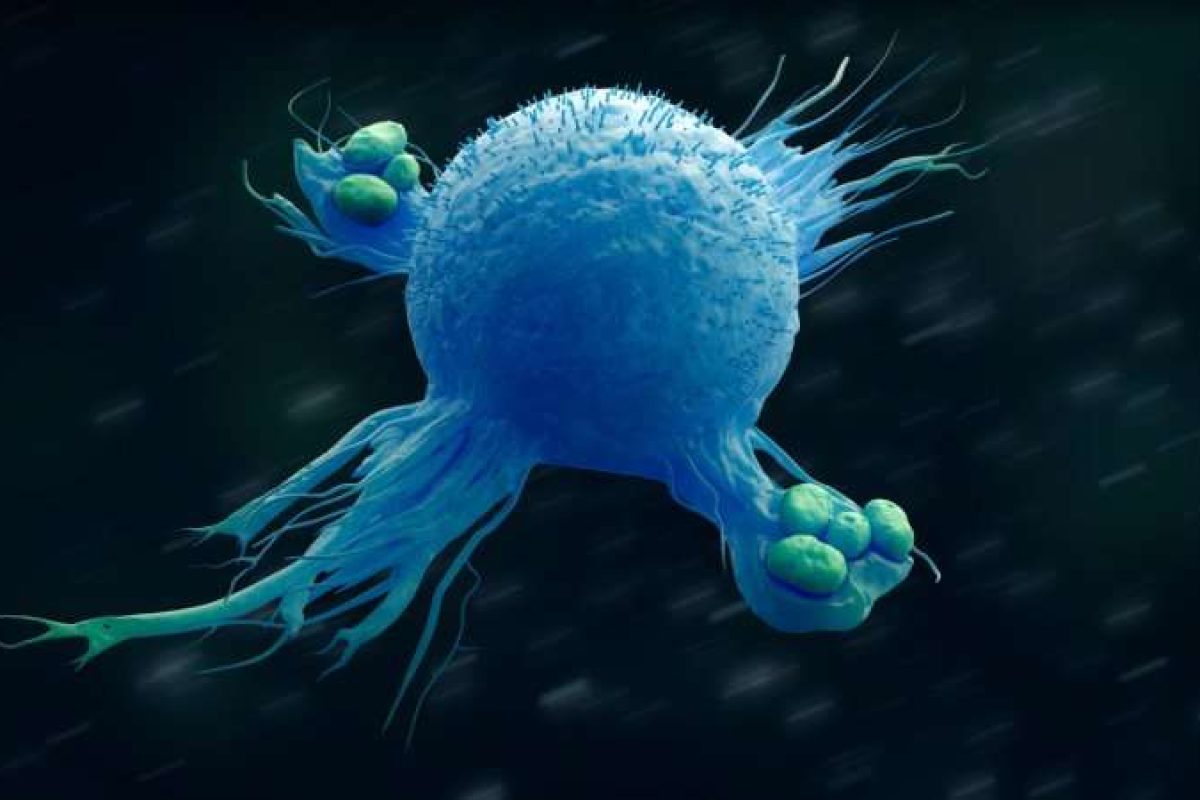
A paper published in Nature Communications has revealed the potential of macrophage-based therapies in the treatment of solid tumours.
The research was done by European biotechnology company Cellis and is based on the fact that tumour-infiltrating macrophages play a pivotal role in tumour dynamics.
In the paper, the researchers present a macrophage-drug conjugate (MDC) platform technology that enables the loading of macrophages with ferritin-drug complexes.
The authors show that macrophages actively take up human heavy chain ferritin (HFt) in vitro via macrophage scavenger receptor 1 (MSR1).
They then further manifest that drug-loaded macrophages transfer ferritin to adjacent cancer cells through a process termed ‘TRAnsfer of Iron-binding protein’ (TRAIN). The TRAIN process requires direct cell-to-cell contact and an immune synapse-like structure.
Finally, MDCs with various anti-cancer drugs are formulated with their safety and anti-tumour efficacy validated in multiple syngeneic mice and orthotopic human tumour models via different routes of administration.
The authors go on to explain that MDCs can be prepared in advance and used as thawed products, supporting their clinical applicability.
The company said: “This paper represents 10 years of relentless research, bringing us closer to a future where macrophage-based therapies can revolutionise the treatment of solid tumours.
“Our study introduces the MDC platform, a novel approach harnessing macrophages to deliver anti-cancer drugs to tumours via the TRAIN mechanism (TRAnsfer of Iron-binding protein). By leveraging the natural biology of macrophages and their interaction with cancer cells, we demonstrate a powerful strategy for targeted therapy – one that is both effective and clinically viable.”
Diana Spencer, Senior Digital Content Editor, DDW