Early Patient Stratification is Critical to Enable Effective and Personalised Drug Discovery and Development By Dr David A Fryburg, Dr Diane H Song and Dr David de Graaf With the current chances of an efficacious outcome in Phase II for novel mechanisms being in the region of 1 in 5,… Read More
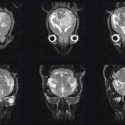
In Vivo Preclinical Imaging - An Essential Tool in Translational Research By Dr John Comley In vivo imaging of small animals (mainly mice) is increasingly being deployed across the drug development process, particularly in the oncology/cancer therapeutic area. One of the main applications is monitoring the treatment response for early… Read More
The Post Genomic Era: What Does It All Mean? By Dr Chris Torrance Information may no longer be a bottleneck to understanding and tackling complex genetic diseases such as cancer. For those who cut their research teeth not so very long ago, before PCR was thought of by Kary Mullis,… Read More
Epigenetics: An Emerging Target Class for Drug Screening By Dr John Comley Heightened awareness of the potential importance of epigenetic targets in many disease areas, and growing vendor interest in developing new assays to screen DNA methylation and histone modifications encouraged HTStec to undertake market research in this area in… Read More
Protein Biomarker Immunoassays: Opportunities and Challenges By Dr M. Walid Qoronfleh and Dr Klaus Lindpaintner With the biopharma industry under heavy pressure, transforming the scientific interchange between the laboratory and the clinic is exceedingly critical. Realising the costly toll of drug attrition in late-stage development, many companies are turning to… Read More
Induced Pluripotent Stem Cells: A model for transforming drug discovery By Dr Dwight Morrow and Dr Julie Holder Induced pluripotent stem (iPS) cells have the potential to transform drug discovery by providing physiologically relevant cells for toxic compound identification, target validation, compound screening, and tool discovery. The technology for generating… Read More
New Mechanisms and Expanded Indications for Biologic Therapies: a perspective on immunology research and development By Dr Susan B. Dillon Over the past decade, the introduction of biologic therapies has had a profound impact for millions of patients with immune-mediated arthritides, inflammatory bowel diseases and plaque psoriasis. Today, five anti-Tumor… Read More
High Throughput Flow Cytometry for Discovery at UNMCMD and the NIH Molecular Libraries Initiative By Dr Larry A. Sklar and Dr Bruce S. Edwards Commercial flow cytometers became widely established in research and clinical laboratories in the 1980s. Once the domain of immunologists and hematologists for cell sorting and analysis,… Read More
Biomarkers Make Their Mark on Current Research and Drug Development Trends By Stephane Parent and Dr Gregory Cosentino Biomarkers continue to become increasingly relevant in research and healthcare applications, as evidenced by the global market for products involved in their identification, validation, and use estimated at $8.3 billion in 2007… Read More
Tracking HTS Assay Development Time: Opportunity for improving drug discovery By Dr Jennifer Hartigan, Cindy Liu and William Downey High throughput screening (HTS) assays are developed more quickly now due to advances in technology, improved liquid handling and sensitive detection, as well as increased communication between scientists in high throughput… Read More
Towards Unbiased Biomarker Discovery Dr Jens Hoefkens High-throughput molecular profiling technologies are routinely applied for biomarker discovery to make the drug discovery process more efficient and enable personalised medicine. The ability to find novel biomarkers rests on large-scale data generation and unbiased data analysis. Over the past decade, biomarker discovery… Read More
By Dr John Comley Laser scanning cytometers have matured over the past decade to meet the needs of end-users for higher throughput cell analysis, to access to previously difficult applications and to keep pace with the diversity of new fluorophores, validated high content screening (HCS) assay kits and reagents now… Read More
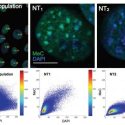
Utilising 3D nuclear DNA methylation patterns in cell-based assays for epigenetic drug screening By Professor Jian Tajbakhsh, Professor Arkadiusz Gertych and Professor Daniel L Farkas Since epigenetic changes are thought to underlie a wide range of complex diseases, the scope of epigenetic drug therapy is likely to expand, as epigenetic… Read More
The Healthcare Industry's Evolving Role in Translational Research an Opportunity for Competitive Advantage By Gregory Venters During the 20th century, medical research has observed enormous advances in basic science discovery, highlighted by the sequencing of the human genome. However, we have not witnessed a corresponding success in the widespread application… Read More
Singapore Strengthens Position as Leading Site for Biopharmaceutical R&D By Kian-Teik Beh Globally, pharmaceutical and biotech companies are confronted by an impending patent cliff, while being challenged with declining research and development (R&D) productivity and the need to integrate multidisciplinary scientific capabilities. Against this backdrop, Asia presents… Read More
Maximising the impact of technologies on drug discovery through portfolio management By Charles S. Dormer, Dr Mark Beggs, Dr Lynn Brennan and Roanna London The opportunities to invest in new technologies in drug discovery are broad and extensive. Knowing where to place your investment and ensuring return on these investments… Read More