Rare disease

FDA
#AAV #FDA #Gene therapy #Manufacturing #Rare disease #Ultragenyx

FDA raises manufacturing concerns for Ultragenyx gene therapy

The US Food and Drug Administration (FDA) has decided not to recommend Ultragenyx Pharmaceutical’s UX111 (ABO-102) AAV gene therapy as a treatment for patients with Sanfilippo syndrome type A (MPS IIIA).   In its complete response letter (CRL), the FDA requested that the company provide additional information and improvements related to… Read More

#News #Regulatory #Trending News

#Cancer drug targets #Cancer research #European Union #Rare disease #Regulatory

EU go-ahead for nasopharyngeal carcinoma drug

The European Commission has approved Tevimbra (tislelizumab), in combination with gemcitabine and cisplatin, for the first-line treatment of adult patients with metastatic or recurrent nasopharyngeal carcinoma (NPC), not amenable to curative surgery or radiotherapy. Nasopharyngeal carcinoma is a rare cancer in which malignant cells form in the nasopharynx, the upper… Read More

#Cancer Research #News #Regulatory

Bone cancer
#Immunotherapy #Oncology #OS Therapies #Osteosarcoma #Phase II trial #Rare disease

One-year event free survival reported at osteosarcoma conference

OS Therapies has shared positive clinical trial data updates from its Phase IIb clinical trial of immunotherapy candidate OST-HER2 in fully resected, lung metastatic osteosarcoma.  The data were presented by Principal Investigator Dr Damon Reed at the MIB Factor Osteosarcoma Conference held in Salt Lake City, Utah… Read More

#Cancer Research #News

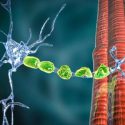
Demyelination of neuron
#Antisense Oligonucleotides (ASOs) #Biotechnology #Rare disease #SynaptixBio

Biotech selects ASO drug candidate for incurable rare disease

Oxford-based SynaptixBio, which is developing a therapy for a rare, deadly, and currently incurable rare disease (H-ABC), says it has identified the drug it will take forward into clinical trials.  The drug, SB H-19642, is an antisense oligonucleotide (ASO), which is a short strand of synthetic DNA… Read More

#News

Palmoplantar Pustulosis
#Dermatology #JAK inhibitor #LEO Pharma #Phase II trial #Rare disease

Phase IIa trial assesses delgocitinib cream in rare skin disease

LEO Pharma has initiated the Phase IIa proof-of-concept DELTA NEXT trial to evaluate the efficacy and safety of delgocitinib cream compared to cream vehicle for mild to severe Palmoplantar Pustulosis (PPP).  “The DELTA NEXT trial in PPP represents an exciting new chapter in the clinical development journey… Read More

#News

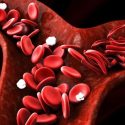
Sickle cells
#FDA #Orphan drugs #Rare disease #Sanofi #Sickle cell disorder (SCD)

Sanofi gets fourth orphan drug designation for rilzabrutinib

The US Food and Drug Administration (FDA) has granted orphan drug designation to rilzabrutinib for sickle cell disease (SCD).  Rilzabrutinib is an oral, reversible Bruton's tyrosine kinase (BTK) inhibitor that works via multi-immune modulation, to target a reduction in vaso-occlusive crises, which may occur via inflammation.  BTK, expressed in B… Read More

#News #Regulatory

#CRISPR #Gene editing #Gene therapy #Rare disease

Personalised CRISPR gene editing therapy treats rare disease

A landmark study from the Children’s Hospital of Philadelphia (CHOP) and Penn Medicine has showcased the power of a customised gene editing therapy to treat a patient with a rare metabolic disease. A child diagnosed with rare genetic disorder severe carbamoyl phosphate synthetase 1 (CPS1) deficiency was… Read More

#Editor's Choice #News

#Gene mutation #Genetic diseases #MHRA #Mitochondria #Rare disease #UCB

TK2d drug gets UK Promising Innovative Medicine designation

Dox – comprising of doxecitine and doxribtimine – to treat thymidine kinase 2 deficiency (TK2d) has been granted Promising Innovative Medicine (PIM) designation in the UK by the Medicines and Healthcare Products Regulatory Agency (MHRA).  TK2d is caused by a genetic mutation in the TK2 gene. This mutation leads to… Read More

#News #Regulatory

Neurons
#AAV #BlackfinBio #FDA #Gene therapy #Neurology #Orphan drugs #Paediatrics #Rare disease

FDA clears gene therapy trial for rare neurological disease

The US Food and Drug Administration (FDA) has cleared BlackfinBio’s Investigational New Drug (IND) application for a Phase I/II clinical trial of novel adeno-associated virus (AAV) gene therapy, BFB-101, in children with Hereditary Spastic Paraplegia Type 47 (SPG47).  The trial will be conducted in the US at Boston Children’s Hospital… Read More

#News #Regulatory

FDA
#FDA #Neurology #Rare disease #Recordati

FDA grants label expansion for Cushing’s disease treatment

The US Food and Drug Administration (FDA) has approved a supplemental new drug application (sNDA) for Isturisa (osilodrostat) for the treatment of endogenous hypercortisolemia.  It is now approved in adults with Cushing’s syndrome for whom surgery is not an option or has not been curative.   This is an expansion of… Read More

#News #Regulatory

Therapeutic antibodies
#Alzheimer's #Antibodies #Cancer #Covid-19 #Engineered antibodies #Immunology #Janssen #Monoclonal antibodies #Rare disease #Therapeutic Antibodies

Podcast: Where is the innovation in the therapeutic antibody market?

This is the latest episode of the free DDW narrated podcast, titled “Where is the innovation in the therapeutic antibody market?”, which covers two articles written for DDW Volume 24 – Issue 3, Summer 2023. They are called: “Finding the North Star of therapeutic antibodies” and “Which diseases… Read More

#News

#Evaluate Pharma #Market reporting #Orphan drugs #Rare disease

Orphan drugs will be a fifth of prescription drug sales by 2030

Orphan drugs will make up a fifth of the forecasted $1.6 trillion in worldwide prescription drug sales by 2030, according to Evaluate’s 2025 Orphan Drug Report.  The 2025 report, based on Evaluate Pharma forecasts, projects that the segment will continue to outpace the wider pharmaceutical market for the next few… Read More

#News #Trends & Analysis

Rare diseases
#Data #Rare disease #Rare Disease Day

Rare disease research is changing, data says

This Rare Disease Day, Elsevier’s Scopus research and citation database analyses articles from millions of researchers, institutions and companies around the world to present data that suggests rare disease research has skyrocketed over the last ten years, but is starting to level off. According to the data, there was a… Read More

#News #Trends & Analysis

Rare Disease Day
#Biomedical research #Connecta #iOnctura #Rare disease #Rare Disease Day #SpliceBio

Rare Disease Day 2025: Q&A with industry experts

Rare Disease Day is an observance held on the last day of February annually to raise awareness for rare diseases and improve access to treatment and medical representation for individuals with rare diseases and their families. To mark Rare Disease Day 2025, DDW gathered insight from a range of industry… Read More

#Business & Investment #Exclusive Content #Opinion

Monoclonal antibody
#Dermatology #FDA #Monoclonal antibodies #Orphan drugs #Rare disease

Dupixent for bullous pemphigoid under FDA priority review

The US Food and Drug Administration (FDA) has accepted for priority review the supplemental biologics license application (sBLA) for Dupixent (dupilumab) to treat adults with bullous pemphigoid (BP).  The sBLA is supported by data from a pivotal study evaluating the efficacy and safety of Dupixent in 106 adults with moderate-to-severe… Read More

#News #Regulatory

Bone cancer
#Bone cancer #Cancer therapy #Chordoma #DNA #Drug discovery #Rare disease

New therapy to treat rare bone cancer chordoma

A paper published in Nature Communications by a team of researchers from Oxford and North Carolina provides structural insights into human brachyury DNA recognition and discovery of progressible binders for cancer therapy. Unpacking brachyury According to the paper’s abstract1, Brachyury is a transcription factor that affects tumour growth of the… Read More

#News