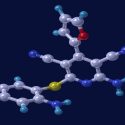
Microwave-assisted synthesis in the pharmaceutical industry a current perspective and future prospects By Dr Richard Wagner In the past five years there has been a dramatic upsurge in the use of microwave heating within the pharmaceutical industry to facilitate the chemical synthesis of new chemical entities. The… Read More
The Role of the Medicinal Chemist in the Drug Discovery Process: current status and future prospects By Dr Stevan W Djuric The need for the pharmaceutical industry to produce a constant stream of new NCEs has never been more paramount but with constantly changing R&D paradigms what is… Read More
New Options for Cell-Based Assay Automation By Dr John Comley The findings of a recent survey on cell-based assay automation revealed that no single factor stands out as the predominant reason productivity is limited in current cell-based automation. However, improving the quality of… Read More
Applying the semantic web to drug discovery and development By Dr Eric Neumann There is much happening in drug development these days: new target classes, increasing costs, new forms of high throughput screening, and the promise of personalised medicine. But of all the issues, the one that… Read More
High Content Screening – Emerging importance of novel reagents/probes and pathway analysis By Dr John Comley The number of high content screens will increase by 50% over the coming year; signal pathway analysis was seen as the most relevant high content screening (HCS) application; with greatest interest in… Read More
Computer-aided design: progress towards more rational drug discovery By Dr Wolfgang H.B. Sauer Drug discovery is a science, a craft and an art, and often it requires a fair amount of serendipity or plain luck to succeed. Success is rare and costly, as evidenced by numerous reports and… Read More
Nanotechnology approaches to solving the problems of poorly water-soluble drugs By Dr Roghieh Saffie-Siebert, Dr Jill Ogden and Dr Mark Parry-Billings Traditionally, almost half of new molecular entities identified by pharmaceutical industry screening programmes have failed to be developed because of poor water-solubility, which makes their formulation difficult… Read More
Exposure response modelling a safe and profitable way to speed drugs to market By Dr Gregory Fisher and Dr Arthur L. Craigmill The applicability of physiologically-based pharmacokinetic modelling (PBPK) far exceeds that of classical PK in predictive pharmacokinetics, tissue dosimetry, drug efficacy, and drug safety. This in… Read More
The search for validated biomarkers in the face of biosystems complexity By Professor Ian Humphery-Smith and Will Dracup As the pharmaceutical industry is all too well aware, the genomics and postgenomic sciences have delivered an excessive number of drug targets few of which have been well validated. Read More
The Impact of RNAi on Drug Discovery By Dr Christopher P. Miller RNAi (RNA interference) is an important target validation tool that has risen to prominence since 2001. For a number of reasons, it has supplanted other pre-existing target validation tools and is now the method of choice… Read More
The Use and Usefulness of Transgenic Systems in the Discovery of New Medicines By Professor Jan Tornell The pharmaceutical industry is faced with the challenge to deliver truly novel medicines to a market under financial pressure when pharmaceutical R&D becomes increasingly difficult and complex. Read More
Label-Free Detection – New biosensors facilitate broader range of drug discovery applications By Dr John Comley This article highlights some of the findings of a recent market report on labelfree detection trends. In particular, it looks at the current perception, main use and biggest benefit of label-free detection… Read More
GENE EXPRESSION as a toxicological screening tool By Dr Bruce Seligmann The use of microarray data in drug development and requirements for FDA audit and approval. Toxicological safety testing of compounds has not yet advanced to the point where measurement of gene expression… Read More
The impact of early ADME profiling on drug discovery and development strategy By Dr Jianling Wang and Dr Laszlo Urban The increased costs in the discovery and development of new drugs, due in part to the high attrition rate of drug candidates in development, has led to… Read More
The Case for Multiplex Protein Assays By Dr Robert Huang and Dr Diem Nguyen Multiplex testing has gained a growing popularity among scientists, mainly due to financial and competitive pressures forcing companies to narrow their targets and validate their leads as quickly as possible. Read More
Applications of liquid chromatography mass spectrometry By Dr David Kwok Applications of liquid chromatography mass spectrometry in accelerating the pace of lead-drug candidate selection and pre-clinical development. This review discusses how the application and benefits of using LC/MS and LC/MS/MS assays in conjunction with… Read More