iPSC

#Drug discovery #iPSC #Neurology #Preclinical development #Preclinical investigations

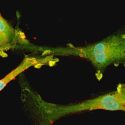
Speeding up neuroscience research: Generating publishable data in 12 weeks

In this Case Study you will learn: How Professor Deepak Srivastava’s lab at King’s College London are working to unpick the complex biology of neuronal synapses to help us better understand neurological disorders like schizophrenia. How the researchers in Professor Srivastava’s lab have been able to generate publishable data… Read More

#Resources

Stem cells
#Human disease models #iPSC #Liver disease #Preclinical investigations #Stem cells #Webinar

Last chance: Discover how iPSC derived cells support drug development

A considerable roadblock in the successful triaging of new therapeutics for liver and metabolic related diseases is the reliability and effectiveness of pre-clinical disease models. Methods employing animal models may have limited success in replicating liver diseases, primarily because of species-specific differences, furthermore, the utilisation of animal models… Read More

Webinar date:
Supported by DefiniGEN
#News

Pluripotent stem cells
#Human disease models #iPSC #Liver disease #Preclinical investigations #Stem cells #Webinar

Register now to discover how iPSC derived cells support gene therapy development

A considerable roadblock in the successful triaging of new therapeutics for liver and metabolic related diseases is the reliability and effectiveness of pre-clinical disease models. Methods employing animal models may have limited success in replicating liver diseases, primarily because of species-specific differences, furthermore, the utilisation of animal models… Read More

Webinar date:
Supported by DefiniGEN
#News

Pluripotent stem cells
#Human disease models #iPSC #Liver disease #Preclinical investigations #Stem cells #Webinar

iPSC derived cells for developing drug and gene therapies

A considerable roadblock in the successful triaging of new therapeutics for liver and metabolic related diseases is the reliability and effectiveness of pre-clinical disease models. Methods employing animal models may have limited success in replicating liver diseases, primarily because of species-specific differences, furthermore, the utilisation of animal models… Read More

Webinar date:
Supported by DefiniGEN
#News

Stem cells
#Human disease models #iPSC #Liver disease #Preclinical investigations #Stem cells #Webinar

How can iPSC derived cells can be used to support drug development?

A considerable roadblock in the successful triaging of new therapeutics for liver and metabolic related diseases is the reliability and effectiveness of pre-clinical disease models. Methods employing animal models may have limited success in replicating liver diseases, primarily because of species-specific differences, furthermore, the utilisation of animal models… Read More

Webinar date:
Supported by DefiniGEN
#News

Senior couple jogging
#Age-related diseases (ARDs) #clock.bio #Healthspan #iPSC #Regenerative Medicine

clock.bio begins mission to extend health span by 20 years

Longevity biotech clock.bio has launched with $4 million in funding to develop regenerative medicines to prevent and treat age-related diseases. The company says its immediate objective is to decode all rejuvenation programmes present in human cells, to build an atlas of disease and rejuvenation targets for… Read More

#Business & Investment #News

Pluripotent stem cells
#Human disease models #iPSC #Liver disease #Preclinical investigations #Stem cells #Webinar

How do iPSC derived cells support development of gene therapies?

A considerable roadblock in the successful triaging of new therapeutics for liver and metabolic related diseases is the reliability and effectiveness of pre-clinical disease models. Methods employing animal models may have limited success in replicating liver diseases, primarily because of species-specific differences, furthermore, the utilisation of animal models… Read More

Webinar date:
Supported by DefiniGEN
#News

Pluripotent stem cells
#Human disease models #iPSC #Liver disease #Preclinical investigations #Stem cells #Webinar

Discover how iPSC derived cells can be used to support the development of drug and gene therapies

A considerable roadblock in the successful triaging of new therapeutics for liver and metabolic related diseases is the reliability and effectiveness of pre-clinical disease models. Methods employing animal models may have limited success in replicating liver diseases, primarily because of species-specific differences, furthermore, the utilisation of animal models to simulate… Read More

Webinar date:
Supported by DefiniGEN
#Webinars

Human heart model
#Adverse event #Cardiovascular disease #Drug safety #Drug screening #iPSC #Organ-on-a-chip

Miniature human heart has potential to reshape drug testing

A tiny human heart model could potentially transform cardiovascular research and enable animal-free drug testing. A team of researchers, led by the Hebrew University of Jerusalem (HU), has developed a self-paced, multi-chambered human heart model, approximately half the size of a rice grain. “Integrating… Read More

#Editor's Choice #News

Treg cells
#Bayer #bit bio #BlueRock Therapeutics #Collaboration #iPSC #T cell activation

BlueRock and bit.bio sign Treg therapies discovery deal

Bayer subsidiary BlueRock Therapeutics, and bit.bio have announced a collaboration to discover and manufacture regulatory T cell (Treg) based therapies. Under the terms of the agreement, bit.bio will use its machine learning discovery platform to identify transcription factor (TF) combinations for reprogramming iPSCs into Tregs. Read More

#News

#bit bio #Cell programming #iPSC #Synthetic biology #US patent

bit.bio secures foundational US patent for opti-ox

bit.bio has secured a foundational US patent for opti-ox, its precision cell programming and manufacturing technology. opti-ox uses a dual genomic safe harbour approach to cell programming, and the granted US patent covers the use of opti-ox to deterministically activate genetic code in any eukaryotic (cell… Read More

#Business & Investment #News

Microglia
#bit bio #iPSC #Poster #Stem cells

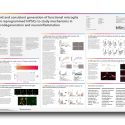
Poster: Accelerated production of functional microglia

Download this new scientific Poster from bit.bio, just revealed at ISSCR 2023. You will discover: How precision reprogramming generates consistent, functional human microglia (ioMicroglia) from iPSCs in just 10 days Independent validation that ioMicroglia undergo phagocytosis of both E. coli particles and amyloid beta particles Independent validation… Read More

#News

#iPSC #Poster #Stem cells

Accelerated production of functional microglia from reprogrammed hiPSCs

In this scientific Poster, just revealed at ISSCR 2023, you will discover: How precision reprogramming generates consistent, functional human microglia (ioMicroglia) from iPSCs in just 10 days Independent validation that ioMicroglia undergo phagocytosis of both E. coli particles and amyloid beta particles Independent validation that ioMicroglia show… Read More

#Resources

Natural killer cells
#Cancer research #Cell therapy #EU patent #iPSC #Oncology #ONK Therapeutics

ONK secures European patent for CISH knockout in NK cells

The European Patent Office (EPO) has granted a licensed patent to ONK Therapeutics covering CISH knockout (KO) in natural killer (NK) cells, irrespective of the source of the NK cells. The patent includes human cord blood-derived, peripheral blood-derived, and NK cells derived from induced pluripotent stem… Read More

#Cancer Research #News

#Charles River #Drug discovery #Gene therapy #Human disease models #Immunotherapy #iPSC #Regenerative Medicine #Stem cells

Stem cells’ versatility in drug development  

This article is sponsored by Charles River. Research tools, safety testing and regenerative medicines – these endless stem cell applications are powering precision, speed, and new modalities in drug development.     Stem cells for use in drug discovery Stem cells are fast becoming an invaluable tool in the drug… Read More

#News

Induced Pluripotent Stem Cells (iPSCs)
#Acquisition #allogeneic cell therapies #Cancer research #Eterna Therapeutics #Exacis Biotherapeutics #Immuno-oncology #iPSC

Eterna acquires Exacis’ allogeneic immuno-oncology platform

Eterna Therapeutics, a life science company focused on mRNA cell engineering, has acquired Exacis Biotherapeutics’ immuno-oncology platform. The acquisition will provide Eterna with a pipeline of allogeneic immuno-oncology products under development for the treatment of haematologic and solid tumours. The deal also provides Eterna… Read More

#Business & Investment #News