iPSC

#Assays #bit bio #Disease modelling #Drug discovery #iPSC #iPSC-derived cells

Listicle: Get the best out of human iPSC derived cells in your assays

Watch this DDW listicle, 5 ways to get the best out of human iPSC-derived cells in your assays from bit.bio, for free now. Transitioning to human iPSC-derived cells can open powerful opportunities for drug discovery, neuroscience, and disease modelling, but success depends on how you handle and culture them. Read More


#News

Neuroscience
#Assays #Guide #iPSC #Neuroscience #Preclinical development

Guide: 10 practical tips for reliable MEA experiments in preclinical neuroscience

Combining human iPSC-derived neurons with multi-electrode array (MEA) assays can provide powerful insights into synaptic connectivity, network dynamics, and functional maturation. However, MEA experiments can be challenging, with small changes in cell culture conditions dramatically impacting results. In this expert Guide, bit.bio’s Field Applications Scientist shares key considerations for improving… Read More

#News

#Assays #iPSC #Neuroscience #Preclinical development

10 practical tips for reliable MEA experiments in preclinical neuroscience

Combining human iPSC-derived neurons with multi-electrode array (MEA) assays can provide powerful insights into synaptic connectivity, network dynamics, and functional maturation. However, MEA experiments can be challenging, with small changes in cell culture conditions dramatically impacting results. In this expert Guide, bit.bio’s Field Applications Scientist shares key considerations for improving… Read More

#Resources

#Drug discovery #Guide #iPSC #Macrophages #Pluripotent stem cells

Guide: Optimising macrophage differentiation from iPSCs

Facing challenges with macrophage differentiation from iPSCs? Discover valuable insights in this new Guide from Lonza: ‘Optimising Macrophage Differentiation from iPSCs with X-VIVO® Media.’ Get the guidance you need to overcome these obstacles to address challenges regularly faced by scientists, from drug discovery to QA/QC. Download the Guide for free… Read More

#News

#Drug discovery #iPSC #Macrophages #Pluripotent stem cells

Optimising macrophage differentiation from iPSCs with Lonza’s X-VIVO Media

Facing challenges with macrophage differentiation from iPSCs? Discover valuable insights in our mini review ‘Optimising Macrophage Differentiation from iPSCs with X-VIVO® Media.’ Get the guidance you need to overcome these obstacles to address challenges regularly faced by scientists, from drug discovery to QA/QC. Read More

#Resources

Neurons
#Biobanking #iPSC #Pluripotent stem cells #Stem cells

Advancing iPSC science through biobanking solutions

This advertorial for Sampled appeared in DDW Volume 26 – Issue 2, Spring 2025 Read the digital issue Some technologies are always ‘on the horizon’, but induced pluripotent stem cells (iPSCs) have finally arrived. Researchers can transform iPSCs into virtually any cell type, making them invaluable for disease modelling,… Read More

#Exclusive Content

#App note #CNS #In vitro #In vitro assays #iPSC #Neuroscience

App Note: Optimisation for a live cell in vitro neuronal activity assay

Human induced pluripotent stem cell (iPSC) derived models are increasingly being used for in vitro studies of the human central nervous system. Growth factors and cytokines are critical in these models for cell growth, differentiation, and survival, but their study is complicated by factors like unknown commercial media compositions and… Read More

#News

#In vitro #In vitro assays #iPSC #Neuroscience

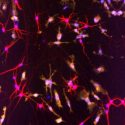
Development of robust co-culture models with human iPSC-derived microglia and excitatory neurons

Download this Application Note to learn more about: Co-culture methods for ioMicroglia with wild type and disease model ioGlutamatergic Neurons. Assay optimisation for a live cell in vitro neuronal activity assay. Solutions for visualisation and quantification of changes in co-culture health, morphology, function and marker expression. Read More

#Resources

#Amyotrophic lateral sclerosis (ALS) #App note #Human disease models #iPSC #Neuroscience

App Note: Human iPSC-derived disease models for ALS

Despite significant research and funding, the development of therapies for ALS has been challenging due to a lack of readily accessible human cell models, leading scientists to rely on animal models and cell lines that differ considerably from human biology. A new App Note is now available to download entitled… Read More

#News

#Amyotrophic lateral sclerosis (ALS) #Human disease models #iPSC #Neuroscience

Disease modelling with genetically matched iPSC-derived excitatory neurons

Download bit.bio’s application note to learn more about: Functional characterisation of human iPSC-derived ALS disease models using high throughput MEA. Phenotypic data showing reduced neuronal activity and network formation in ALS disease models. A genetically matched system in ioGlutamatergic Neurons that can be used to identify, measure and rescue disease-related… Read More

#Resources

#ADME / Tox #Human disease models #In vitro #iPSC #Toxicology #Webinar

Learn how to better replicate liver functionality for toxicology testing

A new event ‘Principles, pitfalls, and progress in modelling human liver toxicity and pharmacology in vitro’ is now open for registrations. The webinar, hosted by DDW and supported by bit.bio, will take place on 3 December 2024 at 4pm GMT. In his talk,… Read More

Webinar date:
Supported by bit.bio
#News

Human liver
#ADME / Tox #Human disease models #In vitro #iPSC #Toxicology #Webinar

Advancements in in vitro modelling for human liver toxicity

A new event ‘Principles, pitfalls, and progress in modelling human liver toxicity and pharmacology in vitro’ is now open for registrations. The webinar, hosted by DDW and supported by bit.bio, will take place on 3 December 2024 at 4pm GMT. In his talk,… Read More

Webinar date:
Supported by bit.bio
#News

Human liver
#ADME / Tox #Human disease models #In vitro #iPSC #Toxicology #Webinar

Register now: Discover human iPSC-derived hepatocytes for drug discovery

A new event ‘Principles, pitfalls, and progress in modelling human liver toxicity and pharmacology in vitro’ is now open for registrations. The webinar, hosted by DDW and supported by bit.bio, will take place on 3 December 2024 at 4pm GMT. In his talk,… Read More

Webinar date:
Supported by bit.bio
#News

#ADME / Tox #Human disease models #In vitro #iPSC #Toxicology #Webinar

Webinar: Overcome common pitfalls in in vitro modelling for liver toxicity

A new event ‘Principles, pitfalls, and progress in modelling human liver toxicity and pharmacology in vitro’ is now open for registrations. The webinar, hosted by DDW and supported by bit.bio, will take place on 3 December 2024 at 4pm GMT. In his talk,… Read More

Webinar date:
Supported by bit.bio
#News

Human cell
#High throughput screening #iPSC #Live cell analysis #Organoids #Phenotyping #Stem cells #Webinar

Register now: Discover a robust method for organoid development

The value of stem cells in laboratory and clinical research has been clearly demonstrated through numerous studies, showcasing their potential as models for a wide range of diseases and therapeutic developments. The inherent flexibility of stem cells allows for the development of various tissue types from a single,… Read More

Webinar date:
Supported by Sartorius
#News

Pluripotent stem cells
#High throughput screening #iPSC #Live cell analysis #Organoids #Phenotyping #Stem cells #Webinar

Webinar: Generate human hepatic organoids from iPSCs

The value of stem cells in laboratory and clinical research has been clearly demonstrated through numerous studies, showcasing their potential as models for a wide range of diseases and therapeutic developments. The inherent flexibility of stem cells allows for the development of various tissue types from a single,… Read More

Webinar date:
Supported by Sartorius
#News