Predictive tests and personalised medicine By Dr Eddie Blair Acceptance of the personalised medicines paradigm is strictly dependent on this approach clearly benefiting patients with minimal effects on the actual delivery of healthcare. The use of molecular diagnostics to predict how an individual will respond to a particular medicine, in… Read More
By Dr John Comley After nearly 15 years of challenging maturity 1536 plate adoption (particularly in primary screening), finally appears to have taken hold. There is now available a broad range of 1536 plate types; an ever expanding variety of tools that make most assays types and profiling approaches doable… Read More
Himarnessing fragment-based drug discovery at CRT By Dr Andrew P Turnbull and Dr Martin E Swarbrick In the past decade, fragment-based drug discovery (FBDD) has gained increasing popularity in the pharmaceutical industry as a powerful alternative and complement to traditional high-throughput screening (HTS) as a source of preliminary hits for… Read More
Share Share Tweet Email A perspective on scientific innovation in the pharmaceutical industry A perspective on scientific innovation in the pharmaceutical industry By Dr Joseph B. Bolen With a tarnished reputation and a lack of sustainable innovation this article argues that, maybe, it is time for the pharmaceutical industry to… Read More
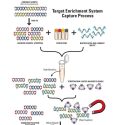
Bringing Cost and Process Efficiency to Next Generation Sequencing By Dr Fred P. Ernani, and Dr Emily M. LeProust While next-generation sequencing has revolutionised the way genomes are sequenced, this technology possesses a fundamental weakness - the inability to easily target specific regions of a genome. To address this, a… Read More
Restructuring Proteomics to Enable Personalised Cancer Care By Dr Henry Rodriguez The genomics community has made great strides in our understanding of the molecular basis of cancer and these advances are slowly beginning to change the way we diagnose and treat patients. But genomic studies alone cannot capture the complete… Read More
The Benefits of Biological Modelling By Gordon Webster The enormous challenge posed by the complexity of biological systems represents a potential intellectual impasse to researchers and threatens to stall future progress in basic biology and healthcare. In recent years, increasing reliance on correlative approaches to biology has failed to resolve… Read More
Generation II DNA Sequencing Technologies By Dr Stephen F. Kingsmore, Dr Jenny C. van Velkinburgh, Dr Joann Mudge, and Dr Gregory D. May Generation II DNA sequencing has been widely heralded as a disruptive technology, generating tens of millions of random short sequences at efficiencies up to 20,000-fold greater than… Read More
Letting the Target Determine your Compound Acquisition Strategy By Dr John Harris With compound libraries likely to remain the cornerstone of hit and lead discovery for the foreseeable future, this paper seeks to summarise current and future approaches to optimal library design and compound acquisition, using examples and experimental evidence… Read More
Building a Robust Portfolio of New Medicines to Combat Malaria By Dr Timothy N.C. Wells Malaria is one of the biggest killers of our time. Current estimates from the World Health Organisation (WHO) suggest that more than 250 million people are at risk worldwide. More significantly, almost a million people… Read More
qPCR Assays - End user practices and latest vendor offerings By Dr John Comley This review provides an insight into real-time quantitative PCR (qPCR) assays today. Using end-user feedback it investigates interest in the targets for qPCR applications; primary application areas for qPCR analyses; the importance of emerging applications; how… Read More
Next Generation Immunoassay Systems and the Revival of Protein Biomarkers By Dr John Todd and Dr Sara J. Agee Proteins are the machinery that drive most biological processes; however, measuring their concentrations at low levels has been historically impeded by a lack of appropriately sensitive technology. Advances in immunoassay technology,… Read More
Emerging Real-time PCR Applications Dr Mikael Kubista Since its introduction on the commercial market little more than 10 years ago, real-time PCR has become the main technical platform for nucleic acid detection in research and development, as well as in routine diagnostics. In 2007 the real-time PCR market revenue in… Read More
Data Overflow Progress in Automating and Streamlining Data By Peer Staehler The genomic world moves faster and faster. The pool of data has exploded exponentially in the past few years due to the growing knowledge about the relevance of genomic findings for medicine and the environment. Like all other developing… Read More
Screening the Human Kinome - Expectations Met or Promises Pending? By Dr Richard M. Eglen Protein kinases are important targets in drug discovery programmes aimed at treating cancer, autoimmune disorders, diabetes and neurological disorders. Novel information on kinase biology is opening up other approaches in the design of selective inhibitors… Read More
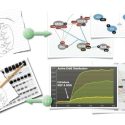
Progress in Systems-Based Analysis of Cellular Signalling By Dr Jeffrey A. Radding Drug discovery currently focuses on targeted approaches, relying on validation of the target as a disease driver. However, the underlying biological complexity of disease often frustrates these attempts at therapeutic intervention, resulting in high failure rates due to… Read More