The Role of the Medicinal Chemist in the Drug Discovery Process: current status and future prospects By Dr Stevan W Djuric The need for the pharmaceutical industry to produce a constant stream of new NCEs has never been more paramount but with constantly changing R&D paradigms what is the role… Read More
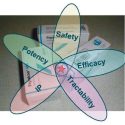
Personalised Medicine: What's in it for big pharma? By Dr Stephen Little There is nothing more difficult to take in hand, more perilous to conduct, or more uncertain in its success, than to take the lead in the introduction of a new order of things. Because the innovator has far… Read More
Next Generation HIV Drugs move into late stage development By Dr Graham P. Allaway and Dr Jeffrey M. Jacobson There are currently 24 drugs approved for treating HIV infection. Of these, 23 are small molecule orally available drugs, or drug combinations, targeting the virus' reverse transcriptase and protease enzymes, targets… Read More
Building a uHTS laboratory communications from the frontier By Dr Peter Hodder Through sheer commercial need to conduct HTS reliably, rapidly and economically, science and technology have partnered to move laboratories from semi-automated craft guilds to industrialised uHTS research operations. To the benefit of both the pharmaceutical and HTS technology… Read More
Share Share Tweet Email Automated Patch Clamping: Setting a new standard for early hERG Automated Patch Clamping: Setting a new standard for early hERG By Dr John Comley Ion channel targets remain a top priority for many Pharma and Biotechs with most looking to increase their screening efforts in 2006. Read More
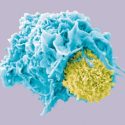
Immunomodulation: emerging from obscurity into a major therapeutic class By David Gee While not initially apparent, immunomodulation is high on the pharma agenda if recent deal making is a valid indicator. This article discusses the potential of immunomodulation to rise from the relative obscurity of adjuvants in vaccines to mainstream… Read More
Advances in the imaging of biomolecules: the label-free intrinsic imaging approach By Dr Stuart Hassard, Dr Anthony D. Baxter and Dr John Hassard Many stages in the process of drug discovery require the separation, identification and analysis of biomolecules such as proteins, peptides and nucleic acids. Such analyses have traditionally… Read More
New Options for Cell-Based Assay Automation By Dr John Comley The findings of a recent survey on cell-based assay automation revealed that no single factor stands out as the predominant reason productivity is limited in current cell-based automation. However, improving the quality of assay results and enhancing throughput were seen… Read More
The future of the CRO industry By Gilbert Godin The pressures on Pharma/Biotech to control R&D costs while improving the yield of new, approvable drugs indicate an even greater reliance on outsourcing. So what will the next five years bring for the CRO industry? Five years ago, as we approached… Read More
Engineering Success: Wyeth redefines its research & development organisation By Dr Robert R. Ruffolo, Jr In an era of unprecedented productivity challenges, rising regulatory constraints and ever increasing costs, the need to be innovative, productive and efficient in all R&D departments has never been greater. We discuss how and why… Read More
Applying the semantic web to drug discovery and development By Dr Eric Neumann There is much happening in drug development these days: new target classes, increasing costs, new forms of high throughput screening, and the promise of personalised medicine. But of all the issues, the one that now takes centre… Read More
High Content Screening - Emerging importance of novel reagents/probes and pathway analysis By Dr John Comley The number of high content screens will increase by 50% over the coming year; signal pathway analysis was seen as the most relevant high content screening (HCS) application; with greatest interest in applying HCS… Read More
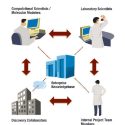
Redefining Drug Discovery Informatics By Bryan S. Koontz As the pharmaceutical industry changes in response to unprecedented challenges, information technology supporting the drug discovery process must evolve and be redefined in order to improve research productivity and success rates. Improvements to traditional computational chemistry applications will continue to provide incremental… Read More
Computer-aided design: progress towards more rational drug discovery By Dr Wolfgang H.B. Sauer Drug discovery is a science, a craft and an art, and often it requires a fair amount of serendipity or plain luck to succeed. Success is rare and costly, as evidenced by numerous reports and reviews (1,2). Read More
By Dr Y. Douglas Dolginow The art and science of prediction is a risky and humiliating exercise. As bad as we are at it, predicting things remains one of the fundamental human instincts, undoubtedly linked to a Darwinian selective advantage for our species. So no matter that the umbrella was… Read More
Ion Channels - New opportunities for an established therapeutic target class By Dr Andrew Southan, Iain F. James and David Cronk There is an increasing recognition within the pharmaceutical industry of the immense potential for ion channels as a drug target class. Advances in the understanding of the human genome,… Read More