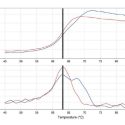
Harnessing the modified proteome for increased diagnostic power By Dr David Bramwell, Dr Steven Laval and Dr Jane McLeod Relevant biomarkers are vitally important in personalised medicine, guiding patient matching to specific therapies for earlier, easier and more effective disease identification and treatment. Here we trace the expectations of ’omicsbased… Read More
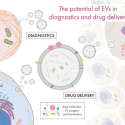
Unlocking the potential of Extracellular Vesicles: from single molecules to novel therapeutics By Dr Anna Caballe and Dr Katarzyna Ginda-Makela As part of normal homeostasis, cells release different types of small-sized membrane vesicles to traffic analytes across membranes, communicate with other cells and remove unwanted cell content. These vesicles can… Read More
Reducing the PAINS in High Throughput Screening: Assay design as a tool for maximising efficiency By Dr Philip S. Jones and Dr Stuart P. McElroy While the quality of the compound collection is frequently described as a key determinant of the success of a high throughput screening campaign, in our… Read More
How Artificial Intelligence is Transforming Drug Design By Dr Mark Roberts and Dr Sam Genway AI could create a streamlined, automated approach to drug discovery, trawling vast datasets to identify targets, find candidate molecules and predict synthesis routes. Getting there will require significant vision, but we are already seeing exciting… Read More
Optimising Phenotypic Screening - Single-cell analysis versus 3D multicell analysis By Dr Richard M. Eglen In light of the high failure rate of compounds when they are subjected to clinical testing, we are seeing a renaissance in phenotypic screening in drug discovery. However, most phenotypic screening is based on the… Read More
2030 Life Sciences and Health in the Digital Age (Part 1) By Dr Steve Arlington and John Wise One of the key ways in which The Pistoia Alliance works with its members is to help them not just deal with the problems of today, but also to look ahead, to… Read More
Automating Automation - How close are we to Artificial Intelligence impact? By Dr Michael A. Tarselli, Dr Yohann Potier and Dr Alan E. Fletcher In terms of consistency, repeatability, known errors and sheer volume, there exists perhaps no better collection of data for computer learning than that emerging from automated… Read More
The Reality of Virtual Pharmaceutical Companies By Dr Stephen Naylor and Dr Kirkwood A. Pritchard Jr We discuss the oxymoronic proposition of a Virtual Pharmaceutical Company (VPC) and the typical adopted business model, as well as provide examples of such companies currently trying to undertake this adventurous task. The vagaries… Read More
Integrated Platform Drug Discovery and Development Companies - Part 2: Comparative analysis By Dr Stephen Naylor and Dr Kirkwood A. Pritchard Jr Spring 2019 Large pharmaceutical companies have struggled to efficiently implement tools, technologies and platforms into their drug discovery and development (DDD) programmes. More recently there have been attempts… Read More
Fostering Multidisciplinary Collaboration in Drug Discovery By Professor Zeynep Erden, et al. Drug discovery teams combine specialists with in-depth knowledge from a variety of scientific disciplines. Such diversity in thought worlds poses a challenging exercise in cross-disciplinary collaboration and project coordination. Based on a longitudinal field study of five projects… Read More
Systems Pharmacology: When multi-targeting is advantageous By Dr Kirkwood A. Pritchard Jr, Dr Dustin P. Martin and Dr Stephen Naylor The safety and efficacy of therapeutic drugs still requires improvement. In part this is due to the promiscuity of individual drugs, which on average can interact with an estimated 6-28… Read More
The Growth of Organoids in Cancer Drug Discovery By Dr J. Mark Treherne, et al., Will the automated expansion of organoids help improve the productivity of cancer drug discovery? Increasingly, complex cell-based assays and tissues are routinely used as part of cancer drug discovery. However, conventional monolayer or suspension cultures… Read More
Increasing Drug Discovery Success With 3D Cell Culture Systems By Dr Richard M. Eglen, Dr Feng Li and Dr Tony Frutos Drug candidates often fail in the clinic for two reasons: they lack efficacy or possess an adverse toxicity profile. These failures can come at a high cost, especially when… Read More
By Dr Phil Jones The mission at The University of Texas MD Anderson Cancer Center is to eradicate cancer, which remains a major cause of mortality worldwide. It is the second leading cause of death in the United States and globally, claiming more lives than malaria, HIV/AIDs and tuberculosis combined… Read More
Genetically-Engineered Models: The Value of Precious GEMs By Dr Megan M. MacBride Genetically-engineered animal models (GEMs) are critical tools for drug discovery and development, but intellectual property (IP) concerns can complicate access. As pharma and biotech increasingly outsource R&D activities to universities, careful scrutiny is required to ensure adherence to… Read More
Current Trends in RNA Therapeutics Development By Dr Xiaoqiu Wu and Dr Andrew P. Turnbull Cellular RNAs play crucial roles during disease progression and represent a diverse and largely untapped class of biomolecules that can be exploited for drug development. RNA species include messenger RNAs (mRNAs) that are translated into… Read More