By Dr Aaron Heifetz The promise of stem cell technology as a tool for drug discovery, drug development and as a therapeutic modality is no longer in the future but part of contemporary healthcare. The speed which stem cells have… Read More
Epigenetics: Targeting the mediator between environment and phenotype By Dr John M. Rosenfeld, Dr Kan Saito and Dr Michael Sturges Although it is still early days in terms of our understanding of epigenetics, the fast development of new tools and technologies to define genome-wide epigenetic variations in… Read More
In Vivo Cell Reprogramming: Current status and potential clinical applications By Dr Shili Wu, Jonathan Pang, Bobby Baravati, Jun Bao and Dr Yong Zhu In Vivo Cell Reprogramming, or IVR, is a new technology that can be used to develop cures for incurable diseases. Using a combination… Read More
3D Cell Culture Developments to Improve In Vitro Analyses By Prof Stefan Przyborski Improved in vitro models are required to aid the identification and assessment of candidate molecules for pharmaceutical development. Conventional cell culture models involve the growth of cells on two-dimensional (2D) substrates. Cells adapt to… Read More
Enabling the Promise of Stem Cells By Robert Shaw and Dr Jeff Till The remarkable potential of stem cells to generate several hundred differentiated cell types is driving their use for regenerative medicine and for supporting the traditional drug discovery and development process (Figure 1). Read More
High Throughput Screening Systems: Impact of Reliability on Downtime and Drug Discovery By Dr John Comley This article reports the results of a survey on the reliability of automated HTS assay systems and the effect of reliability on output. Evidence supporting the view that high throughput screening (HTS)… Read More
Induced Pluripotent Stem Cells: A model for transforming drug discovery By Dr Dwight Morrow and Dr Julie Holder Induced pluripotent stem (iPS) cells have the potential to transform drug discovery by providing physiologically relevant cells for toxic compound identification, target validation, compound screening, and tool discovery. The technology… Read More
New Mechanisms and Expanded Indications for Biologic Therapies: a perspective on immunology research and development By Dr Susan B. Dillon Over the past decade, the introduction of biologic therapies has had a profound impact for millions of patients with immune-mediated arthritides, inflammatory bowel diseases and plaque psoriasis. Read More
Current Trends in Label-Free Drug Discovery Technologies By Philip Rawlins Drug Discovery Label-free technologies have been used throughout drug discovery for the detection and characterisation of molecular interactions. The implementation of automated systems, increased sensitivity and the development of new technologies have recently broadened the use of… Read More
Biomarkers Make Their Mark on Current Research and Drug Development Trends By Stephane Parent and Dr Gregory Cosentino Biomarkers continue to become increasingly relevant in research and healthcare applications, as evidenced by the global market for products involved in their identification, validation, and use estimated at $8.3 billion… Read More
3D Cell Culture: Easier said than done By Dr John Comley The transition from cell culture on the flat surface of a conventional two-dimensional (2D) culture vessel to a three-dimensional (3D) environment, matrix or scaffold with 3D architecture has begun, and is providing much needed support for… Read More
By Dr John Comley Laser scanning cytometers have matured over the past decade to meet the needs of end-users for higher throughput cell analysis, to access to previously difficult applications and to keep pace with the diversity of new fluorophores, validated high content screening (HCS)… Read More
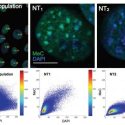
Utilising 3D nuclear DNA methylation patterns in cell-based assays for epigenetic drug screening By Professor Jian Tajbakhsh, Professor Arkadiusz Gertych and Professor Daniel L Farkas Since epigenetic changes are thought to underlie a wide range of complex diseases, the scope of epigenetic drug therapy is likely to… Read More
By Dr John Comley After nearly 15 years of challenging maturity 1536 plate adoption (particularly in primary screening), finally appears to have taken hold. There is now available a broad range of 1536 plate types; an ever expanding variety of tools that make… Read More
LIMS vs ELNs – Arch enemies or best of friends? By David Morris Since the first appearance of laboratory information management systems (LIMS) in the late 1960s, this technology has become commonplace in many, if not most, research and commercial laboratories. This considerable development… Read More
Stem Cell Applications and Opportunities in Drug Discovery By Dr Mark A. Thiede The high attrition rate of late stage drug candidates has led the pharmaceutical and biotech industries to a reassess the in vitro models used to select and validate drug targets and subsequent lead molecules. Read More