Obesity - The 21st century disease By Diane L. McBay and Dr Colin T. Dourish Obesity will be the leading cause of death and disability in the 21st century. This epidemic is largely attributable to increasingly sedentary lifestyles and the abundance of tasty, high-fat foods. Obesity increases the risk of… Read More
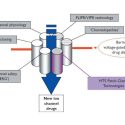
Channelling Drug Discovery - Current trends in ion channel drug discovery research By Dr David Owen and Andrew Silverthorne Ion channels are proteins that span cell membranes thus forming conduits or 'channels' through which charged ions such as sodium and potassium can pass across a normally impermeant barrier such as… Read More
Key R&D informatics challenges facing small/medium-sized pharmaceutical and biotech companies By John Wise The ability of R&D informatics to deliver real benefit to the SME pharmaceutical company is constrained by the increasing burden of non-discretionary computer systems combined with the lack of opportunity to leverage the economies of scale enjoyed… Read More
Business strategy for implementation of biomarkers in drug development By Miles Flamenbaum With pharmacoproteomic biomarkers being the subject of focus among regulatory agencies as well as research institutions, many pharmaceutical companies are increasing their interest and investment in biomarker strategies. This article discusses the potential for new efficiencies and cost… Read More
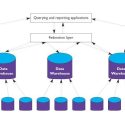
From raw data in the laboratory to information availability in the enterprise By Dieter Kreusel If pharmaceutical or biotechnology companies could measure their success merely on the volume of raw data accumulated from screening assays and pre-clinical testing, they would be basking in the glow of unprecedented success. Companies are… Read More
By Dr Patrick J. Vojta, Vincent P. Kazmer and Dr Larry D. Kier Adverse drug responses are an important post-marketing public health issue, occurring many times in subsets of treatment populations. Promising new approaches to predicting physiological responses to drugs are focused on genomic responses or toxicogenomics (1). This article… Read More
Metabolism Provides Alternative Door to Stroke Therapy By Dr Keith F. Martin and Tony Dolan Even in the age of genomics and gene hunters, a holistic view of cell metabolism can result in revolutionary new drugs. You know that feeling you get the day after an exaggerated attempt at physical… Read More
Proteomics In Drug Target Discovery - High-throughput meets high-efficiency By Dr Terence E. Ryan and Dr Scott D. Patterson Biochemistry is enjoying a renaissance under the guise of 'proteomics' due to the availability of sequenced genomes, advances in mass spectrometry and associated data analysis. Its application to drug discovery and… Read More
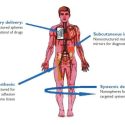
Silicon Technology and Pharmaceutics by Professor Leigh T. Canham, Dr Roghieh S. Saffie, Stephen E. Connor and Dr Roger Aston The recent discovery that, following nanostructuring, silicon can be rendered biocompatible and biodegradable has far reaching and profound long-term implications for the pharmaceutical industry and, indeed, medicine as a whole. Read More
The genomics revolution is poised to sweep aside the old economics of pharmaceutical R&D. The biotechnology and pharmaceutical industries; and perhaps healthcare delivery in general; are on the brink of transformation, and companies that embrace the revolution in the right way stand to reap enormous benefits. Developing a new drug… Read More
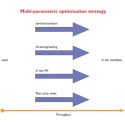
Hit to lead and lead to candidate optimisation using multi-parametric principles By Dr Anthony D. Baxter and Dr Peter M. Lockey As the numbers of potential target proteins become available for pharmaceutical companies of all sizes, the drive towards more cost-effective drug discovery assumes greater significance. It is a truism… Read More
Data Mining in the pharmaceutical industry By Dr Robert D. Small and Herbert A. Edelstein A research-based pharmaceutical company is a data accumulating wonder. More than in any other industry, success is predicated on the collection, processing and exploitation of that data. This is not always recognised and often not… Read More
Evaluating future drug candidates and their manufacture together By Professor Peter Dunnill Classically, evaluating a candidate drug has preceded evaluation of the process for making it. The late rush to process development worked reasonably well with simple chemical pharmaceuticals. With complex biopharmaceuticals, a new approach is needed. One now being… Read More
Chemogenomics - A gene family approach to parallel drug discovery By Dr Paul R. Caron, Dr Michael D. Mullican, Dr Robert D. Mashal, Dr Keith P. Wilson, Dr Michael S. Su and Dr Mark A. Murcko Currently available drugs only target around 500 different proteins (4). Recent reports from efforts… Read More
The lab on a chip and its impact on drug discovery by Dr Simon Cowen and Dr Coulton Legge Few technology developments have had as profound an effect on society as the invention of the microchip integrated circuit in the 1960s. Since then, the power of electronic circuits has increased… Read More
Why pharmaceutical companies should teach scientists to be entrepreneurs By Dr Jeffrey P. Kiplinger Conventional wisdom says that big employers do not want anything to do with entrepreneurs as employees. The last thing a human resources director wants to see on a resume is that a candidate started a business… Read More