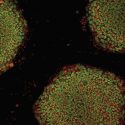
Gene Editing: Re-writing Genomes With Targetable Nucleases By Dr Dana Carroll We are in the midst of a revolution in genome engineering, based on reagents that can be designed to cut chromosomal DNA at arbitrary sites. These targetable nucleases allow creation of new mutations at specific sites,… Read More
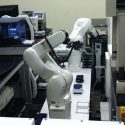
Automated Compound Management Evolves To Meet The Drug Discovery Demands Of The Future By Dr Caroline Engeloch and Dr Daniel Baeschlin The development of new drugs involves testing hundreds of thousands of compounds, from high throughput screening through to subsequent lead optimization. Read More
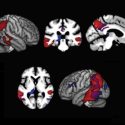
The Great Neuro-Pipeline Brain Drain – Why Big Pharma Hasn’t Given Up On CNS Disorders By Julia Skripka-Serry Central Nervous System (CNS) disorders bear an economic burden of more than $2 trillion in the US and EU and rake in upwards of $80 billion a year for the… Read More
By Dr Alejandra Solache, Robert Brockett, Trinette Chuang, Dr Robin Clark, Rey Dimagiba, Dr April Fisher, Dr Wayne Speckmann and Dr Chun Yang Antibodies have become a vital tool among researchers in the life sciences and are routinely being used in a number of diverse immunoassay… Read More
Partnering with the right CRO is a winning strategy for companies big and small By Dr Davide Molho The Bio-Pharma business model is undergoing radical changes. Over the last two decades, we have seen the biopharmaceutical industry gradually become more willing to look externally and embrace the… Read More
Highlights from GlobalData’s CRO Benchmark Report By Adam M. Dion The biopharmaceutical industry is currently facing significant headwinds. The blockbuster era is over, development costs are skyrocketing, uncertainty exists around regulatory and reimbursement, patent cliffs, generic erosion and a sluggish global economy all have industry executives losing… Read More
Outsourced Kinase Profiling Services: Adding Value To In-House Kinase Programmes Dr John Comley Biochemical kinase profiling using a large panel of kinases with a broad coverage of the human kinome has become the de facto norm within the Pharma industry. The importance of this activity is demonstrated… Read More
Unrevealing Biological Secrets By Single Cell Expression Profiling By Dr Mikael Kubista and Dr Anders Ståhlberg During the last 30 years exceedingly sensitive and accurate technologies have been developed to measure and quantify amounts of nucleic acids and proteins. With techniques such as… Read More
A Decade of RNAi Screening: Too much hay and very few needles By Bhavneet Bhinder and Dr Hakim Djaballah RNAi screening is arguably the fastest growing field with the premise to better understand gene function at the genome level. It has been hailed as the second genomics… Read More
Stem Cells Rapidly Gaining Traction in Research and Drug Discovery By Dr John Comley A recent market survey on stem cells in research and drug discovery showed that despite a significant amount of hype and hope around stem cells, most drug discovery-related efforts today still fall into the… Read More
Are Laboratories Truly Ready For Mobile Working? By Sarah Westall It is not too long ago that mobile technology was limited to a certain few, but these days devices such as smartphones and tablets play an important part in many people’s working and personal lives. Read More
Laboratory Automation Advances High Throughput Bio-Inspired Research Into Personalised Medicine By Dr Joshua LaBaer The Biodesign Institute at Arizona State University plays an important role in addressing global healthcare challenges by developing bio-inspired solutions that can be translated into commercially viable products and clinical practices. Read More
Targeting Diminished Cerebral Glucose Metabolism for Alzheimer’s Disease By Dr Henderson As demographics of developed countries shift toward an older population, the number of cases of Alzheimer’s disease is anticipated to increase dramatically. Currently, there are no disease modifying treatments and approved drugs provide only symptomatic relief. Read More
Academic Ingenuity and Corporate Partnerships: New models in human health ventures bring value to all By Professor Paul Agris Many disapprove of science faculty at American universities procuring corporate ventures that support research, instead of primarily functioning as an instructor, mentor and basic researcher. This perception is… Read More
Multi-Parameter Flow Cytometry Technology Advances for Rare Cell Analysis and Sorting By David Gebhard and Dr Diether Recktenwald The study of rare cell populations is important to advance medical diagnostics and therapeutics. For many clinical studies, rare cell counts promise to provide valuable alternate end points; examples… Read More
There are approximately 7,000 rare diseases, which from a regulatory perspective are defined as those diseases where there are less than 200,000 patients in the US or that affect no more than five in 10,000 of the general population in the EU. Read More