The Potential of Cloud Computing for Drug Discovery & Development By Peter Boogaard Cloud collaboration has allowed projects of previously unimaginable scale and scope to be constructed at an unmet price/performance ratio. Widespread access to Information and Communication Technologies (ICTs) and agile… Read More
Targeting Target Cancer Metabolism – What is fuelling the resurgence? By Dr Neil P. Jones Targeting the metabolic pathways of cancer is a hot topic for drug discovery. The central dogma is that cancers have a higher demand for metabolic inputs to aid proliferation and survival and… Read More
Combining chemists expertise and a computer’s advanced capabilities to generate good ideas. By Dr Matthew Segall, Edmund Champness, Dr Chris Leeding, Dr Ryan Lilien, Dr Ramgopal Mettu and Dr Brian Stevens Drug One of the defining challenges of drug discovery is the need to make complex decisions regarding… Read More
8 Years of Surveying Ion Channel Screening – Has anything changed? By Dr John Comley No review of ion channel screening over the past decade can avoid discussing the pivotal role played by automated electrophysiology. Arguably this technology, more than any other, has opened up the field… Read More
Early Patient Stratification is Critical to Enable Effective and Personalised Drug Discovery and Development By Dr David A Fryburg, Dr Diane H Song and Dr David de Graaf With the current chances of an efficacious outcome in Phase II for novel mechanisms being in the region of… Read More
Selecting a Lab Information Management System (LIMS) for Next-Generation Sequencing Research By Bruce Pharr and Dr Michael Kuzyk Genomics has revolutionised the life sciences industry by combining human ingenuity with right-place/right-time serendipity. Advances in computer processing and storage have provided the bandwidth and throughput to enable the… Read More
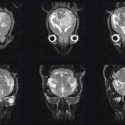
In Vivo Preclinical Imaging – An Essential Tool in Translational Research By Dr John Comley In vivo imaging of small animals (mainly mice) is increasingly being deployed across the drug development process, particularly in the oncology/cancer therapeutic area. One of the main applications is… Read More
Share Share Tweet Email What Are The Obstacles to Innovation in the Pharmaceutical Industry? What Are The Obstacles to Innovation in the Pharmaceutical Industry? The Pistoia Alliance Innovation is a key word throughout the… Read More
In Vivo Cell Reprogramming: Current status and potential clinical applications By Dr Shili Wu, Jonathan Pang, Bobby Baravati, Jun Bao and Dr Yong Zhu In Vivo Cell Reprogramming, or IVR, is a new technology that can be used to develop cures for incurable diseases. Using a combination… Read More
3D Cell Culture Developments to Improve In Vitro Analyses By Prof Stefan Przyborski Improved in vitro models are required to aid the identification and assessment of candidate molecules for pharmaceutical development. Conventional cell culture models involve the growth of cells on two-dimensional (2D) substrates. Cells adapt to… Read More
The Post Genomic Era: What Does It All Mean? By Dr Chris Torrance Information may no longer be a bottleneck to understanding and tackling complex genetic diseases such as cancer. For those who cut their research teeth not so very long ago, before PCR was thought of by… Read More
By Dr Cliff Murray Drug Discovery The pharmaceutical industry is still struggling to cure cancer despite pouring enormous resources into the search for new treatments. We take a look at the some of the current technologies for the discovery and delivery of molecular diagnostic, prognostic and… Read More
Protein Biomarker Immunoassays: Opportunities and Challenges By Dr M. Walid Qoronfleh and Dr Klaus Lindpaintner With the biopharma industry under heavy pressure, transforming the scientific interchange between the laboratory and the clinic is exceedingly critical. Realising the costly toll of drug attrition in late-stage development, many companies… Read More
Induced Pluripotent Stem Cells: A model for transforming drug discovery By Dr Dwight Morrow and Dr Julie Holder Induced pluripotent stem (iPS) cells have the potential to transform drug discovery by providing physiologically relevant cells for toxic compound identification, target validation, compound screening, and tool discovery. The technology… Read More
Moving Forward With Label-Free Technology By Dr Jennifer Hartigan, Cindy Liu and William Downey Label-free technology is gaining acceptance and opening doors for new drug discovery. Relatively new in the well-established world of high throughput screening (HTS), label-free technology provides opportunities for probing biomolecular interactions without spatial-interference, auto-fluorescent… Read More
Assessing the Value of R&D Partnerships By Dr David A Pardoe, Dr Jackie Hunter MBE, Dr Robert M Cooke and Dr Paul Barrett In response to the need to increase the return on investment in R&D, many large Pharma companies are shifting from an internal fixed resource model… Read More