
Proteasome discovery “opens new frontier for personalised treatments”
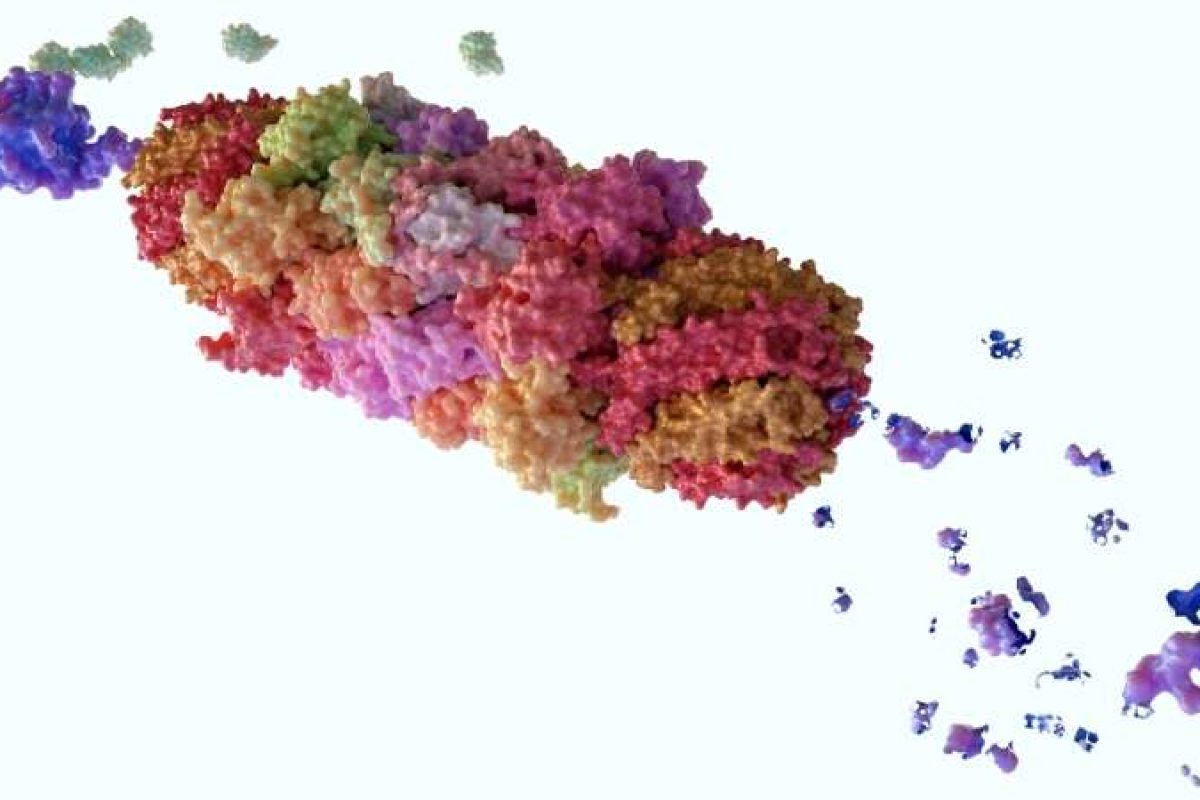
In a new study, published in Nature, Professor Yifat Merbl’s lab at the Weizmann Institute of Science reports uncovering a surprising immune mechanism involving the proteasome.
The proteasome is a cellular waste disposal system best known for its central role in protein degradation and recycling.
The team discovered that some of the peptides released in the proteasome during protein breakdown are capable of killing bacteria.
Scientists in Merbl’s lab in Weizmann’s Systems Immunology Department previously developed a technology that enabled them to track proteasomes under various disease conditions, such as lupus and cancer, accumulating vast amounts of data on the degraded protein fragments.
In the new study, the researchers found that many of these degradation products matched sequences previously identified as antimicrobial peptides, critical components of the innate immune system.
For years, it was known that such peptides may be generated by protein-cutting enzymes called proteases that ‘released’ them from proteins so they could become active, but the new findings have shown that such peptides may be activated by proteasomes.
The study revealed that the proteasome itself constantly produces these peptides as part of its routine activity, and that this production ramps up significantly during bacterial infections.
“This peptide database opens a new frontier for developing personalised treatments against infections and other medical conditions,” said Merbl. “Before now, we knew nothing about the connection between proteasome products and the production of these peptides. In light of our findings, we conducted an extensive series of experiments demonstrating that the proteasomes are key to this defence system.”
An untapped reservoir of antimicrobial agents
In one experiment conducted on human cells, the researchers inhibited the proteasomes in one group of cells; when the cells were infected with salmonella, the invading bacteria thrived in the group that lacked active proteasomes.
In another experiment, bacteria thrived when the proteasome functioned normally, but the peptides produced within it were destroyed.
Experiments in mice infected with bacteria that cause pneumonia and sepsis showed that treatment with a proteasome-derived peptide significantly reduced the number of bacteria, lessened tissue damage and even improved survival rates.
The researchers saw that infection causes the proteasome to change its protein-cutting mode, ‘favouring’ the production of peptides with antibacterial properties. Within an hour of infection, they identified proteasomes with a control unit called PSME3 and found that this subunit was responsible for prioritising the production of such peptides. When they prevented the proteasomes from using this control subunit, the bacteria were less damaged.
“The ability to track how the activity of the proteasome changes in response to bacterial infection was based on the technology we developed several years ago,” explained PhD student Karin Goldberg, who led the project. “The turning point came when we saw that the proteasome’s peptide-cutting activity changed during infection. That was when we realised we had uncovered a previously unknown immune mechanism.”
Using an algorithm to analyse all the proteins made by the human body, the team then identified peptides with potential antibacterial properties in 92% of human proteins. Their simulations revealed over 270,000 previously unknown peptides that could be released by the proteasome, representing a huge untapped reservoir of natural antimicrobial agents.
Diana Spencer, Senior Digital Content Editor, DDW