
Advancing cancer therapy with antibody-drug conjugates
Cathie Miller, PhD, Senior Director of Product Marketing at BioIVT, discusses biospecimens and analytical techniques supporting the rapid evolution of ADCs in oncology.
Antibody-drug conjugates (ADCs) are making significant strides forward as targeted cancer therapies. By coupling the specificity of antibodies with the potency of cytotoxic drugs, ADCs aim to deliver toxic agents directly to cancer cells while minimising damage to normal, healthy cells.
Understanding ADCs
ADCs are intricately designed therapeutics that combine three main components, each of which plays a critical role in their function and effectiveness. The first component is the monoclonal antibody, a specially engineered protein that targets particular antigens expressed on the surfaces of cancer cells. This unique capability allows the monoclonal antibody to recognise and home in on tumours, ensuring that the treatment is directed precisely where it is most needed1.
The second crucial component is the cytotoxic drug, often referred to as the payload. This potent agent is responsible for delivering a lethal dose of medication directly to the cancer cells. By attaching the cytotoxic drug to the monoclonal antibody, the ADC can kill targeted cancer cells effectively, thereby limiting the spread of the disease. In comparison to traditional chemotherapy, this targeted approach is particularly beneficial as it helps to minimise damage to normal, healthy cells, reducing the side effects commonly associated with conventional cancer treatments1.
The linker serves as the third essential element, connecting the monoclonal antibody to the cytotoxic drug. Its primary role is to provide stability during the ADC’s circulation in the bloodstream, ensuring that the components remain intact until they reach the tumour environment. The linker is designed to withstand the challenges of systemic circulation but must release the cytotoxic agent at the right moment within the tumour microenvironment1. This precise release is critical for maximising the therapeutic effect of the treatment.
Role of biospecimens in ADC research
Biospecimens play a crucial role in ADC development, providing essential biological material to support various stages of the process, including understanding of the tumour biology, target validation, and ADC efficacy testing. Tumour tissue samples are of particular importance in the study of target antigen expression, tumour heterogeneity, and the evaluation of ADC efficacy across various cancer types. Blood samples are essential for conducting pharmacokinetic studies, facilitating biomarker discovery, and monitoring the levels of ADCs circulating in the bloodstream. Normal tissue samples are also required as they help assess potential off-target effects and the toxicity associated with ADCs. Furthermore, patient-derived xenografts serve as valuable models for preclinical testing of ADCs, as they are generated from actual patient tumour samples, providing a clinically relevant environment for research.
Biospecimen quality has a direct impact on the reliability and reproducibility of ADC research and can be affected by a variety of factors. Proper collection and preservation techniques are essential for ensuring the integrity of biological specimens. It is crucial to minimise ischemia time to maintain cellular viability and function, thereby enhancing the quality of the samples collected. Additionally, appropriate storage conditions must be established to prevent degradation and preserve the specimens for future analysis. Detailed clinical annotation provides valuable context and information regarding the samples, facilitating more accurate research and diagnostic outcomes.
Biomarkers in ADC development
Biomarkers play a critical role in ADC development, helping researchers identify suitable molecular targets and predict treatment efficacy.
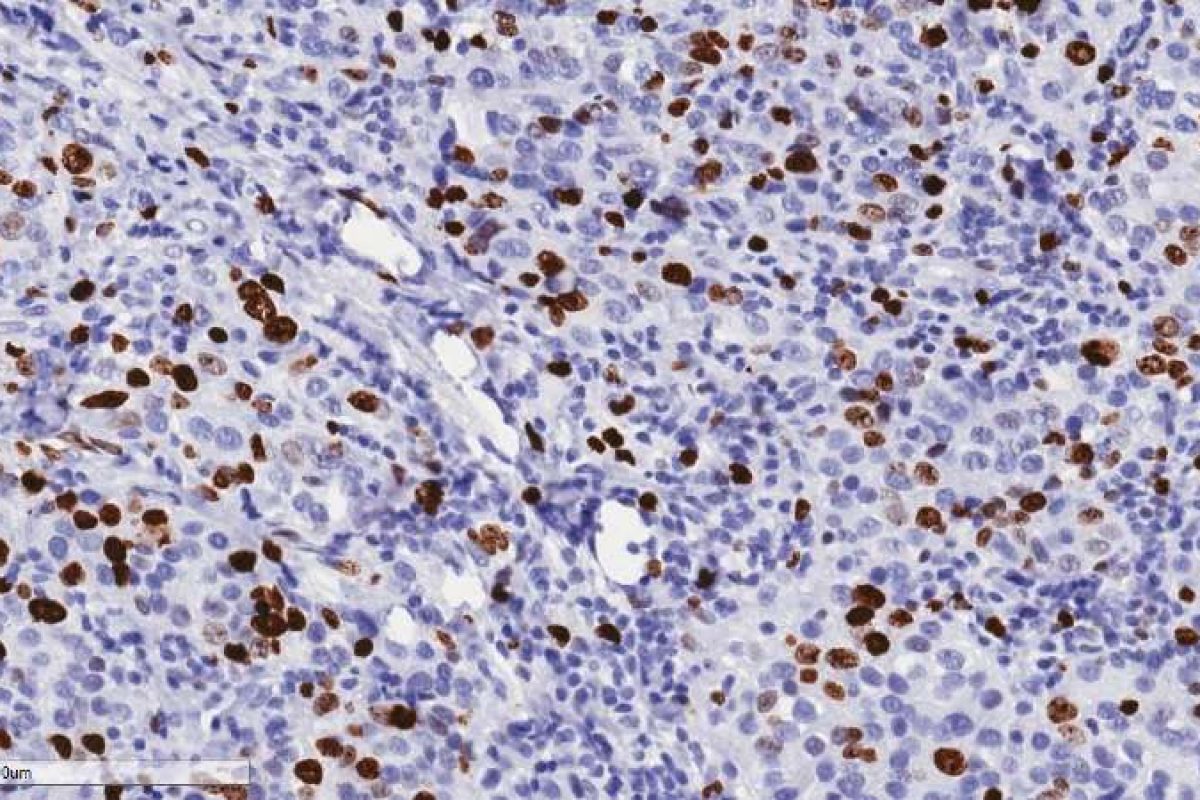
Ki67 is a protein expressed in actively dividing cells but not in resting cells, making it an excellent marker for identifying proliferating cells within a tissue sample. Ki67 staining can therefore be utilised to assess the value of biospecimens and offers several benefits. For example, identifying proliferating cells is crucial for understanding tumour aggressiveness and assessing potential responses to treatment. Ki67 staining addresses tumour heterogeneity by highlighting regions of varying cellular activity within the tissue block, which can provide insights into the tumour’s behaviour. Additionally, validating target antigens is beneficial because it confirms that those antigens are expressed on proliferating tumour cells, ensuring that targeted therapies will be effective. Moreover, the prognostic and predictive value of high Ki67 expression is significant, as it is associated with more aggressive disease and poorer prognosis, thereby influencing treatment strategies and patient outcomes.
Another important biomarker is HER2 (human epidermal growth factor receptor 2) recognised as a key target for ADCs in the treatment of breast and gastric cancers, where its overexpression plays a significant role in disease progression. Similarly, CD30 serves as an important target for ADCs intended to treat lymphomas, leveraging its unique expression profile in those malignancies. Furthermore, TROP2, or tumour-associated calcium signal transducer 2, has emerged as a valuable target for ADCs across various epithelial cancers, highlighting the versatile applications of ADC technology in oncology.
Biospecimen-based techniques in ADC research
Several techniques utilising biospecimens are of particular importance for ADC development. Immunohistochemistry is a crucial technique employed to evaluate the expression and distribution of target antigens in tumour tissues, providing valuable information for research and treatment strategies. Flow cytometry complements this by quantifying target antigen expression on tumour cells derived from dissociated tissue samples, allowing for a more precise analysis of cellular characteristics. Additionally, next-generation sequencing offers insights into genetic alterations that may affect the efficacy of ADCs, facilitating a better understanding of tumour biology and therapeutic responses. Furthermore, mass spectrometry plays a vital role in analysing the metabolism of ADCs and determining the drug-to-antibody ratio in tissue samples, which is essential for optimising therapeutic efficacy and safety. Together, these advanced techniques enhance researchers’ ability to study and treat tumors effectively.
Challenges and considerations
Tumour heterogeneity presents a significant challenge in the development of effective ADCs, as variability in target antigen expression can differ not only within a single tumour but also between tumours of the same histology. This variability complicates the identification of suitable targets for ADCs and may lead to suboptimal treatment responses in patients. Additionally, the availability of high-quality, clinically annotated biospecimens is vital for research and development; however, acquiring these specimens can be difficult, especially for rare cancer types where patient populations are limited. Ethical considerations further complicate this landscape, as researchers must adhere to strict informed consent protocols and ethical guidelines when collecting and utilising human biospecimens to ensure the rights and well-being of participants are maintained. Moreover, the need for standardisation in biospecimen collection, processing, and analysis cannot be overstated. Developing standardized protocols is essential for ensuring that research findings are reproducible and reliable, ultimately contributing to advancements in cancer treatment and personalised medicine. Addressing these challenges is crucial for the successful application of ADCs in clinical settings and for advancing understanding of cancer biology.
Future directions
The field of ADC research is rapidly evolving in several promising directions. Some ADCs being investigated as targeted cancer therapies can now engage two distinct antigens simultaneously, thereby enhancing their therapeutic efficacy and minimising the likelihood of resistance occurring, which often hampers treatment outcomes.
Personalised ADCs take this approach further by customising therapies according to the unique biomarker profiles of individual patients, ensuring a more precise and effective treatment strategy. Moreover, the development of novel payload technologies is critical, as it focuses on creating innovative cytotoxic agents and linker chemistries that can significantly improve both the efficacy and safety of ADCs.
Finally, the exploration of combination therapies highlights the potential for synergistic effects when ADCs are used alongside other cancer treatments, such as immunotherapies. This multifaceted approach not only maximises therapeutic benefits but also paves the way for more comprehensive cancer care, leading to improved patient outcomes.
Conclusion
Biospecimens are indispensable tools in ADC research, providing important insights into tumour biology, target validation, and treatment efficacy. By leveraging high-quality biospecimens and advanced analytical techniques, researchers can accelerate the development of more effective and targeted ADC therapies, offering new hope for cancer patients worldwide.
From DDW Volume 26 – Issue 1, Winter 2024/25 Read the digital issue
Reference:
- https://pmc.ncbi.nlm.nih.gov/articles/PMC5427099/
About the author:
 Cathie Miller, PhD, is Senior Director of Product Marketing at BioIVT, which enables smarter science and accelerates medical breakthroughs by delivering high-quality personalised biospecimen solutions and research services to the life science and diagnostic industries. She has more than 20 years’ experience as a bench scientist, director, and global product manager, focused on using biospecimens to advance cancer, immunology and virology research.