
Drug Discovery Innovators and Investors (DDII) conference: Event summary
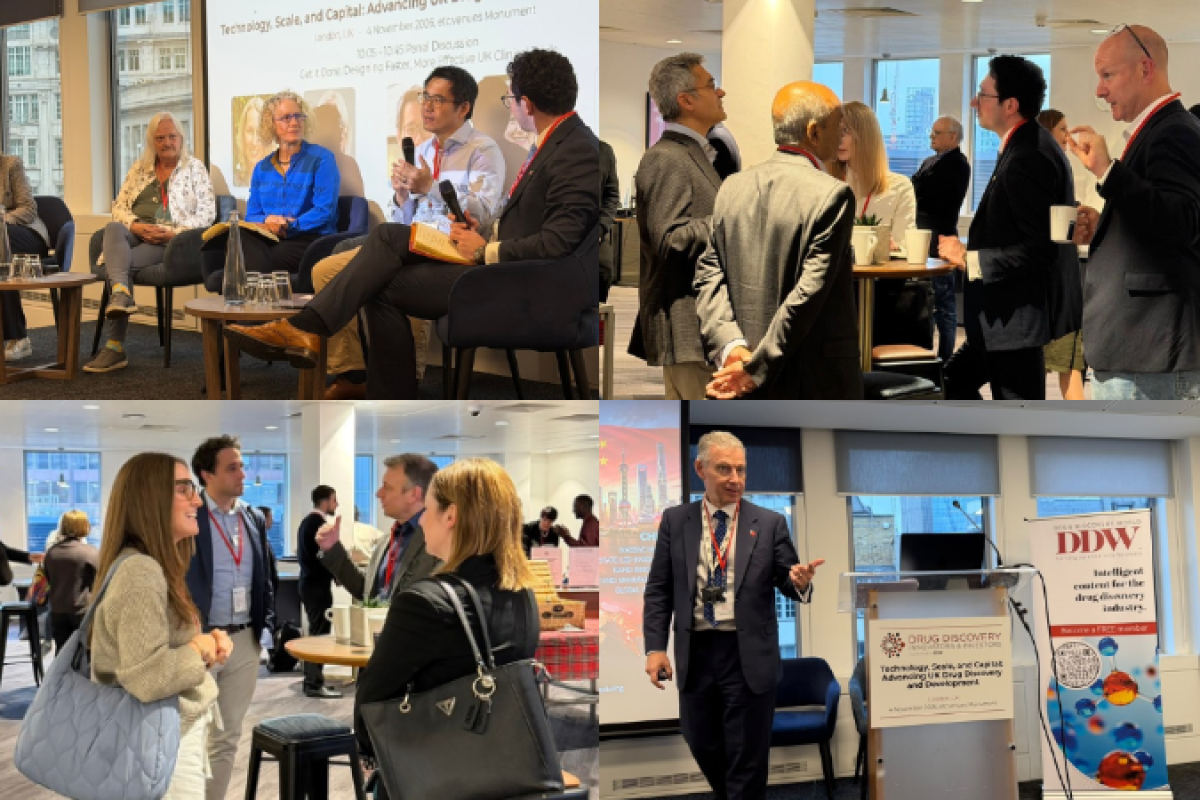
The second event in the Drug Discovery Innovators and Investors (DDII) event series took place on 4 November, 2026, bringing together representatives from across the UK life sciences sector to discuss the opportunities and challenges facing drug discovery and development.
Held in London under the theme Technology, Scale, and Capital: Advancing UK Drug Discovery and Development, the conference explored how emerging technologies, artificial intelligence (AI), automation and investment could help strengthen the UK’s position as a global centre for pharmaceutical research and development.
The programme featured expert presentations, panel discussions and networking opportunities, with speakers from pharmaceutical companies, biotechnology businesses, research organisations, investment firms and industry bodies.
Key themes and discussions
The morning programme opened with a presentation from Dr Paul Brooks, Chief Executive Officer of CN Bio Innovations, who explored how human organ-on-a-chip technology could help address the high failure rate of drug candidates during development.
His presentation examined how CN Bio’s PhysioMimix platform can support decisions around candidate selection, efficacy, safety and dosing, with case studies covering metabolic dysfunction-associated steatohepatitis (MASH), drug-induced liver injury (DILI) and ADME.
Strengthening the UK’s clinical trial environment
A panel discussion moderated by Thomas Averre of Tarleton Advisory examined how the UK could design faster and more effective clinical trials.
Panellists discussed the strengths and weaknesses of the UK’s clinical trial infrastructure, barriers to conducting research, and how approaches including biomarkers and AI could improve trial design and outcomes.
Building reliable data foundations for AI
Caroline Wickramasinghe, Senior Product Manager at SPT Labtech, highlighted the importance of high-quality experimental data in enabling AI-driven drug discovery.
The presentation explored how inconsistent data across instruments, laboratories and workflows can undermine AI-generated insights, emphasising the need for reproducible, traceable and interoperable data.
This was followed by a presentation from Dr Wenshu Xu, Head of Drug Discovery Tools at TTP, examining how automation, microfluidics and miniaturised screening could address bottlenecks in the Design-Make-Test-Analyse (DMTA) cycle.
AI, commercialisation and investment
The afternoon breakout sessions considered AI from two different perspectives: its potential to address commercial questions in drug development and its role in attracting investment.
Tim Reason, Founder of Estima Scientific, explored how AI could support health economics and outcomes research (HEOR), including pricing, market access and identifying patient subgroups.
In a parallel session, Yogan Patel, Head of Life Sciences and MedTech at MHA, examined whether integrating AI is becoming an increasingly important consideration for investors evaluating life sciences businesses.
Regulation and intellectual property
The programme also addressed the regulatory and intellectual property considerations shaping UK drug development.
Anusha Foy, Vice President of Regulatory Affairs at Allucent, discussed how UK regulation can either accelerate or obstruct development, while Dr Andrew Wells, Partner and Head of Chemistry at HGF, explored the commercial value of intellectual property strategies in protecting drug discovery innovations.
Positioning the UK as a global life sciences leader
Chris Molloy, Chief Executive Officer of the UK BioIndustry Association (BIA), delivered the keynote address, exploring the UK’s potential to become an increasingly important player in the changing global drug R&D landscape.
His presentation highlighted the country’s strengths in discovery research, regulation, finance and specialist therapeutic areas, including oncology, cell and gene therapy and rare diseases. He also considered the importance of strengthening investment, encouraging technology adoption and developing international R&D partnerships.
Addressing the early-stage funding challenge
The conference concluded with a panel discussion on funding early-stage UK drug development, moderated by Reece Armstrong, Editor of Drug Discovery World.
Representatives from Cell and Gene Therapy Catapult, Pioneer Group, Cancer Research Horizons and Epidarex explored the funding landscape for emerging drug development companies, including available investment routes, how the UK compares with international competitors and practical considerations for securing capital.
Looking ahead
The conference highlighted the interconnected challenges facing the UK drug discovery sector, from improving the predictability of preclinical research and accelerating clinical trials to adopting AI effectively, navigating regulation and securing investment.
Across the programme, discussions focused on how technology, infrastructure, collaboration and access to capital could help translate scientific innovation into commercially viable medicines.
Networking
Networking was a key success of the event, with delegates continuously taking advantage of the opportunities to connect and exchange ideas throughout the day.
Productive conversations took place between representatives from financial institutions, drug discovery companies, manufacturing organisations and pharmaceutical businesses, bringing together perspectives from across the drug development ecosystem.
These discussions provided valuable opportunities to explore potential collaborations, share industry challenges and identify areas for future partnership, reinforcing the importance of cross-sector engagement in advancing UK drug discovery and development.