Current Biosensor Technologies in Drug Discovery By Dr Matthew A. Cooper Over the past two decades the benefits of biosensor analysis have begun to make an impact in the market, and systems are beginning to be used as mainstream research tools in many laboratories. Biosensors are devices that use biological… Read More
Changing Dynamics in Dispense and Imaging Assays By Dr John Comley The prospects for a significant shift in dispense and imaging (D&I) assays towards a greater utilisation of calcium-mediated flash luminescence readouts appears to be finally under way. Driving this changing dynamic is the acceptance that assay sensitivity (better quality… Read More
Advances in laboratory automation for drug discovery By Charanya Ramachandran Laboratory automation has metamorphosed the realm of drug discovery over the years through two of major influential factors – cost benefit and error reduction. Automation has reframed the traditional drug discovery process by making feasible the identification of many targets… Read More
PLAYING WITH TIME – Digital imaging comes of age By Dr Pam Pickering Seeing dynamic intra- and extra-cellular events as they happen is central to revealing the mechanisms of disease, identifying key targets for drug intervention and assessing the impact of drug treatment on living cells. Interpreting these events through… Read More
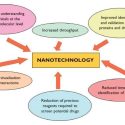
By Dr Amarpreet S Dhiman In terms of drug discovery and development, the role of nanotechnology currently lies in improving diagnostic methods, developing improved drug formulations and drug delivery systems for disease therapy. The breakthrough format of nanotechnology offers innovative solutions, giving researchers greater analytical capacity, improved data quality and… Read More
Share Share Tweet Email Understanding the strategic importance of BIOMARKERS for the discovery and early development phases Understanding the strategic importance of BIOMARKERS for the discovery and early development phases By Dr Orest Hurko Biomarkers have become an increasingly hot topic in the pharmaceutical industry. How much of this is… Read More
By Dr George G. Harrigan The potential of metabolomics, a systems approach to biochemical pathway analysis, to yield scientific and commercial benefits to healthcare and biotechnology enterprises is increasingly recognised. This article discusses current applications and future developments and places an emphasis on incorporation of metabolomics within all aspects of… Read More
The Role of the Medicinal Chemist in the Drug Discovery Process: current status and future prospects By Dr Stevan W Djuric The need for the pharmaceutical industry to produce a constant stream of new NCEs has never been more paramount but with constantly changing R&D paradigms what is the role… Read More
Next Generation HIV Drugs move into late stage development By Dr Graham P. Allaway and Dr Jeffrey M. Jacobson There are currently 24 drugs approved for treating HIV infection. Of these, 23 are small molecule orally available drugs, or drug combinations, targeting the virus' reverse transcriptase and protease enzymes, targets… Read More
Share Share Tweet Email Automated Patch Clamping: Setting a new standard for early hERG Automated Patch Clamping: Setting a new standard for early hERG By Dr John Comley Ion channel targets remain a top priority for many Pharma and Biotechs with most looking to increase their screening efforts in 2006. Read More
New Options for Cell-Based Assay Automation By Dr John Comley The findings of a recent survey on cell-based assay automation revealed that no single factor stands out as the predominant reason productivity is limited in current cell-based automation. However, improving the quality of assay results and enhancing throughput were seen… Read More
Applying the semantic web to drug discovery and development By Dr Eric Neumann There is much happening in drug development these days: new target classes, increasing costs, new forms of high throughput screening, and the promise of personalised medicine. But of all the issues, the one that now takes centre… Read More
High Content Screening - Emerging importance of novel reagents/probes and pathway analysis By Dr John Comley The number of high content screens will increase by 50% over the coming year; signal pathway analysis was seen as the most relevant high content screening (HCS) application; with greatest interest in applying HCS… Read More
Computer-aided design: progress towards more rational drug discovery By Dr Wolfgang H.B. Sauer Drug discovery is a science, a craft and an art, and often it requires a fair amount of serendipity or plain luck to succeed. Success is rare and costly, as evidenced by numerous reports and reviews (1,2). Read More
By Dr Y. Douglas Dolginow The art and science of prediction is a risky and humiliating exercise. As bad as we are at it, predicting things remains one of the fundamental human instincts, undoubtedly linked to a Darwinian selective advantage for our species. So no matter that the umbrella was… Read More
Nanotechnology approaches to solving the problems of poorly water-soluble drugs By Dr Roghieh Saffie-Siebert, Dr Jill Ogden and Dr Mark Parry-Billings Traditionally, almost half of new molecular entities identified by pharmaceutical industry screening programmes have failed to be developed because of poor water-solubility, which makes their formulation difficult or even… Read More