The Great Neuro-Pipeline Brain Drain - Why Big Pharma Hasn't Given Up On CNS Disorders By Julia Skripka-Serry Central Nervous System (CNS) disorders bear an economic burden of more than $2 trillion in the US and EU and rake in upwards of $80 billion a year for the pharmaceutical industry. Read More
A Decade of RNAi Screening: Too much hay and very few needles By Bhavneet Bhinder and Dr Hakim Djaballah RNAi screening is arguably the fastest growing field with the premise to better understand gene function at the genome level. It has been hailed as the second genomics wave, and in… Read More
Academic Ingenuity and Corporate Partnerships: New models in human health ventures bring value to all By Professor Paul Agris Many disapprove of science faculty at American universities procuring corporate ventures that support research, instead of primarily functioning as an instructor, mentor and basic researcher. This perception is most evident surrounding… Read More
There are approximately 7,000 rare diseases, which from a regulatory perspective are defined as those diseases where there are less than 200,000 patients in the US or that affect no more than five in 10,000 of the general population in the EU. Such diseases usually have a genetic basis, often… Read More
Evolution Of Flow Cytometry As A Drug Screening Platform By Dr Rob Jepras and Dr Steve Ludbrook Flow cytometry is an established technology used in many research and clinical laboratories. The largest users are immunologists and haematologists who use it for cell sorting and analysis. Increasing requirements for processing larger… Read More
DNA Sequencing: Latest Developments In Next-Generation Sequencing By Andrew Szopa-Comley Next-generation sequencing has expanded the frontiers of genomic research, opening up new avenues of enquiry and offering insights into diverse areas of biology. Rapid developments in this field are dramatically lowering costs and increasing speeds. With the arrival… Read More
Transforming Data Into Better Healthcare By Dr Jens Hoefkens The healthcare industry is drowning in data for which it lacks established data analysis processes. This situation exists despite the fact that appropriate and efficient data analysis processes are keys to better decision-making and enhanced healthcare therapies, which can potentially result… Read More
Fragment Library Design - The Evolution Of Fragment Based Lead Discovery By Dr Edward Zartler, Dr Chris Swain and Simon Pearce With the growing need to streamline the drug discovery process, screening against fragment libraries rather than drug-like molecules has become increasingly adopted as an integral part of many drug… Read More
Innovate While Derisking Drug Development: Yes We Can! Taher Abbasi, Pradeep Fernandes, Dr Shireen Vali and Professor Gurkirpal Singh The outlook for the drug industry continues to remain bleak in context of productivity and success rates. In spite of ongoing increase in R&D expenses and technology revolutions in the genomics… Read More
Pathway Analysis - Understanding the bridge between environmental cues and cellular response By Dr John Comley Understanding the function of a protein in the context of normal and abnormal cellular processes requires a comprehensive knowledge not only of its regulation but also of its role in signalling and metabolic networks… Read More
Biological Analysis and Interpretation For Improved Research Outcomes By Dr Douglas Bassett In the last few years, technological advancements in the life sciences have changed many ways in which we think about research. Next-generation sequencing, qPCR and microRNA offer new avenues to ask and answer research questions in more detail… Read More
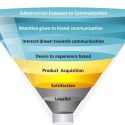
Simultaneous Visualisation of Attrition and Timelines: Funnel Diagrams. By Dr Linda Hirons, Dr Craig Johnstone and Colin Sambrook-Smith In drug discovery both attrition and timelines are important factors to consider when applying process improvement to lead optimisation. In our attempts to improve the visualisation of both of these factors simultaneously,… Read More
Exploring the horizons of small molecule drug discovery the evolution and application of the ideal fragment library By Dr David Myszka and Dr Jane Paul With the pharmaceutical industry facing unprecedented challenges in small molecule drug discovery, this paper argues that, with the correct design of the fragment library, Fragment-Based… Read More
When High Content Screening Meets High Throughput By Dr Vincent Unterreiner and Dr Daniela Gabriel The terms High Content Imaging (HCI) and High Throughput Screening (HTS) were introduced more than a decade ago (1) and are defining the use of automated microscopy and automated image analysis in the context of… Read More
The Potential of Cloud Computing for Drug Discovery & Development By Peter Boogaard Cloud collaboration has allowed projects of previously unimaginable scale and scope to be constructed at an unmet price/performance ratio. Widespread access to Information and Communication Technologies (ICTs) and agile and adaptable systems of workflow now allow people… Read More
Combining chemists expertise and a computer's advanced capabilities to generate good ideas. By Dr Matthew Segall, Edmund Champness, Dr Chris Leeding, Dr Ryan Lilien, Dr Ramgopal Mettu and Dr Brian Stevens Drug One of the defining challenges of drug discovery is the need to make complex decisions regarding the design… Read More