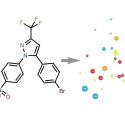
Chemical Space, High Throughput Screening and The World Of Blockbuster Drugs By Dr Hakim Djaballah We are constantly told that if a high throughput screen does not identify hit(s) then blame it on the compounds in your library. The community has accepted this notion and unleashed a… Read More
Innovate While Derisking Drug Development: Yes We Can! Taher Abbasi, Pradeep Fernandes, Dr Shireen Vali and Professor Gurkirpal Singh The outlook for the drug industry continues to remain bleak in context of productivity and success rates. In spite of ongoing increase in R&D expenses and technology revolutions in… Read More
A roadmap for achieving self-sustainability of academic high throughput screening core facilities By Dr Peter R. McDonald, Dr Anuradha Roy and Dr Rathnam Chaguturu Many academic HTS centres, faced with the high costs of drug discovery and decreasing federal funding, are struggling to survive. Just as with… Read More
DNA Diagnostics Gets Digitised – Quantitative real-time PCR By Dr Mikael Kubista and Dr Anders Stahlberg Quantitative real-time PCR (qPCR) has during the last two decades emerged as the preferred technology for nucleic acid analysis in routine as well as in research. qPCR has… Read More
Next Generation Flow Chemistry and Biology Platforms: The Impact on Small Molecule Drug Discovery By Dr J Mark Treherne, Dr David M Parry and Christopher N Selway Can the next generation of flow chemistry and biology platforms be fully integrated to transform the efficiency of small-molecule drug… Read More
In Vivo Cell Reprogramming: Current status and potential clinical applications By Dr Shili Wu, Jonathan Pang, Bobby Baravati, Jun Bao and Dr Yong Zhu In Vivo Cell Reprogramming, or IVR, is a new technology that can be used to develop cures for incurable diseases. Using a combination… Read More
Overcoming Bottlenecks in Drug Discovery By Dr Trevor Perrior Developing a new drug is an expensive and time-consuming process. The best current estimate puts the cost of developing a single new drug at close to $1 billion. After a drug candidate has entered… Read More
Free Online Resources Enabling Crowd-Sourced Drug Discovery By Dr Antony J. Williams, Valery Tkachenko, Dr Chris Lipinski, Professor Alexander Tropsha and Dr Sean Ekins The availability of freely accessible online resources to enable and support drug discovery has blossomed in recent years. The PubChem platform is now accompanied… Read More
Maximising the impact of technologies on drug discovery through portfolio management By Charles S. Dormer, Dr Mark Beggs, Dr Lynn Brennan and Roanna London The opportunities to invest in new technologies in drug discovery are broad and extensive. Knowing where to place your investment and ensuring return… Read More
Overcoming the Limitations of Chemical Structure By Dr Andy Vinter, Dr Steve Gardner and Dr Sally Rose The pharmaceutical business has been profoundly hampered by a ubiquitous and unexpected obstacles; the way it draws its chemical compounds. Scientists, patent agents and business decision makers from R&D, safety,… Read More
The Benefits of Biological Modelling By Gordon Webster The enormous challenge posed by the complexity of biological systems represents a potential intellectual impasse to researchers and threatens to stall future progress in basic biology and healthcare. In recent years, increasing reliance on correlative approaches… Read More
Letting the Target Determine your Compound Acquisition Strategy By Dr John Harris With compound libraries likely to remain the cornerstone of hit and lead discovery for the foreseeable future, this paper seeks to summarise current and future approaches to optimal library design and compound acquisition, using examples… Read More
Natural Product Pharmaceuticals – The third generation By Dr Melanie McCullagh Compounds derived from natural products have made a big impact on the pharmaceutical industry. Of the 1,010 NCEs approved between January 1981 and June 2006, 43 were unaltered natural products (NPs) and a further 232 (23%)… Read More
By Dr Anil Vasudevan Since the original publications on the benefits of conducting organic reactions in a microwave by Gedye (1) and Majetich (2) in the mid-80s, the uptake of this technique was sluggish at best for the next 12-14 years. Read More
High Throughput Screening in Academia – Drug discovery initiatives at the University of Kansas By Dr P McDonald, Dr Roy, Byron Taylor, Ashleigh Price, Dr Sittampalam, Dr Scott Weir, Dr Chaguturu Academia has historically been involved in exploring the fundamental aspects of the disease targets and in… Read More
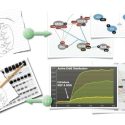
Progress in Systems-Based Analysis of Cellular Signalling By Dr Jeffrey A. Radding Drug discovery currently focuses on targeted approaches, relying on validation of the target as a disease driver. However, the underlying biological complexity of disease often frustrates these attempts at therapeutic intervention, resulting in high failure… Read More