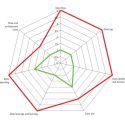
Novel concepts and therapeutic options for the treatment of schizophrenia By Dr Karoly Nikolich and Dr Roman Urfer Schizophrenia affects a large number of individuals irrespective of social status and education. Current treatments of schizophrenia represent the second largest central nervous system (CNS) pharmaceutical market, exceeding $12 billion per year. Read More
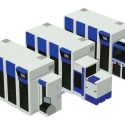
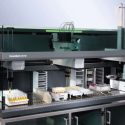
Compound Libraries - Cost of ownership By Dr W. Steven Fillers The value of high quality storage and processing of small molecule libraries has recently received increased interest due to a better understanding of the physical properties of DMSO. Automated equipment can now provide storage and processing fully contained in… Read More
Virtual Screening - Finding needles in a haystack on a shoestring By Dr David E. Clark, Neil V. Harris, Alan G. Roach and Dr Anthony D. Baxter In recent years, virtual screening (VS) has become an accepted approach to hit-finding alongside biochemical high-throughput screening (HTS). Large pharmaceutical companies are typically… Read More
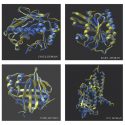
Share Share Tweet Email Tools for Structural Genomics - Accelerating the structure pipeline Tools for Structural Genomics - Accelerating the structure pipeline By Dr Lawrence J. DeLucas, Dr Christie G. Brouillette, Dr Kal Ramnarayan and Dr Shankari Mylvaganam The international structural genomics effort has resulted in a number of technological… Read More
Opportunities for the pharmaceutical industry: key biotransformation technologies of the future By Praveen Kaul, Anirban Banerjee and Professor UC Banerjee Biotransformation is a broad and growing field of biotechnology and encompasses both enzymatic and microbial biocatalysis. Progress has been made in research on the key drivers of biotransformations, including the… Read More
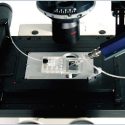
Functional cell-based high throughput drug screening By Professor Daniel T. Chiu and Professor Owe Orwar Cell-based assays are poised to assume an increasingly important role in drug screening and discovery. It is becoming apparent that simple binding assays and in vitro experiments are grossly insufficient for extrapolating the efficacy and… Read More
Making the Most of Drug Discovery Data By Dr Nick Davies and Dr Tim Peakman Discovery scientists in most pharmaceutical companies are struggling with incompatible legacy systems, a growing volume of data and the imminent advent of a product model that will demand much more of them. Data-driven drug discovery… Read More
Gene Expression: Analysis and Drug R&D By Dr Ralph Sinibaldi It is clear that gene expression profiling systems have a role to play in many facets of drug discovery and development, but several questions remain. We take a look at the use of DNA microarray for gene expression or expression… Read More
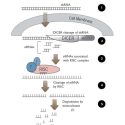
Using RNAi to identify and validate novel drug targets: targeting human kinases with an siRNA library By Andrea Kroenke, Anne Grabner, Dr Michael Hannus, Dr Christoph Sachse, Dr David Dorris and Dr Christophe Echeverri Libraries of siRNAs directed against predefined subsets of genes now offer the capacity to greatly accelerate… Read More
Accommodating cells in HTS By Sandra Fox High Throughput Screening has become an important and integrated part of drug discovery at most pharmaceutical and many biotechnology companies worldwide, and is now entrenched in the drug discovery process. To produce high quality leads, centralised HTS laboratories are expanding their overall role… Read More
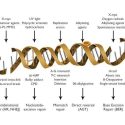
DNA repair inhibition to treat cancer and other serious illnesses By Professor Stephen P. Jackson and Cheryl L. Bishop The stability of an organism's genome is essential for healthy functioning and survival. The information content and integrity of the genome are so important that a range of maintenance and repair… Read More
The cost and value of three-dimensional protein structure By Professor Raymond C. Stevens During the past few years we have seen the cost of protein three-dimensional structure determination begin to converge by protein family type, there has been a commoditisation of high-throughput structure based drug discovery technology components, and the… Read More
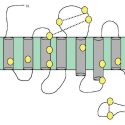
High Throughput Screening using G-protein coupled receptors as the target plate-based and biochromatographic technologies By Professor Irving W.Wainer, Dr Farideh Beigi and Dr Ruin Moaddel The G-protein coupled receptor (GPCR) family constitutes the largest class of cell surface receptors and GPCRs are the targets for more than 50% of the… Read More
Molecular pathology and the art of drug design By Dr Keith McCullagh The current explosion of interest in sophisticated genomic technologies, computerised robotics and high throughput screening of diverse molecular libraries appears to have been associated with a reduction in research productivity in recent years, as judged by the rate… Read More
The Protein Biochip Content Problem By Dr Steven Bodovitz The protein biochip industry has a content problem that is not only slowing its development as a whole but possibly the development of the entire proteomics industry. In science, for a problem to have its own name, it needs to be… Read More
Functional proteomics in drug discovery By Dr Stefan W. Henning and Dr Leodevico L. Ilag The critical bottleneck of the drug discovery process is developing the right drug for the right target. Today proteins represent more than 90% of druggable targets and will most likely remain the single most important… Read More