Assays

Fluorescent Immunohistochemistry
#Assays #Cell Science #Drug discovery #Drug targets #Immunohistochemistry

Find validated IHC and mIF markers for your target before your study starts

This new free download can help researchers avoid assay development delays. Download this reference list from Crown Bioscience, which shows what is already validated and ready to run. You will learn: 500+ Human IHC markers for RUO, IVD or CDx Prevalidated 5 to 7-color mIF panels suitable for IO and… Read More

#News

#Assays #Drug screening #In vivo #Promega

Five questions to answer before you move your assays from 2D to 3D 

This paid-for advertorial by Promega appeared in DDW Volume 27 – Issue 3, Summer 2026.   The shift from 2D monolayers to 3D cell culture models like spheroids, organoids, and complex tissue constructs, is gaining momentum in the drug discovery space. And for good reason: 3D models better recapitulate in vivo biology, improving the… Read More

#Exclusive Content

#AI #Assays #Drug discovery #Lab automation #STEM

How to improve lab education

Dr Tim Meyer, Research Group Leader Pharmaceutical Biotechnology at University Medical Center Göttingen, explains why the next generation of scientists must be trained differently for the lab.   Academic life science research has traditionally been optimised for novelty. Students and early-career researchers are trained to design elegant proof-of-concept experiments, execute them… Read More

#Exclusive Content #Opinion

#Assays #Charles River #SLAS2026

Charles River and Synthace to advance assay development 

Charles River Laboratories has announced a collaboration with software and assay developer Synthace to advance assay development in drug discovery.  As part of the collaboration announced at SLAS2026, Charles River will give its clients access to Synthace’s approach to developing, automating and transferring more robust assays, which it says are faster and… Read More

#Business & Investment #News

#Assays #Drug discovery #Oncology #Revvity #SLAS2026 #SPT Labtech

SLAS2026: Day One Round-Up  

DDW covers some of the biggest announcements from the first day of SLAS2026.     Carterra launches high-throughput SPR instrument   High-throughput technology provider Carterra  launched its Carterra Vega High-Throughput Surface Plasmon Resonance (HT-SPR) instrument – the industry’s first 48-channel SPR platform. The instrument has been designed to deliver 12-fold higher throughput versus the… Read More

#News

Cannabinoid research
#Assays #BMG Labtech #Cannabinoid #Drug discovery

The study of cannabinoid-based drugs: developments and opportunities

This paid-for advertorial by BMG Labtech appeared in DDW Volume 27 – Issue 1, Winter 2025/2026.   Scientists are exploring new strategies to advance drug discovery and development related to cannabinoid research due to significant unmet needs in different therapeutic areas. Microplate-based interaction assays show promise for the study of a wide range of cannabinoid signalling events. Developments in cannabinoid research… Read More

#Exclusive Content

Lab equipment
#Assays #Biotech #Digital workflow #Drug discovery #Protein #Protein chemistry / Proteomics #Webinar

Webinar: Discover a powerful solution for mechanism-of-action studies

In this webinar, Bio-Techne unveils the next evolution of the Leo System, expanding the capabilities of Simple Western Technology for high-throughput protein analysis. The Leo System now supports integrated dual fluorescence channels—Near-Infrared (NIR) and Infrared (IR)—alongside chemiluminescence, enabling simultaneous detection of multiple targets within 96 samples in a single… Read More

#News

High-throughput screening
#Assays #Biotech #Digital workflow #Drug discovery #Protein #Protein chemistry / Proteomics #Webinar

Webinar: The next evolution of high-throughput protein analysis

In this webinar, Bio-Techne unveils the next evolution of the Leo System, expanding the capabilities of Simple Western Technology for high-throughput protein analysis. The Leo System now supports integrated dual fluorescence channels—Near-Infrared (NIR) and Infrared (IR)—alongside chemiluminescence, enabling simultaneous detection of multiple targets within 96 samples in a single… Read More

#News

3d structure of the protein molecule
#Assays #Biotech #Digital workflow #Drug discovery #Protein #Protein chemistry / Proteomics #Webinar

Webinar: A deep dive into high-throughput protein analysis

In this webinar, Bio-Techne unveils the next evolution of the Leo System, expanding the capabilities of Simple Western Technology for high-throughput protein analysis. The Leo System now supports integrated dual fluorescence channels—Near-Infrared (NIR) and Infrared (IR)—alongside chemiluminescence, enabling simultaneous detection of multiple targets within 96 samples in a single… Read More

#News

Lab equipment
#Assays #Biotech #Digital workflow #Drug discovery #Protein #Protein chemistry / Proteomics #Webinar

Webinar: Achieve high-throughput, multiplexed protein analysis

In this webinar, Bio-Techne unveils the next evolution of the Leo System, expanding the capabilities of Simple Western Technology for high-throughput protein analysis. The Leo System now supports integrated dual fluorescence channels—Near-Infrared (NIR) and Infrared (IR)—alongside chemiluminescence, enabling simultaneous detection of multiple targets within 96 samples in a single… Read More

#News

amino acids chain
#Assays #Biotech #Digital workflow #Protein #Webinar

Webinar: How to advance protein analysis

In this webinar, Bio-Techne unveils the next evolution of the Leo System, expanding the capabilities of Simple Western Technology for high-throughput protein analysis. The Leo System now supports integrated dual fluorescence channels—Near-Infrared (NIR) and Infrared (IR)—alongside chemiluminescence, enabling simultaneous detection of multiple targets within 96 samples in a single… Read More

#News

Stem cells
#Assays #Drug development #Drug discovery #iPSC-derived cells #Neuroscience

Technical Guide: Introducing the Brain-Chip R1

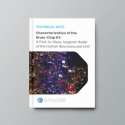
A new Technical Guide is now available from Emulate entitled ‘Characterization of the Brain-Chip R1: A First-in-Class, Isogenic Model of the Human Neurovascular Unit‘. Key highlights: Incorporates five iPSC-derived cell types, including proprietary BMECs that exhibit a physiologically relevant brain microvascular endothelial-like phenotype Maintains resting-state glia and a tight,… Read More

#News

#Assays #Drug development #Drug discovery #iPSC-derived cells #Neuroscience

Introducing the Brain-Chip R1: A new era for human-relevant BBB & NVU research

Key highlights: Incorporates five iPSC-derived cell types, including proprietary BMECs that exhibit a physiologically relevant brain microvascular endothelial-like phenotype Maintains resting-state glia and a tight, stable barrier throughout a four-day experimental window Features a streamlined, 12-day direct-to-chip workflow with no pre-plating or expansion steps, enabling robust and reproducible performance… Read More

#Resources #Technical Notes

#Assays #bit bio #Disease modelling #Drug discovery #iPSC #iPSC-derived cells

Listicle: Get the best out of human iPSC derived cells in your assays

Watch this DDW listicle, 5 ways to get the best out of human iPSC-derived cells in your assays from bit.bio, for free now. Transitioning to human iPSC-derived cells can open powerful opportunities for drug discovery, neuroscience, and disease modelling, but success depends on how you handle and culture them. Read More

#News