
Spider venom heart drug moves to human clinical trials
A project to develop a drug to treat heart attack and protect donor hearts will move to human clinical trials, after receiving $17.8 million in funding from the Medical Research Future Fund (MRFF).
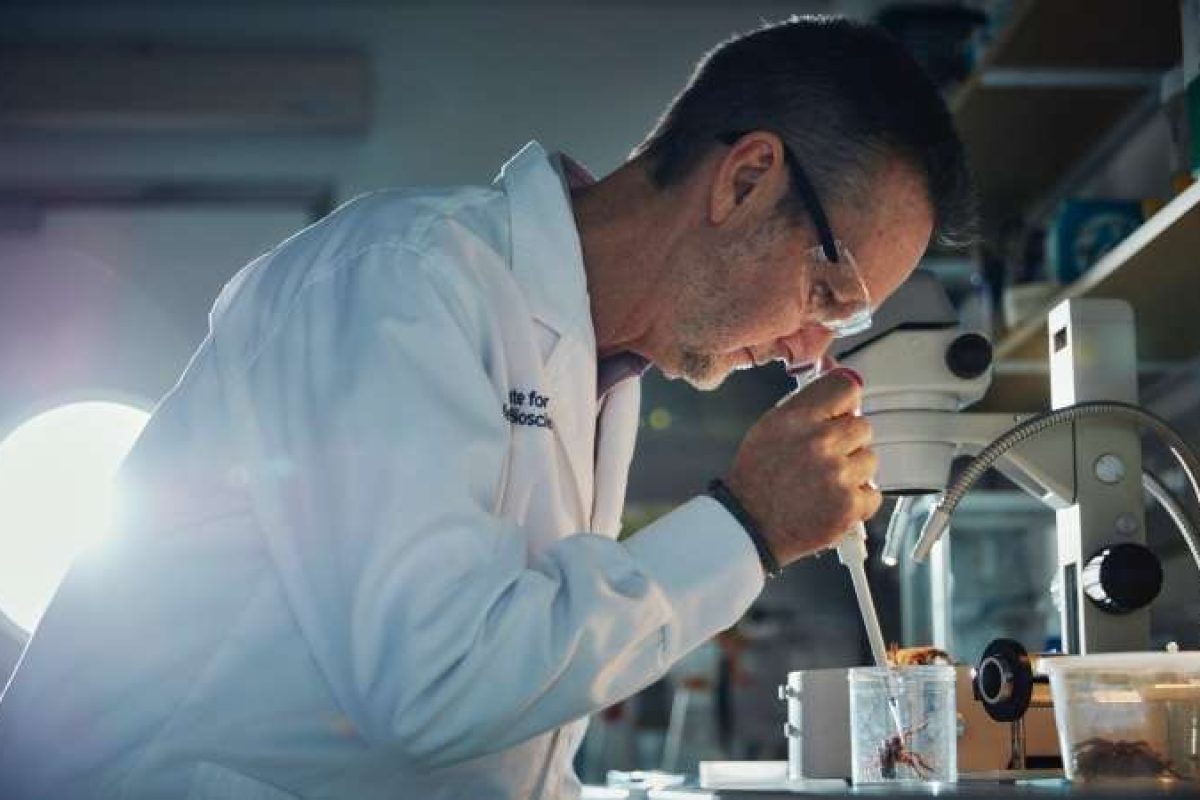
Professor Glenn King from the University of Queensland’s (UQ) Institute for Molecular Bioscience (IMB) said the four-year trial will assess Hi1a as a treatment to prevent heart damage. Hi1a is a peptide in the venom of the K’gari funnel web spider.
“Our team showed that in animal models, Hi1a protects the heart from damage sustained due to lack of oxygen during a heart attack or during donor heart retrieval,” Professor King said. “This MRFF funding will enable us to undertake human clinical trials to test a miniaturised version of Hi1a as a drug to treat heart attack and protect donor hearts during the retrieval process.
“If successful it will improve patient survival and quality of life, dramatically expand the pool of donor hearts available for transplantation and significantly reduce healthcare costs.”
The team includes researchers from UQ, the Victor Chang Cardiac Research Institute and the Baker Heart & Diabetes Institute as well as clinicians at St Vincent’s Hospital in Sydney, the Alfred Hospital in Melbourne and The Prince Charles Hospital in Brisbane.
IMB’s Associate Professor Nathan Palpant led the studies showing the efficacy of Hi1a in cardiac disease models.
“Coronary heart disease is the leading cause of death in Australia,” Dr Palpant said. “Almost 60,000 Australians are hospitalised with a heart attack every year and 7000 will not survive. Despite the huge socioeconomic burden of heart attack and heart failure, there is not a single drug to limit the loss of heart cells during an attack or to protect donor hearts – our team hopes to change this.”
Image shows: Professor Glenn King working in the lab with a funnel web spider. Credit The University of Queensland.
Diana Spencer, Senior Digital Content Editor, DDW