
Physics Nobel prize awarded for machine learning inventions
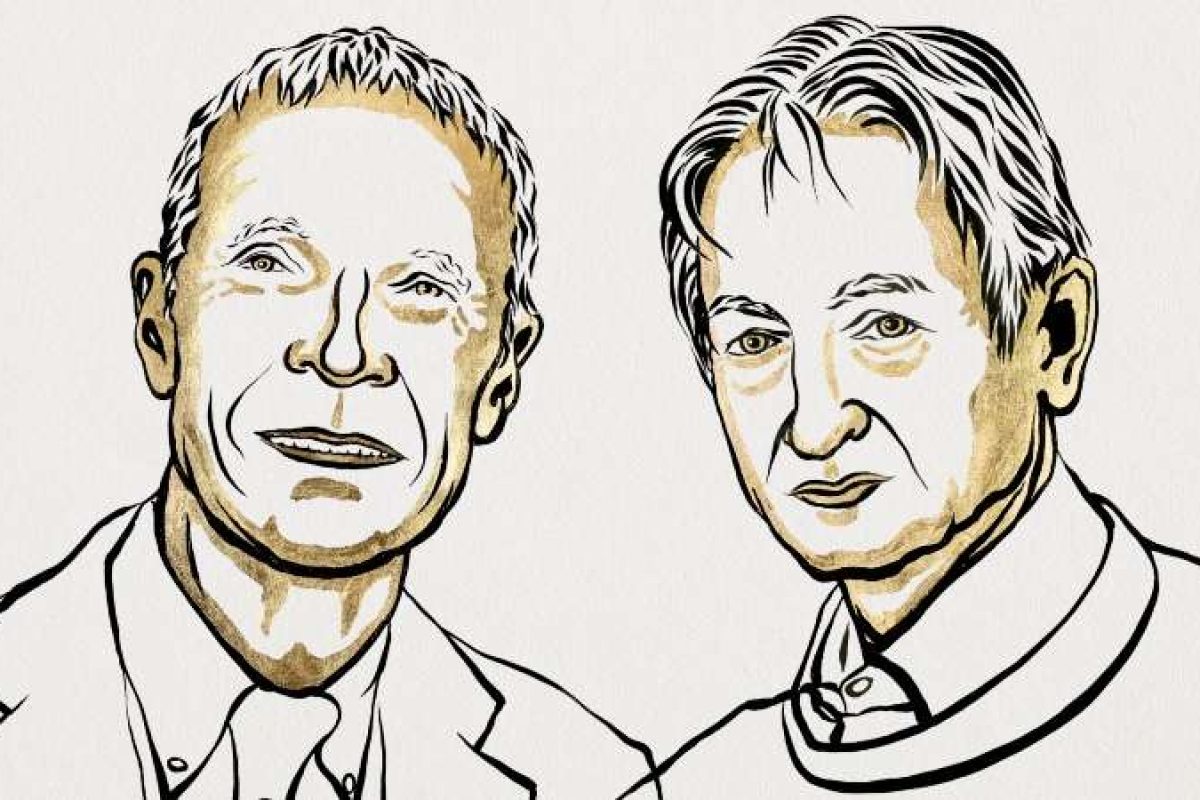
The Princeton Neuroscience Institute’s John Hopfield has been awarded the Nobel Prize in physics for foundational discoveries and inventions that enable machine learning with artificial neural networks. He shares the prize with Geoffrey Hinton of the University of Toronto, who has been referred to as the “Godfather of AI”.
Hopfield is the Howard A Prior Professor in the Life Sciences, Emeritus, and Professor of Neuroscience, Physics, and Molecular Biology, Emeritus, at Princeton University. Hopfield was also the recipient of the Swartz Prize for Theoretical and Computational Neuroscience at the Society for Neuroscience’s annual meeting in 2012.
“This year’s two Nobel Laureates in Physics have used tools from physics to develop methods that are the foundation of today’s powerful machine learning,” the Royal Swedish Academy of Sciences noted when awarding the prize. “John Hopfield created an associative memory that can store and reconstruct images and other types of patterns in data. Geoffrey Hinton invented a method that can autonomously find properties in data, and so perform tasks such as identifying specific elements in pictures.”
The prize amount is 11 million Swedish kroner ($1 million), which the laureates share.
Hopfield said he was grateful for the opportunity to speak as a Nobel laureate about the vital throughline between basic scientific research and technological innovation that changes people’s lives. “The science which advances technology is the science that gets done for curiosity’s sake much earlier,” he said. This theoretical research, he said, is “the generator of technologies which are so interesting, useful and one relies on to keep making things work better”.
“John Hopfield’s brilliant scientific career has transcended ordinary disciplinary boundaries, enabling him to make lasting contributions to physics, chemistry, neuroscience, and molecular biology,” said Princeton President Christopher Eisgruber. “His pathbreaking research on neural networks, for which he is honored today, exemplifies beautifully the power of curiosity-driven research to advance the frontiers of knowledge and create new tools for addressing some of the world’s most profound challenges.”
A “foundational figure” who “fundamentally changed the world”
“John Hopfield was a foundational figure in the creation of the neuroscience at Princeton,” said Mala Murthy, Director of the Princeton Neuroscience Institute. “Hopfield networks are inspired by the brain and enable machines to store memories and recall them with only partial information. This work paved the way for the deep learning revolution that has now touched nearly every aspect of society. We are so pleased for John and this deserving honour.”
Bonnie Bassler, Chair of Princeton’s Department of Molecular Biology, said: “John’s discoveries show how research at the interface of disciplinary boundaries can transform our understanding of nature and deliver practical applications that benefit society. John combined physics, biology and neuroscience approaches to probe the brain, developing neural networks to explain how the brain recalls memories. Those discoveries led to the creation of artificial neural networks that are now routinely used by machines like smartphones and self-driving cars. The Nobel recognition is truly deserved as John’s contributions have fundamentally changed the world.”
Hopfield joins a number of other Princeton faculty and alumni who have been awarded Nobel Prizes.
Megan Thomas, Multimedia Editor, DDW