
Improving the standard of biological drugs
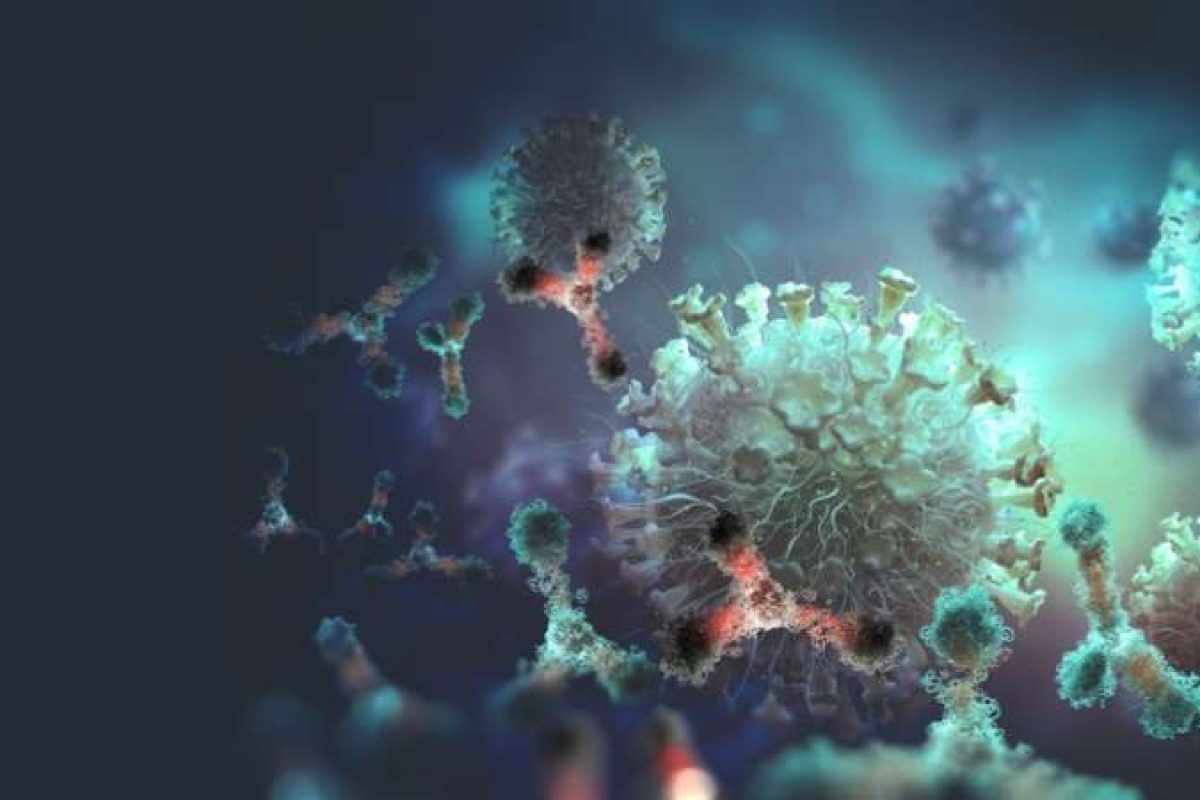
DDW Editor Reece Armstrong speaks to Dr Steven Powell, co-founder of Glen Clova Scientific (GCS), about the company’s approach of using virus-like particles (VLPs) to treat conditions such as eczema and asthma, and what the current market looks like for this therapy area.
Spun-out of the Univeristy of Dundee in 2022, Glen Clova Scientific is developing a new class of active biologic drugs for chronic inflammatory and autoimmune disorders. Current biological drugs, or antibodies, are a huge market treating many indications but have multiple associated challenges such as frequent dosing every two to four weeks for a lot of monoclonal antibodies (mAbs), complex manufacturing, high cost of drug per patient, and high cost of goods.
The company has a preclinical pipeline with candidate targets selected based on validated safety and efficacy of conventional biological drugs. It’s aiming to use its VLP platform technology to deliver therapies that overcome the traditional challenges associated with antibodies. By using VLPs to treat cytokine-related diseases, the company hopes that these therapies will require less frequent dosing, use micrograms of drug-per-patient compared to grams, and not require the development of anti-drug antibodies which limit efficacy of antibody drugs over time.
Glen Clova Scientific recently closed a £4 million seed financing round which it will use to advance its preclinical pipeline across senile pruritus (GCS001), atopic dermatitis (GCS002), and eczema and asthma (GCS003).
RA: You’ve seen positive data in mouse models for your GCS001 treatment targeting senile pruritus. How confident are you about reproducing these results in further trials?
SP: Other clinical trials involving VLP-drug technology have translated well between rodents and mammals; in addition, other VLP-drugs for the same target have performed well in other species (dogs, horses). GCS data lead us to consider our own VLP-drug technology as at least as potent, if not more potent, than those other drug types. This gives us confidence that our data will translate into humans. Ultimately, however, clinical trials are needed to confirm efficacy.
RA: What does the current treatment landscape look like for these conditions? Is there a large unmet need?
SP: There is a significant unmet need for senile pruritus, affecting millions of patients not deriving benefit from currently available interventions. Likewise, the treatment options for both asthma and eczema, while offering biologic drugs helpful in many patients, is limited both by high cost and frequent need for dosing, as well as – in particular for asthma – only partial efficacy, as well as lack of access to drug for millions of patients.
RA: Do VLPs have potential in other disease sectors outside of Glen Clova’s current focus?
SP: There are many potential disease sectors, including autoimmune conditions, cancer, infectious disease and neurodegenerative diseases for example. However, GCS is focussed on our current programs. The technology can also be applied to non-human applications.
RA: What are Glen Clova’s plans for the remainder of this year?
SP: To optimise, and fine-tune process development to satisfy requirements for clinical applications for GCS001 and to perform preclinical evaluation for GCS002.
RA: In terms of the production for VLPs-based therapies, what cost-advantages do these have over antibodies?
SP: Antibodies are produced in mammalian cells. VLP drugs can be made in several platforms. GCS currently is focussed on bacterial production which is significantly less expensive than production in human cell lines. As with antibodies, VLP drugs are biologic drugs requiring riguous purification schemes. However, the annual requirement of drug substance per patient is hugely reduced (about 100,000 times less per patient in terms of weight). This means that, even given the economies of scale operative in monoclonal antibody production, they cannot compete with the economics of VLP drug production.
RA: Could you discuss the technological approach you’ve developed to make this process easier?
SP: We have devised a technology which allows us to combine the target protein, against which antibody response is desired, with the VLP scaffold in a drastically simplified way compared to currently available solutions which streamlines production and makes it more economical.
RA: What are the challenges of developing therapies based on VLPs?
SP: The concept of therapeutic vaccination is hugely disruptive, representing the leap from passive immunotherapy, in the form of antibody injection, to active immunotherapy. There are successful Phase II clinical trials, demonstrating overall principle safety and efficacy of this approach. However, ultimately, long-term performance and efficacy of any new class of drugs can only be demonstrated by licencing and post-market performance in many patients over extended periods of time. Until this has been achieved, there will remain an appropriate cautionary observation about this new type of treatment.
From DDW Volume 25 – Issue 3, Summer 2024 Read the digital issue
Biography:
 Dr Steven Powell is an experienced life sciences CEO with over 35 years of experience in pharmaceutical, diagnostic and device development. His expertise runs to all phases of clinical testing in a number of areas including inflammation, oncology and infectious disease. He was previously partner with the venture capital fund Gilde Healthcare and adviser to the Cancer Pioneer Fund (UK).