
How iiCON is accelerating global infectious disease R&D
iiCON at the heart of infectious disease research
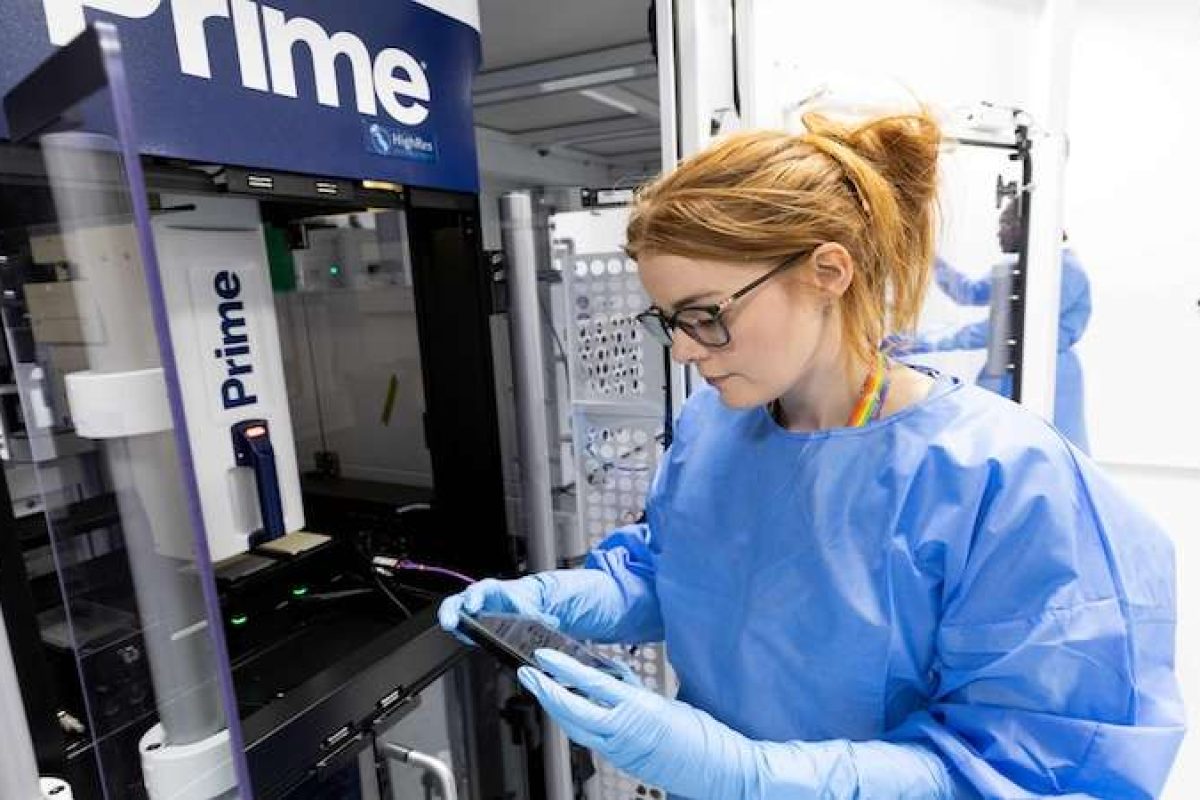
This year, a new AI robotic laboratory designed to accelerate the discovery of drugs and vaccines for infectious diseases was announced in Liverpool UK.
The £20 million ($26.4 million) Liverpool Accelerate Laboratory was developed through the Infection Innovation Consortium: iiCON – an initiative dedicated to advancing pioneering infection R&D through collaboration between industry, researchers and the NHS.
Opening in 2027, the lab will be available to industry and academics, providing them with access to technologies such as AI, automation, and the use of human organoids that provide a better representation of human biology for drug discovery and development for infectious diseases.
DDW Editor Reece Armstrong was able to visit the lab to see what the facilities will offer teams, and speak to Professor Janet Hemmingway, Founding Director of iiCON, about the launch and what it means for the organisation and life sciences within the UK.
For Professor Hemmingway, this development represents, in part, the next step in iiCON’s commercialisation of organoid activity. The group has been developing organoids for around 10-years, Professor Hemmingway says, and with the industry pivoting away from animal models, it makes sense for the group to expand upon the expertise it has built up over the years.
“For the first five years within iiCON, we were developing organoids, testing them, getting some really good data out of it – which is really useful in that preclinical space, but really time-consuming and small scale,” Professor Hemmingway says.
The next step was for iiCON to “build something that speeded up that process in terms of the volume of organoids that we could deal with”.
Organoids are just one part of how the industry is pivoting away from animal models and into systems that better represent human biology. The UK Government has set up a £75 million ($99.1 million) national roadmap to move away from animal models, aligning its goals with regulatory bodies and industry momentum.
“If you look at the whole trajectory for industry and for UK government as well, everybody’s trying to move away from animal models. They’re costly, they’re not great and they’re not actually good in terms of being a great predictor of, of what you’re going to get in humans,” Professor Hemmingway explains.
A global hub for infectious disease research
The lab is expected to generate £40 million ($52.9 million) of investment in its first three years and will create jobs for the region. What it also does is help place Liverpool and the North West as another UK hub for research and development.
Professor Hemmingway cautions though that this latest development not only positions iiCON as a UK strength but as a global one.
“We are set up really as a globally excellent facility. If you look at the profile we got from iiCON, we’re already attracting companies from all over the world. And they come to us because we can do things that they can’t get done elsewhere.”
The next step for iiCON then is showcasing how it can use everything it’s developed so far into doing infectious disease research.
“We want to turn that R&D into something that is of real value to industry. I think we’re putting a big marker down to say we are in that really specialised contract research operation environment.”
This specialisation is something that comes through in multitudes when visiting the site. The breadth of multidisciplinary expertise across both research and engineering makes both iiCON and the Liverpool Accelerate Laboratory the hub for innovation that Professor Hemmingway hopes it can be.
“I hope you can see from the kind of thing that we’re putting together here, what we’re not building is an academic ivory tower,” she says.
The use of automation has been a key feature for the lab and is a vital component into how iiCON is approaching scaling up – something they could never do by simply employing more technicians.
Having a high-throughput automated system will also allow the organisation to layer AI into its processes, Professor Hemmingway explains. And through the use of organoids, this should enable research to be more reproducible than if animal models were being used.
That reproducibility is essential to advancing research from hit-to-lead and into the clinic but it could possibly help qualify the data that goes into regulatory path packages, speeding up the timeline for drug submissions.
COST network
Another effort from iiCON into infectious disease research has been the establishment of the European COST Action network. This pan-European network, was made possible through funding from COST (European Cooperation in Science and Technology). The network includes over 70 collaborators from 21 countries and is designed to strengthen and harmonise the European response to infectious disease threats.
Judging by the response iiCON has received for its network, infectious diseases is an area of unmet need that has resonated with collaborators in Europe.
The importance of combatting infectious diseases has been made more prevalent this year with outbreaks of Ebola in Africa and reductions of foreign aid by the likes of the US and UK in supporting lower-income countries.
Professor Hemmingway states that with global pressures forcing countries to try and save money “an easy and soft target is sometimes into that aid area”.
What this means, she says is that “the poorest populations with the greatest need in, in the world get hit the hardest from that. And so we’re seeing it already in impacting on some of the work that we’ve been doing.”
She references projects which saw funding stop overnight, leaving millions of nets which can stop the spread of malaria and other infectious diseases languishing in warehouses.
For Professor Hemmingway and organisations such as iiCON, they have to work in this new reality.
“I think it’s never been more important to be able to do that and make sure we carry on pushing, because what starts in Africa tomorrow is going to be our problem at some point.”
The group has already made efforts in human challenge trials. This year, the iiCON hit a landmark goal of recruiting 100 people in a clinical trial in Malawi for pneumococcal disease vaccine. The trial will see 416 people recruited in 2016 and is the biggest human challenge trial that has taken place in Malawi. The vaccine, PnuBioVax, is being developed by the UK SME ImmBio and delivered by iiCON.
Malawi faces a particular threat from the antimicrobial resistant strain of the disease known as Serotype 3 pneumococcus (SPN3). The PnuBioVax vaccine targets proteins which are common across all pneumococcus serotypes, including SPN3, so there is strong hope that it could lead to a more holistic control response across many different strains of the disease.
Next steps
And iiCON is pushing forward. The group has just launched its second phase of activity to advance innovation in infectious diseases, securing a £6 million ($7.9 million) grant for UK Research and Innovation’s (UKRI) Local Innovation Partnerships Fund (LIPF).
This second phase will enable iiCON to develop a permanent, globally-facing Liverpool City Region R&D hub, focusing on six R&D platforms to support infectious disease research. These will include early-stage drug discovery, human challenge clinical trials, nanotherapeutics and more. The Liverpool Accelerate Laboratory will play a key role in this endeavour, providing advanced organoid modelling for infectious disease research.
It’s hoped that the new platforms will help de-risk and accelerate drug and vaccine discovery pathways. The organisation will provide end-to-end support for companies of all sizes that are looking to progress new infectious disease products and therapeutics.
“We hope in terms of jobs that it will create here, the number of products that we’ll help companies get through, and the support we can give for companies to get their products out to market and grow, that in five years’ time it will be another great success story,” Professor Hemmingway says about the launch of this next phase.