
Expert reflections from AACR 2025

DDW’s Megan Thomas hears from industry experts Daniel Veres, Turbine’s Chief Scientific Officer & Co-Founder, as well as Ryan Jacobs, Business Development Manager at Astoriom, about AACR 2025.
MT: What do you consider to be the key trends in cancer research?
Daniel Veres: Key trends in cancer research include a shift toward precision medicine, supported by a multimodal toolkit of current and emerging therapies such as ADCs. AI and in silico models are increasingly being used to predict which patients will benefit from specific therapies.
There’s also a growing emphasis on integrating scalable, flexible computational models to guide drug discovery and development. Early positioning strategies for drug programmes, rather than opportunistic approaches, are becoming more important for clinical success. Altogether, these trends are making cancer research more data-driven and patient-centric.
Ryan Jacobs: AACR 2025 showcased transformative trends that are shaping the future of cancer research. Foremost among these is the integration of basic, translational, and clinical science to accelerate innovation across the continuum of care. This convergence is driving progress in immunotherapy, targeted therapies, and early detection.
Precision medicine and immunotherapy continue to evolve rapidly. Researchers are expanding the reach of immune-based therapies into new cancer types, while combining them with novel agents such as antibody-drug conjugates (ADCs) and bispecific antibodies. Targeted therapies are being refined to address rare mutations and resistance mechanisms. These therapeutic advancements demand access to high-quality clinical samples, longitudinal tracking, and robust biobanking infrastructure.
Multi-omic technologies and artificial intelligence are also becoming central to cancer discovery and detection. Techniques like spatial profiling, organoid modelling, and next-generation liquid biopsy are generating vast data from tissue and blood samples. AI is being deployed to interpret this complexity and inform clinical decision-making. Such progress is heavily dependent on the integrity and accessibility of research samples. Regulatory-compliant, environmentally controlled storage, such as that offered by Astoriom, can help to ensure the quality of biospecimens used in these advanced technologies.
Another major trend is the increasing emphasis on global equity, prevention, and early detection. International collaborations and simplified interventions—such as single-dose HPV vaccines—are improving outcomes in resource-limited settings. There is also growing attention to underrepresented populations in genomic research. Secure and scalable infrastructure supports inclusive biobanking and data protection initiatives, enabling diverse and globally coordinated research efforts.
MT: What are the biggest challenges when it comes to cancer research?
DV: Despite the rapid development of new technologies and approaches, it remains incredibly difficult to determine which treatments will ultimately succeed for patients. Traditional wet-lab experiments are resource-intensive, limited in scalability and not often predictive.
In silico methods show great promise, but depend heavily on the quality, diversity, and number of available datasets and they can be difficult to interpret.
Overcoming these challenges is critical to making early discovery-stage predictions more reliable, actionable, and impactful for patients.
RJ: AACR 2025 also underscored persistent challenges that must be addressed to sustain research momentum. Tumour heterogeneity and therapy resistance remain significant obstacles. Despite major strides in drug development, cancer’s adaptability continues to hinder durable treatment responses. Addressing this requires high-quality, longitudinal sample collection and multi-point biomarker tracking, demanding robust sample management systems.
Translating scientific breakthroughs into clinical success remains a non-linear and resource-intensive process. Adaptive trials, combination therapies, and smarter data integration are essential but complex. These models require consistent access to validated samples and coordinated logistics across sites. Here, customised storage solutions, disaster recovery plans, and real-time access to stored assets are key.
A critical systemic challenge is the instability of research funding. Many labs face delays in onboarding new personnel or launching studies due to grant freezes and political headwinds. This threatens the continuity of research and the preservation of valuable materials. Services that offer secure, long-term storage for irreplaceable samples and scalable support for grant-dependent projects can help to mitigate these risk factors.
Equity in research participation is another ongoing concern. Indigenous populations and underserved communities remain underrepresented in genomic databases and clinical trials. Trust-building and culturally responsive biobanking models are emerging as vital components of inclusive research. Privacy-first storage solutions and the flexibility to manage community-owned sample collections with sensitivity and transparency are essential to support this evolution.
MT: Why is AACR important to you and your work?
DV: AACR is an important meeting for the global oncology community to exchange ideas, and showcase the latest breakthroughs. For Turbine, it’s an opportunity to demonstrate how our cell simulation platform can transform oncology research by making drug development more efficient, scalable, and patient-focused.
It’s especially rewarding to share proof points from our pharma partnerships, highlight advances in our virtual models, and generally, to connect with others who share our mission to improve the efficiency and rate of success for oncology drug development.
RJ: AACR is a vital touchpoint for Astoriom, providing a panoramic view of the cancer research ecosystem.
The meeting unites leading scientists, clinicians, policymakers, and advocates, facilitating a holistic understanding of where the field is heading. It informs our service development and helps us anticipate emerging logistical and infrastructure needs.
Through AACR’s rich programming, we gain insight into challenges researchers face with sample tracking, data integration, and clinical trial logistics. This feedback loop allows us to refine our offerings and remain aligned with the real-world demands of translational science. Sessions on decentralised trials, remote biospecimen collection, and next-gen biobanking validate our emphasis on agile, scalable, and technology-enabled storage solutions. Also, precision medicine and advancing research platforms, such as single-cell multi-omics, spatial multi-omics and cryo-EM-based drug discovery, require high-quality ultracold and cryogenic sample storage. These storage temperatures are our area of expertise, and we are proud to continue growing our offering, in both the US and EU, with insights from the AACR community.
AACR also reaffirms the importance of our mission to safeguard every sample. The passionate advocacy for sustained research funding and the moving testimonies from patient-survivors underscore why it is essential to support the people and processes that power cancer discovery.
MT: What have been the key takeaways from AACR 2025? Were any presentations or events particularly valuable for your work?
DV: AACR 2025 highlighted major breakthroughs in precision therapies for previously undruggable targets, such as RAS-driven cancers, along with a surge in innovative ADCs featuring novel and dual payloads. These developments point to more personalised and effective cancer treatments.
However, designing optimal therapies requires sophisticated tools – like Turbine’s virtual lab – which simulates experiments to identify the best payload and target combinations, ultimately accelerating the development of therapies with maximal patient benefit.
RJ: AACR 2025 delivered several high-level takeaways directly relevant to Astoriom’s mission:
- Sample quality underpins discovery: From CRISPR-edited CAR T-cell development to predictive organoid models, the value of reliable, high-integrity samples was a constant theme. Validated storage environments and quality control protocols are foundational to these efforts.
- Remote and decentralised trials are expanding: Innovations in telehealth and mobile biospecimen collection were positioned as necessary adaptations for broader participation. Remote-access sample logistics, supporting trials across geographies can help to enable this shift.
- Multi-omic and AI-driven science is data-hungry: Studies combining genomic, proteomic, and spatial data call for comprehensive and interoperable storage frameworks. Our ability to integrate with digital systems and maintain metadata-rich sample inventories supports this complexity.
- Research continuity requires infrastructure resilience: With academic labs facing funding volatility, the need for dependable, third-party support is more pressing than ever. By providing stable, regulatory-aligned storage services we can help to preserve continuity and protect long-term research investments.
- Equity and inclusion must be operationalised: Initiatives like indigenous-led biobanks and global health programmes highlight the need for adaptable, culturally sensitive storage and data solutions.
AACR 2025 demonstrated that cancer research is advancing with unprecedented speed and complexity—but also amid real-world challenges that threaten progress.
Biography
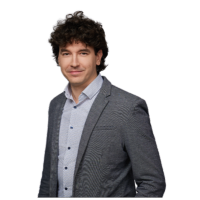 Daniel Veres is Turbine’s co-founder and CSO. As a medical doctor specialising in cancer research at top research institutes, he helps design innovative treatments against cancer at Turbine by converting computational results into clinical interpretations. He works to understand scientific and medical challenges then guides his team of biologists in generating novel findings to move better treatments to patients.
 Ryan Jacobs is a business development manager with Astoriom. He has a dual Bachelors of Science (BS) degrees in Cellular Biology and Biochemistry from The Pennsylvania State University and also has a background in cellular biology, biochemistry, and medicinal chemistry. Jacobs has spent 14 years as a research scientist with a range of experience in academia, biotech, and pharma. Jacobs has a passion for drug discovery and advancing cutting-edge therapies, especially in oncology, and has worked significantly with automation and large robotics systems in research laboratory settings.