
CAR T-cell therapy selectively targets cancer mutations
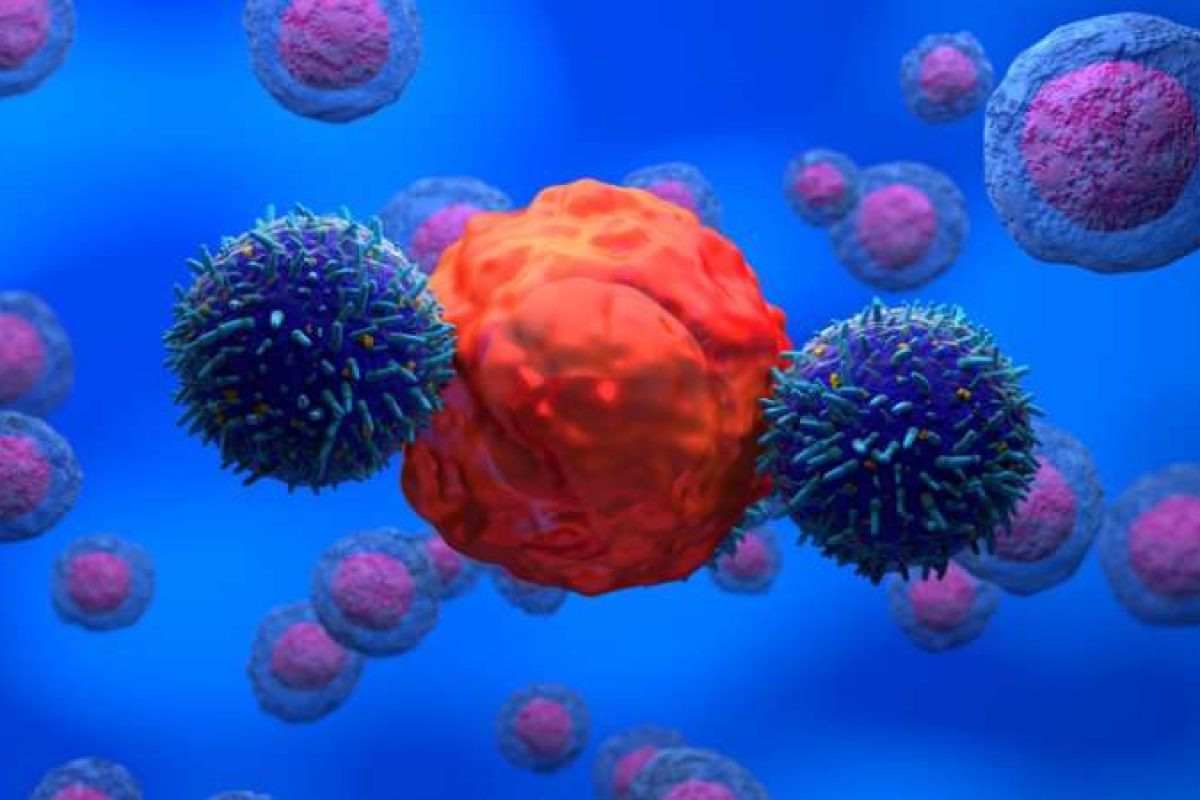
A new CAR T-cell therapy can target key mutations causing rare blood cancers and leave healthy blood cells unharmed, scientists say.
A research effort led by University College London (UCL) and the University of Oxford engineered a CAR T-cell therapy which can reprogramme a patient’s own immune cells to target specific cells in the body.
A study, published in Science Translational Medicine, shows the engineered cells were designed to recognise a mutation found in around a third of myeloproliferative neoplasms (MPN) patients called CALR.
Using patient samples through a model that recreates human bone marrow in the lab and studies in mice, the CAR T cells showed they could precisely kill cancer cells carrying the CALR mutation, without harming other blood cells.
A Phase I clinical trial is being planned at UCLH, with the aim to begin within the next one to two years, subject to funding and regulatory approval.
“MPNs can be devastating, especially once they progress to myelofibrosis, and current drugs often don’t remove the cancer stem cells that are driving the disease,” said first author Dr Alex Rampotas, UCL Cancer Institute.
“What’s exciting about this approach is its precision: the CALR mutation creates an abnormal protein on the surface of these cells, giving us a clear target. CAR T cell therapy technology can exploit this vulnerability, turbo-boosting the immune system to eradicate those cells and allowing normal blood production to recover.
“Our ambition is to turn this into a first-in-human trial and, ultimately, a treatment that can selectively eliminate the root of the disease. If successful, it could offer patients a route beyond symptom control towards deeper, longer-lasting remissions, with the hope of restoring healthy blood production.”
Research could ‘speed up’ development of immunotherapies
MPNs are classed as rare, but around 4,000 people are diagnosed with an MPN in the UK each year. Current treatments include JAK inhibitor drugs, which can calm overactive immune responses and slow disease down, but they do not remove the cancer stem cells that keep the disease going. Most patients also stop responding to these drugs.
A bone marrow transplant can be curative but is only suitable for a small minority of patients and can carry up to 40% treatment-related mortality.
The CALR mutation can be found on the surface of the cancer stem cells, acting like a visible flag that the immune system can potentially recognise. The team engineered CAR T cells to detect this flag, which can kill CALR cancer cells with high potency and selectivity.
For patients whose disease had progressed to an accelerated phase, the CAR T cells initially worked less well because the target protein levels were lower. The researchers found that eltrombopag (a drug used clinically for some platelet and blood conditions) could increase the amount of the target on cancer cells, improving CAR T cell killing.
The team also tested their research using lab-grown 3D mini bone marrows. With the bone marrow model seeded with real myelofibrosis cells, the team were able to show that the CAR T cells were even able to move into heavily scarred tissue (fibrosis) and kill the cancer cells.
In a mouse model, the CALR-targeting CAR T cells also controlled leukaemia growth and significantly prolonged survival.
“Our model is designed to recreate the real conditions these cancers grow in, including the fibrosis and complex tissue structure that can make treatments fail in the lab-to-clinic gap,” said Professor Beth Psaila, from the MRC Weatherall Institute of Molecular Medicine and Ludwig Institute for Cancer Research, University of Oxford.
“Seeing the CAR T cells find and kill the cancer cells in fibrotic marrow organoids was a highly encouraging step.
“Just as importantly, the model lets us test not only whether a therapy works, but how it works, cell by cell, in human tissue. We hope this platform will speed up the development of safer, more effective immunotherapies for myelofibrosis and other blood cancers.”