
Radiotherapy drug delivers promising early tumour treatment
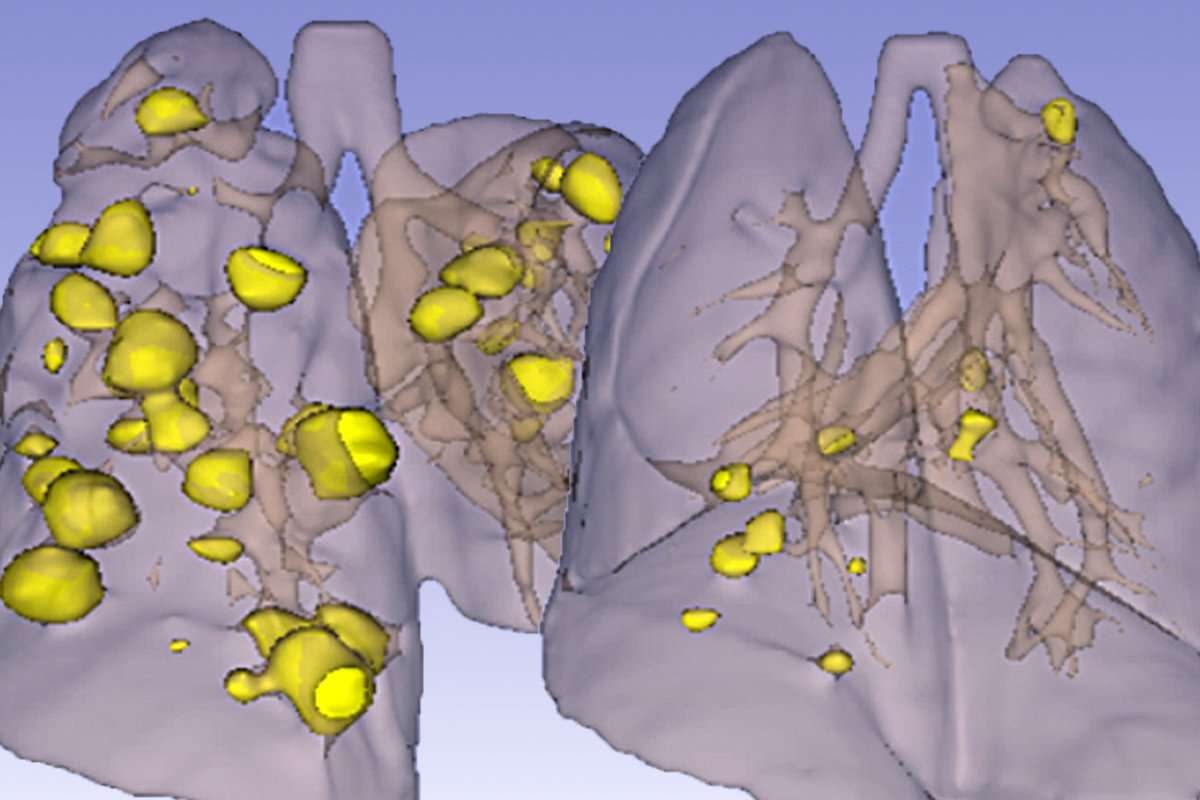
New data on Molecular Partners’ radiotherapy candidate MP0712 shows targeted delivery into cancer tumours.
MP0712 is being developed for the treatment of patients with small cell lung cancer (SCLC) and other neuroendocrine cancers. The candidate, which targets DLL3, showed potential to deliver radiotherapy treatment to tumours with limited exposure in healthy organs such as the kidney and liver.
“This is an important milestone for MP0712, which is indicative of its potential performance in a clinical setting when carrying 212Pb as therapeutic radioactive payload and providing a strong basis for advancing its clinical development,” said Patrick Amstutz, CEO of Molecular Partners.
“We are continuing preparations for the upcoming Phase I trial with MP0712 and look forward to advancing additional Radio-DARPin programmes in 2026.”
203Pb and 212Pb are an element-equivalent pair of lead (Pb) isotopes, with 203Pb used for imaging and 212Pb for therapeutic applications (targeted alpha therapy, TAT). As a ‘matched pair’, pre-treatment imaging with 203Pb provides a prediction of treatment behaviour with 212Pb.
The patient, used for case study in the Phase I/IIa clinical trial, was initially diagnosed with stage 3 small cell lung cancer and had a treatment history of radiotherapy and chemotherapy. The patient was then re-classified as stage 4 post-imaging with MP0712 due to observed liver metastases.
In addition to first-in-human images, the results highlight that MP0712 is rapidly internalised and accumulates intracellularly in DLL3-expressing cells in vitro. The data suggests that MP0712 can achieve high tumour uptake despite very low DLL3 expression levels, leveraging internalisation and replenishment pathways of DLL3, as well as optimal binding properties and tuneable half-life of the DLL3-binding DARPin.
Molecular Partners has filed a Phase I Investigational New Drug (IND) application for MP0712, with Phase II studies expected to progress.
Bruno Quinney, Content Team, DDW