Neuroscience

Neurons in a brain with Alzheimer's disease
#Drug discovery #Mission Therapeutics #Mitophagy #Neurodegenerative disorders #Neuroscience

Can neurodegenerative diseases be tackled by enhancing mitophagy?

Mission Therapeutics, a clinical-stage biotech company developing first-in-class therapeutics targeting mitophagy, has announced the publication of a review article titled ‘Targeting mitophagy in neurodegenerative diseases’ in the journal Nature Reviews Drug Discovery. The article outlines the progress scientists have made in identifying that mitochondrial dysfunction is… Read More

#News

Tau proteins
#Alzheimer's #Fast Track designation #FDA #Johnson & Johnson #Monoclonal antibodies #Neuroscience

Tau-directed mAb receives US FDA fast track designation

The US Food and Drug Administration (FDA) has granted Fast Track designation to posdinemab, a phosphorylated tau-directed monoclonal antibody (mAb).  The therapy from Johnson & Johnson is being investigated to treat patients with early Alzheimer’s disease (AD) in the Phase IIb AuTonomy study.   It has shown potential in targeting disease-associated… Read More

#News #Regulatory

Human brain
#Acquisition #CNS #Excessive Daytime Sleepiness (EDS) #Narcolepsy #Neuraxpharm #Neuroscience #TG Therapeutics

Narcolepsy acquisitions to boost Neuraxpharm’s CNS reach

Pharmaceutical company Neuraxpharm, focused on the treatment of central nervous system (CNS) disorders, has acquired Provigil (modafinil) and Nuvigil (armodafinil), both of which are indicated for the treatment of Excessive Daytime Sleepiness (EDS) in adults with narcolepsy. Neuraxpharm has acquired these products in most markets outside the US, excluding the… Read More

#Business & Investment #News

Neurons
#Cell therapy #GPCRs #Neurology #Neuroscience #Stanford University

New ‘PAGER’ technology could transform cell therapies

Researchers at Stanford University have built a new synthetic receptor with broad potential to programme cell activity, including immune response and neurological signalling.  Detailed in a paper published in Nature, the new synthetic receptor accommodates a broader range of inputs and… Read More

#Editor's Choice #News

#Astex Pharmaceuticals #Bioorthogonal chemistry #Click chemistry #Cognitive impairment #Covid-19 #Drug discovery #Life sciences #Long Covid #Molecular Biology #Neuroscience #Public health

Podcast: Innovative approaches to improving drug discovery

This is the latest episode of the free DDW narrated podcast, titled “Innovative approaches to improving drug discovery”, which covers three articles written for DDW Volume 24 – Issue 2, Spring 2023 of DDW. They are called: Post-Covid cognitive impairment: a new target for drug development?, Sitting Down… Read More

#News

Brain physiology
#Amyotrophic lateral sclerosis (ALS) #Artificial intelligence (AI) #Longitude Prize #Machine learning #Motor neuron disease #Neurology #Neuroscience

Third global Longitude Prize to be launched in 2025 focusing on ALS

The Longitude Prize series from Challenge Works will launch the Longitude Prize on amyotrophic lateral sclerosis (ALS) in Spring 2025. The next installment in the prize series follows the success of the Longitude Prize on antimicrobial resistance (AMR), won in 2024 by Sysmex Astrego’s PA-100 AST system, and the Longitude… Read More

#News

#Alzheimer's #Collaboration #GSK #Muna Therapeutics #Neuroscience #Transcriptomics

GSK and Muna ally on novel treatments for Alzheimer’s disease

GSK and biotechnology company Muna Therapeutics have entered a research alliance to identify and validate novel drug targets for the treatment of Alzheimer’s disease.   The companies will explore insights from Muna’s MiND-MAP platform, which applies spatial transcriptomics to brain samples from Alzheimer’s disease patients, cognitively resilient individuals, healthy controls, and… Read More

#Business & Investment #News

#App note #CNS #In vitro #In vitro assays #iPSC #Neuroscience

App Note: Optimisation for a live cell in vitro neuronal activity assay

Human induced pluripotent stem cell (iPSC) derived models are increasingly being used for in vitro studies of the human central nervous system. Growth factors and cytokines are critical in these models for cell growth, differentiation, and survival, but their study is complicated by factors like unknown commercial media compositions and… Read More

#News

#In vitro #In vitro assays #iPSC #Neuroscience

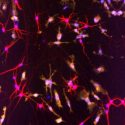
Development of robust co-culture models with human iPSC-derived microglia and excitatory neurons

Download this Application Note to learn more about: Co-culture methods for ioMicroglia with wild type and disease model ioGlutamatergic Neurons. Assay optimisation for a live cell in vitro neuronal activity assay. Solutions for visualisation and quantification of changes in co-culture health, morphology, function and marker expression. Read More

#Resources

Degeneration of dopaminergic neuron in Parkinson's disease
#BioArctic #Monoclonal antibodies #Neuroscience #Parkinson's #Phase II trial

Clinical trial will test monoclonal antibody in Parkinson’s disease

BioArctic says it has dosed the first patient with exidavnemab in the EXIST Phase IIa study in Parkinson’s disease patients.   Exidavnemab is a monoclonal antibody designed to target aggregated forms of the protein α-synuclein, believed to play a role in the disease progression in different neurological disorders… Read More

#News

AI brain
#CNS #Events #Genomics #Neuroscience #SLAS2025

Learn about the brain genomic positioning system with DDW

Graham T Dempsey, PhD, Co-founder and Chief Scientific Officer, Quiver Biosciences will be speaking at the DDW SLAS2025 track – Concept to Cure: Curiosity and Lab Automation in Drug Discovery. SLAS2025 is on 25-29 January 2025, in San Diego, USA. Graham Dempsey This free… Read More

#News

#AI / data analytics / healthtech / informatics #Alzheimer's #Automation #Biomarkers #Data automation #Data management #Digital biomarkers #Digitalisation #Drug development #Drug discovery #Genetics / genomics #Mass spectrometry / NMR #Neurodegenerative disorders #Neuroscience

New podcast: The far-reaching impact of drug discovery technology

This is the latest episode of the free DDW narrated podcast, titled “The far-reaching impact of drug discovery technology”, which covers three articles written for DDW Volume 24 – Issue 2, Spring 2023 of DDW. They are called: “Accelerating time to market through digitalisation”, “… Read More

#News

#Amyotrophic lateral sclerosis (ALS) #App note #Human disease models #iPSC #Neuroscience

App Note: Human iPSC-derived disease models for ALS

Despite significant research and funding, the development of therapies for ALS has been challenging due to a lack of readily accessible human cell models, leading scientists to rely on animal models and cell lines that differ considerably from human biology. A new App Note is now available to download entitled… Read More

#News

#Amyotrophic lateral sclerosis (ALS) #Human disease models #iPSC #Neuroscience

Disease modelling with genetically matched iPSC-derived excitatory neurons

Download bit.bio’s application note to learn more about: Functional characterisation of human iPSC-derived ALS disease models using high throughput MEA. Phenotypic data showing reduced neuronal activity and network formation in ALS disease models. A genetically matched system in ioGlutamatergic Neurons that can be used to identify, measure and rescue disease-related… Read More

#Resources

#AbbVie #Bristol Myers Squibb #Cerevel Therapeutics #FDA #Karuna Therapeutics #Neuroscience #Schizophrenia

Comment: Knock on effects of AbbVie’s failed schizophrenia trials

DDW’s Megan Thomas reflects on the impact of AbbVie’s failed schizophrenia trials. Earlier this month, AbbVie provided updates confirming that its two Phase II EMPOWER trials investigating emraclidine as a once-daily, oral monotherapy treatment for adults with schizophrenia who are experiencing an acute exacerbation of psychotic symptoms, have failed in… Read More

#Business & Investment #Exclusive Content #Opinion #Regulatory

#Alzheimer's #Neuroscience #Non-animal model (NAM) #Preclinical investigations

‘Alzheimer’s in dish’ 3D model shows promise for drug discovery

A decade ago, researchers introduced a new model for studying Alzheimer’s disease (AD). Known as ‘Alzheimer’s in a dish’, the model uses cultures of mature brain cells suspended in a gel to recapitulate what takes place in the human brain over 10 to 13 years in just six weeks. Read More

#News