Drug Discovery

#Cell Science #Drug discovery #Genetics / genomics #Spatial biology

3D spatial biology: A new dimension for drug discovery

Dr Todd Dickinson, CEO, Stellaromics on 3D spatial biology and functional genomics. Understanding how genes are regulated and expressed in complex tissue environments is fundamental to modern drug discovery. Traditionally, researchers have relied on 2D spatial genomics methods, analysing thin slices of tissue on a single plane to study gene… Read More
#Exclusive Content

#Assays #Drug discovery #Imaging #Live cell analysis #Macrophages #Phenotyping #Technical Note

Optimise macrophage assays and boost immunology research

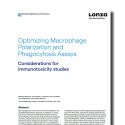
A new free resource from Lonza is now available entitled ‘Optimising macrophage polarisation and phagocytosis assays‘. Download this Technical Note to learn: Streamlined Macrophage Workflow: Transform cryopreserved or PBMC-derived monocytes into M1 or M2 macrophages using a reproducible, high-throughput protocol. Comprehensive Validation: Confirm phenotype and function with live-cell imaging… Read More

#News

#Assays #Drug discovery #Imaging #Live cell analysis #Macrophages #Phenotyping

Optimising macrophage polarisation and phagocytosis assays

Download this Technical Note to learn: Streamlined Macrophage Workflow: Transform cryopreserved or PBMC-derived monocytes into M1 or M2 macrophages using a reproducible, high-throughput protocol. Comprehensive Validation: Confirm phenotype and function with live-cell imaging and phagocytosis assays for application-ready results. Accelerated Research: Enhance drug discovery, immunotoxicology, and screening workflows with both… Read More

#Resources

Human cell
#10x Genomics #Drug discovery #Mergers and acquisitions #Scale Biosciences #Single-cell analysis

10x Genomics expands single cell analysis with Scale buyout

10x Genomics has acquired Scale Biosciences, gaining key inventions and technologies and broadening access to single cell analysis.  Scale Biosciences was founded by a multidisciplinary team of scientists and technologists with expertise in next generation sequencing, genomics, and bioinformatics: Professor Garry Nolan at Stanford University, Professors Jay… Read More

#Business & Investment #News

#Drug discovery #Genetics / genomics #Synthetic biology #Synthetic DNA

Enzymatic DNA synthesis: Moving beyond limits

Dr Thomas Ybert, Co-founder and Chief Scientific Officer at DNA Script, describes how recent advancements in enzymatic DNA synthesis are unlocking previously inaccessible regions of the genome. Synthetic nucleic acids are foundational tools in biological research and therapeutic development, essential for applications ranging from gene synthesis to mRNA vaccine templates. Read More

#Exclusive Content

#Cell analysis #Drug discovery #Flow Cytometry #Guide #Sample preparation

Guide: Flow cytometry protocols and practical insights

Accelerate your research to help you plan and set up your flow cytometry experiments with this new free resource from Thermo Fisher Scientific. This Guide ‘Flow cytometry protocols’ covers the main procedural steps below to achieve your best results. Protocols included: Sample preparation Immune cell stimulation Phenotypic analysis Cell viability… Read More

#News

#Cell analysis #Drug discovery #Flow Cytometry #Sample preparation

Flow cytometry protocols, practical insights, application data, and more

Accelerate your research to help you plan and set up your flow cytometry experiments. This Guide covers the main procedural steps below to achieve your best results. Protocols included: Sample preparation Immune cell stimulation Phenotypic analysis Cell viability and apoptosis Cell cycle Cell proliferation… Read More

#Resources

Blood samples
#Biobanking #Drug discovery #Genetics / genomics #UK Biobank

The current state of biobanking

DDW Editor Reece Armstrong looks at the challenges and opportunities for biobanking in drug discovery. The biobanking market was worth $81.29 billion in 2024 according to GrandView Research1 and is expected to reach $126.7 billion by 2030. A legacy sector for life sciences, biobanks have acted as repositories for research… Read More

#Exclusive Content

#Artificial intelligence (AI) #Computational chemistry #Digital workflow #Drug discovery #Machine learning #Webinar

Webinar: How is AI revolutionising drug discovery?

A new FREE TO ATTEND webinar ‘Transforming drug discovery with AI and digital labs‘, hosted by DDW and supported by Sapio Sciences, is now open for registrations. On 15 September at 4pm BST, join Dr Rajesh Kumar, Senior Director of Structural Biology at Schrödinger, as he explores how advanced computational… Read More

Webinar date:
Supported by Sapio Sciences
#News

#Cancer research #Drug discovery

Technical Note – Optimise your Macrophage Assays and Boost your Immunology Research

Download this technical note to learn: Streamlined Macrophage Workflow: Transform cryopreserved or PBMC-derived monocytes into M1 or M2 macrophages using a reproducible, high-throughput protocol. Comprehensive Validation: Confirm phenotype and function with live-cell imaging and phagocytosis assays for application-ready results. Accelerated Research: Enhance drug discovery, immunotoxicology, and screening workflows with both… Read More

#Technical Notes

#Drug discovery

Guide – Accelerate your imaging research with our updated protocols guide

This imaging protocol handbook will help you accelerate your research by helping you plan and execute your imaging experiments. The guide covers main procedural steps to achieve your best results. Plan and optimise imaging experiments with clear, step-by-step procedural guidance. Master core and advanced techniques—from cell proliferation and… Read More

#Guides

#AI / data analytics / healthtech / informatics #Drug development #Drug discovery #Generative AI

From knowledge to creation: keeping up with AI 

Generative AI is now rapidly disrupting entire industries and new technology breakthroughs are emerging at pace. As new iterations push the boundaries of deep research and insight generation, the implications for life sciences are both profound and uncertain. Reflecting on the rapid progression of GenAI, and its potential to… Read More

#Exclusive Content

#Artificial intelligence (AI) #Automation / robotics #Drug discovery #Hit identification #Hit to lead

Unlocking hit-to-lead efficiency through AI and automation

Veronica DeFelice, Director of Biologic Products at Sapio Sciences, looks at how the hit-to-lead process in drug discovery is being impacted by AI and automation. Complexity at the core of hit-to-lead Hit-to-lead (H2L) screening is a critical phase in drug discovery, where researchers narrow down large libraries of compounds, small… Read More

#Exclusive Content

#App note #Artificial intelligence (AI) #Drug discovery #Imaging

App Note: Your AI-enhanced solution for viral infectivity analysis

Discover how the Agilent BioTek Cytation cell imaging multimode reader and ViQi’s AVIA provide a powerful, integrated solution for viral infectivity analysis. Download the Application Note to explore how this innovative approach offers key advantages over traditional assays, including: High-throughput, cost-effective analysis: AVIA minimises reagent use, incubation time, and replicate… Read More

#News

Scientist working with multi well plate for cell culture in the lab
#Antibody drug conjugate (ADC) #Drug discovery #GPCRs #Reagents #Revvity

Revvity launches new reagents for GPCR research

Revvity has launched pHSense reagents, designed to advance internalisation studies in drug discovery.   pHSense reagents are designed for high-throughput, plate-based workflows and intended for researchers studying G protein-coupled receptors (GPCRs) or antibody-drug conjugates (ADCs).  Developed for use with standard plate readers, pHSense reagents combine a… Read More

#News

#Drug discovery #Goldilocks molecules #Synthetic biology #Synthetic libraries

Goldilocks molecules: Unlocking the next frontier in drug discovery

Christian Schafmeister, Founder and President of Thirdlaw Molecular, explores the promise of Goldilocks-sized molecules, the chemistry and design principles behind them and the technologies enabling rapid development of high-affinity binders against previously undruggable targets. For decades, the pharmaceutical industry has thrived on a foundational paradigm: small molecules for intracellular targets… Read More

#Exclusive Content