Drug Discovery

#Automation #Automation / robotics #Drug discovery #Lab technology #Webinar

Webinar – The orchestrated lab: Moving beyond siloed automation

Many laboratories have invested in automation, yet workflows often remain fragmented, with disconnected instruments, data, and processes creating inefficiencies and limiting scalability. As scientific workflows grow more complex, automation alone is no longer enough. Leading labs are now embracing orchestration, the coordination of instruments, robotics, software, data, and people across… Read More


#News

Antibody drug conjugate
#Antibody drug conjugate (ADC) #Drug discovery #Investment #Life sciences #Oncology

Bead BioPharma emerges from stealth with novel drug platform 

Bead BioPharma has emerged from stealth by submitting a patent for a novel cancer drug platform.  The life sciences company, backed by Archangels, submitted the patent in efforts to launch its formal entry into one of the most competitive sectors of global oncology.  Bead BioPharma is focused on antibody-drug conjugates (ADCs), a… Read More

#Business & Investment #News

#Drug discovery #Fragment-based drug discovery #Webinar

Webinar: Overcome critical bottlenecks in fragment-based drug discovery

Fragment-based drug discovery (FBDD) offers an efficient route to explore chemical space, but critical bottlenecks remain. Commercial fragment libraries are either too large to screen routinely with biophysical methods or too small to capture sufficient chemical diversity for challenging targets. Moreover, fragment expansions into focused compound collections lacks streamlined, integrated… Read More

#News

#CatSci #CRISPR #Drug development #Drug discovery #Life science #siRNA

From undruggable to inevitable

Dr Joe Renny, Head of Corporate Development, and Dr Simon Tyler, Chief Commercial Officer, CatSci, discuss the last 15 years of drug development, and what comes next. The American Cancer Society’s 2026 statistics tell a story that should be on the wall of every drug developer. Five-year survival for chronic… Read More

#Exclusive Content

Antibody discovery concept
#Artificial intelligence (AI) #Biologics #Drug discovery #Therapeutic Antibodies #Webinar

Webinar: Modernise and scale your antibody discovery programmes

Antibody discovery is being reshaped by two forces: an explosion of novel formats and the growing role of AI across the DBTL loop. But most teams are still running antibody programs on software that hasn’t kept pace with science, leaving data siloed and relationships missing. In this webinar, hosted by… Read More

Webinar date:
Supported by Benchling
#News

Two scientists working in a research laboratory
#Career #Drug discovery #Funding #National Institute for Health and Care Research

Over £37m funding to boost early career researchers in the UK

The National Institute for Health and Care Research (NIHR) is awarding £37 ($49) million in funding to medical research charities to support early career researchers.  It is hoped that the scheme, in partnership with the Association of Medical Research Charities (AMRC), will help medical research charities continue… Read More

#News

Biosafety testing
#Biosafety testing #Drug discovery #Next generation sequencing #Webinar

Webinar: How can a single, comprehensive test enable broader viral detection?

Biopharmaceutical manufacturers are under increasing pressure to deliver safe, reliable products at speed – yet adventitious viral agent (AVA) testing remains one of the most significant bottlenecks in the quality control process. In this on-demand webinar, ViruSure, a global leader in pathogen safety testing, shares how it… Read More

Webinar date:
Supported by Oxford Nanopore Technologies and ViruSure
#News

Cancer tumour
#Champions Oncology #Drug discovery #KRAS #Oncology #Patient-derived tumour models #Tumour models #Webinar

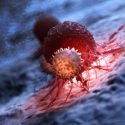
Cracking sensitivity and resistance to Pan-RAS(ON) inhibition with KRAS

KRAS mutations are among the most prevalent oncogenic drivers in solid tumours, yet predicting which patients will respond to targeted therapy — and understanding why resistance inevitably emerges — remains one of the central challenges in oncology drug development. ‘Cracking KRAS: Decoding Sensitivity and Resistance to Pan-RAS(ON) Inhibition Across Patient-Derived… Read More

#News

#Champions Oncology #Drug discovery #KRAS #Oncology #Patient-derived tumour models #Tumour models #Webinar

Webinar: Decoding sensitivity and resistance to Pan-RAS(ON) inhibition

KRAS mutations are among the most prevalent oncogenic drivers in solid tumours, yet predicting which patients will respond to targeted therapy — and understanding why resistance inevitably emerges — remains one of the central challenges in oncology drug development. ‘Cracking KRAS: Decoding Sensitivity and Resistance to Pan-RAS(ON) Inhibition Across Patient-Derived… Read More

#News

#AI #Drug development #Sofinnova Partners

Ingenix raises €13m to scale AI drug development model 

AI company Ingenix has announced it has raised €13 million to scale its drug development model.  Ingenix says its Biological Reasoning Engine overcomes structural problems in AI drug development, integrating best-in-class models across modalities and biological scales.  The model was applied to a dual-payload ADC prioritisation… Read More

#News

#Drug discovery #Fragment-based drug discovery #Webinar

Webinar: Accelerating hit discovery for hard-to-target proteins

Fragment-based drug discovery (FBDD) offers an efficient route to explore chemical space, but critical bottlenecks remain. Commercial fragment libraries are either too large to screen routinely with biophysical methods or too small to capture sufficient chemical diversity for challenging targets. Moreover, fragment expansions into focused compound collections lacks streamlined, integrated… Read More

#News

#AI #Assays #Drug discovery #Lab automation #STEM

How to improve lab education

Dr Tim Meyer, Research Group Leader Pharmaceutical Biotechnology at University Medical Center Göttingen, explains why the next generation of scientists must be trained differently for the lab.   Academic life science research has traditionally been optimised for novelty. Students and early-career researchers are trained to design elegant proof-of-concept experiments, execute them… Read More

#Exclusive Content #Opinion