3D cell culture

#3D cell culture #Assays #Organoids #Promega

From monolayer to microtissue: Measuring what matters in 3D drug discovery

Darren Heywood, Senior Product Manager at Promega UK, examines assay formats built specifically for 3D measurements. A 3D microtissue, such as a spheroid or organoid, is not a monolayer with more cells. These are three-dimensional cultures that self-organise into structures resembling real tissue. In a spheroid, as it grows, oxygen and… Read More

#Exclusive Content

Organoid
#3D cell culture #Drug discovery #New approach methodologies (NAMs) #Oncology #Organoids

Why traceability will make or break the organoid revolution 

By Carolina Lucchesi, Principal Scientist and Head of Microphysiological Systems, ATCC.  Across the world, regulators are sending a consistent signal: the era of animal-only preclinical testing is drawing to a close. In the United States, the Food and Drug Administration (FDA) has committed to phasing out animal testing requirements1. The European Union and United Kingdom are moving in the same direction, with regulatory bodies… Read More

#Exclusive Content

#3D cell culture #Cell Science #Drug discovery #Organoids #Stem cells

Pushing drug discovery with stem cells, organoids and 3D cell cultures

DDW Editor Reece Armstrong looks at how advances in stem cells, organoids and 3D cell cultures are affecting drug discovery and development.  Stem cells, organoids and 3D cell cultures have emerged as promising tools that scientists can use to better understand disease and how drugs function within the human body. … Read More

#Exclusive Content

Heart in a box
#3D cell culture #Advertorial #Biosafety testing #Cell Science #In vitro assays

Ncyte Heart in a Box: Human iPSC-derived 3D cardiac microtissue

This advertorial for Ncardia appeared in DDW Volume 26 – Issue 2, Spring 2025 Read the digital issue When hearts are on the line, accuracy is vital.  Ncyte® Heart in a Box™ is a high-purity, high-functional cell product that mirrors the human heart’s complexity in vitro, giving you a physiologically… Read More

#Exclusive Content

#3D cell culture #Automation #Automation / robotics #Case study #Cell Science #In vitro

How can automation improve 3D in vitro cell model production?

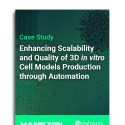
Download this new Case Study from Hamilton and InSphero, entitled ‘Enhancing Scalability and Quality of 3D In Vitro Cell Models Production through Automation‘. In this Case Study, InSphero, a Swiss-based company specialising in 3D in vitro cell models and cell culture tools for drug discovery, describes: The… Read More

#News

Case Study: Enhancing Scalability and Quality of 3D In Vitro Cell Models Production through Automation
#3D cell culture #Automation #Automation / robotics #Cell Science #In vitro

Enhancing Scalability and Quality of 3D In Vitro Cell Models Production through Automation

In this Case Study, InSphero, a Swiss-based company specialising in 3D in vitro cell models and cell culture tools for drug discovery, describes: The advantages of 3D in vitro cell models for drug discovery The automation of the production of 3D in vitro cell models via InSphero’s Akura™ technology The… Read More

#Resources

#3D cell culture #Assay development optimisation & technology #Biopharmaceuticals #Cell line development #Cell lines #Cell Science #Guide

DDW Cell Line Development Guide 2024

Download the exclusive Guide and read about: What are the benefits cell line development is bringing to biopharmaceutical developers? What technological advances are helping drive efficiencies in cell line development? How is this process underpinning drug development and why is the market growing? In what ways is cell line development… Read More

#DDW eBooks #DDW Guides

Scientist working in the lab
#3D cell culture #3D modelling #ADME / Tox #Drug toxicity #Pharmokinetics #Webinar

Last chance: Optimise ADME/Tox testing with advanced cell models

Join DDW and Lonza for this free event ‘Building advanced cell models for toxicity testing’. The event will take place on 19 September at 3pm GMT / 4pm CET / 10am EST / 7am PST. Life sciences researchers need a host… Read More

Webinar date:
Supported by Lonza
#News

Medical research
#3D cell culture #3D modelling #ADME / Tox #Drug toxicity #Pharmokinetics #Webinar

Building advanced cell models for toxicity testing: Register today

Join DDW and Lonza for this free event ‘Building advanced cell models for toxicity testing’. The event will take place on 19 September at 3pm GMT / 4pm CET / 10am EST / 7am PST. Life sciences researchers need a host… Read More

Webinar date:
Supported by Lonza
#News

Biosafety testing
#3D cell culture #3D modelling #ADME / Tox #Drug toxicity #Pharmokinetics #Webinar

Free event: Next generation predictive in vitro ADMET solutions

Join DDW and Lonza for this free event ‘Building advanced cell models for toxicity testing’. The event will take place on 19 September at 3pm GMT / 4pm CET / 10am EST / 7am PST. Life sciences researchers need a host… Read More

Webinar date:
Supported by Lonza
#News

Researcher in a medical lab
#3D cell culture #3D modelling #ADME / Tox #Drug toxicity #Pharmokinetics #Webinar

Webinar: Create advanced predictive models for tox testing

Join DDW and Lonza for this free event ‘Building advanced cell models for toxicity testing’. The event will take place on 19 September at 3pm GMT / 4pm CET / 10am EST / 7am PST. Life sciences researchers need a host… Read More

Webinar date:
Supported by Lonza
#News

Scientist working in the lab
#3D cell culture #3D modelling #ADME / Tox #Drug toxicity #Pharmokinetics #Webinar

Webinar: Building advanced cell models for toxicity testing

Join DDW and Lonza for this free event ‘Building advanced cell models for toxicity testing’. The event will take place on 19 September at 3pm GMT / 4pm CET / 10am EST / 7am PST. Life sciences researchers need a host… Read More

Webinar date:
Supported by Lonza
#News

Scientist working in the lab
#3D cell culture #3D modelling #ADME / Tox #Drug toxicity #Pharmokinetics

Building advanced cell models for toxicity testing

Life sciences researchers need a host of tools to develop and test critical disease-treating drugs and therapies, from basic research to final product release. Primary cells, media, and reagents are all important for supporting preclinical and clinical pharmaceutical workflows for drug discovery and absorption, distribution, metabolism, excretion, and toxicity (ADMET)… Read More

Webinar date:
Supported by Lonza
#Webinars

Lab mouse
#3D cell culture #Animal testing #ESG #Non-animal model (NAM) #Organoids #Pistoia Alliance

77% of researchers not using alternatives to animal testing

New survey findings have revealed that 77% of R&D professionals are not using in vitro cell-based alternatives to animal testing, and only 23% describe themselves as ‘very familiar’ with any kind of animal model alternative. More than 350 survey respondents participated in the survey by The… Read More

#News

#3D cell culture #Assay development optimisation & technology #Biopharmaceuticals #Cell line development #Cell lines #Cell Science

Advances in cell line development

Reece Armstrong offers an overview of cell line development and outlines the benefits the technology is bringing to biopharmaceutical developers. Cell line development is an essential underpinning of the drug development process, enabling teams to test, optimise and manufacture therapeutics at a commercial scale. It is a crucial for the… Read More

#Exclusive Content

#3D cell culture #ADME / Tox #Cell Science #Organoids #Stem cells

How 3D biology is informing drug discovery

Listen to this article on the DDW Podcast:   DDW Editor Reece Armstrong looks at the advantages and opportunities 3D cell cultures, organoids and stem cells are bringing to drug discovery teams. The use of 2D biology in the pharmaceutical industry has provided researchers with ways to observe how cells… Read More

#Exclusive Content