
After the midterms, biopharma needs more than a policy forecast
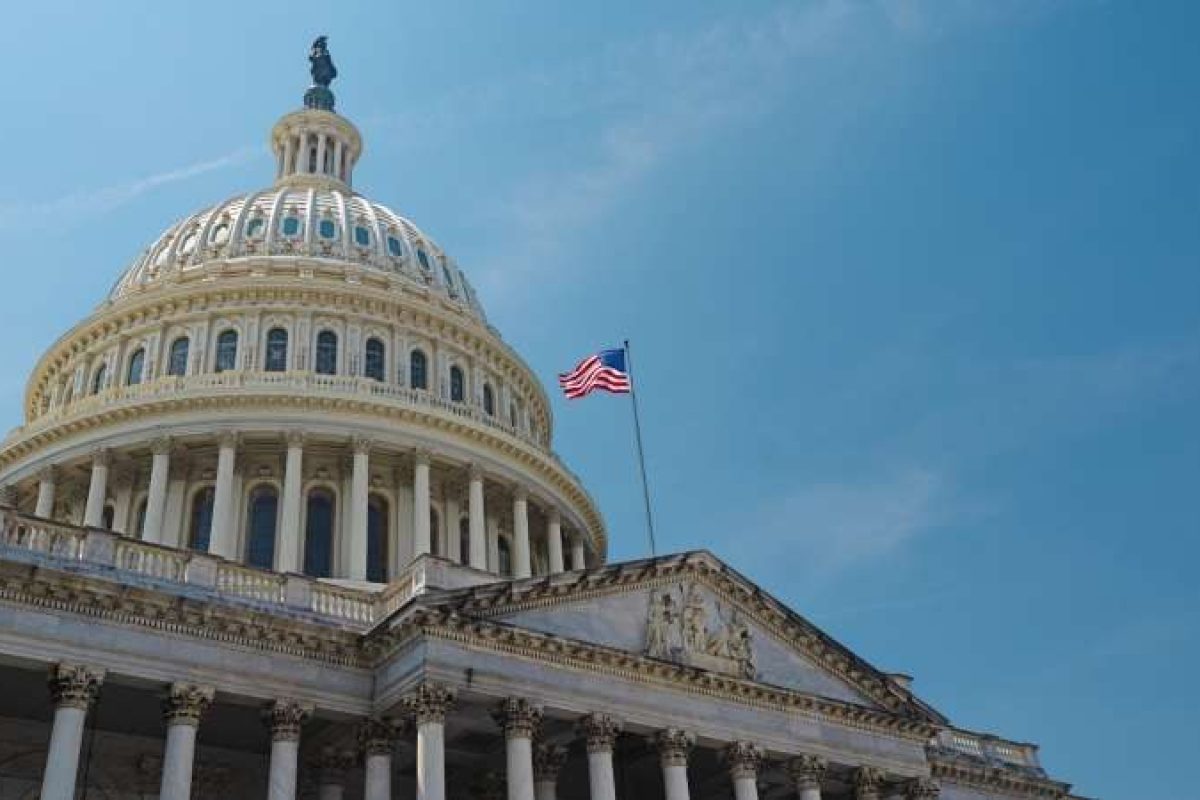
A Democratic Congress will likely sharpen oversight of the FDA and drug pricing, but the most consequential choices for drug developers in 2027 will still be made in clinical trial protocols, financing plans and portfolio reviews.
Washington has had a leadership change, but the development equation has not.
The November midterms have given Democrats control of both chambers of Congress while President Donald Trump remains in the White House. That changes who controls hearings, appropriations and the Senate confirmation process, but it does not hand Congress direct control over FDA approval decisions or guarantee sweeping new health legislation. Senate procedural hurdles and presidential veto power remain substantial constraints to wholesale changes of the drug development pipeline1-3.
My expectation for 2027 is more oversight, harder budget negotiations and selective bipartisan action on affordability, rather than a comprehensive regulatory reset. This distinction is important for the industry, because biopharmaceutical executives can spend the next year trying to predict every turn in Washington, or they can identify which policy developments will actually change the evidence, capital and time needed to bring a medicine to patients.
The questions in a development-stage biopharmaceutical company boardroom should remain specific regardless of who is in charge in Washington: What result will justify the next investment? What evidence will change a regulator’s, payer’s or partner’s assessment? How much cash runway is needed to reach that decision? Policy becomes material when it changes those answers.
FDA oversight: The reauthorisation test
The clearest legislative deadline in our near future appears to be September 2027, when current Prescription Drug User Fee Act (PDUFA) authority expires. The FDA is preparing PDUFA VIII for fiscal years 2028 through 2032. Reauthorisation supports the fee-funded review system and the performance commitments on which sponsors rely for meetings, submissions and planning4.
Democratic control creates more opportunity to examine agency staffing, scientific consistency, transparency and the handling of federal health programmes. The post-election Endpoints discussion highlighted appropriations and PDUFA as unusually consequential areas where Congress must engage, even amid partisan disagreement2. Oversight can expose operational problems and shape future funding but it cannot substitute for a pharmaceutical company sponsor producing convincing evidence of safety and efficacy.
For companies planning pivotal studies, the operating implication is to reduce avoidable uncertainty before spending the largest portion of their development budget. Clinical endpoints, multiplicity, patient selection, statistical assumptions and the interpretation of clinically meaningful benefit should be addressed early. FDA guidance on formal meetings and multiple endpoints offers established tools for that work5,6.
A poorly framed agency question can be costly. A simple endpoint change after trial initiation may force protocol revisions, additional enrollment or a new financing at an unfavourable valuation. Conversely, clear regulatory feedback can make a development plan more credible to investors and potential partners. Regulatory discipline must also be viewed as capital discipline in this business.
Drug pricing: The pressure will persist
Drug pricing is the area where a divided Washington may still be able to find common ground. Although the parties differ on mechanisms and on how to balance patient costs with incentives for innovation, affordability remains politically prominent across party lines. Both the Endpoints discussion and recent reporting in Pharmaphorum identified pricing as a plausible area for bipartisan engagement, while cautioning against assuming an easy legislative agreement2,3.
The Medicare Drug Price Negotiation Program is already law. On 5 November, CMS finalised rules for negotiated prices effective in 2029 and later. CMS plans to select up to 20 additional eligible Part B and Part D drugs, plus qualifying drugs for renegotiation, by 1 February 2027. While these are important implementation milestones, we’re still awaiting evidence that a new Congress will have the political will to agree on a pricing overhaul7,8.
Separate from Medicare negotiation, the administration’s most-favoured-nation (MFN) pricing arrangements with manufacturers may face closer congressional examination with the change of political hands. Reporting has raised questions about transparency, the durability of negotiated terms and how savings are being measured to best serve patients2,3. It is reasonable to expect hearings or requests for documents from the new Congress, but it would be premature to assume a particular legislative outcome.
For drug developers, the lesson is not to forecast a uniform pricing penalty for every future product. Eligibility and timing differ by product and statute, this much has become clear. The practical lesson the industry should take away is that market access evidence must be designed into the development cycle, and not just added as a commercialisation workstream right before launch.
A target product profile (TPP) should connect the proposed indication and label with relevant comparators, magnitude and durability of benefit, safety, administration and the questions a payer is likely to ask. A therapeutic can clear a regulatory threshold at FDA without demonstrating sufficient differentiation to support its projected uptake or price. Regulatory approval and commercial value are related, but they should not be evaluated in the same test.
Federal priorities: Research funding and coverage
The next Congress will also confront competing priorities in federal research and insurance coverage. NIH reported $47.5 billion in fiscal 2026 programme-level funding, approximately 1% above fiscal 2025, serving as our historical baseline, but it would not be wise to assume this will be a prediction of the eventual fiscal 2027 appropriation9.
The near-term policy debate is likely to include oversight of agency spending and grantmaking, as well as proposals affecting Medicaid and Affordable Care Act coverage. STAT’s pre-election reporting described the extent to which congressional control could affect investigations and health spending, while also noting the constraints imposed by the Senate and White House1. The legislative calendar will be important as a mile marker for biopharma to track and account for in the design of development timelines.
For biotech, these debates have second-order effects. Academic funding supports laboratories, investigators, clinical research networks and translational work that eventually become licensable assets. Coverage policy affects patients’ ability to obtain treatment and the economic assumptions behind future commercialisation. Neither effect is captured adequately by a simple post-election market reaction. Biopharma leaders need to be on top of these downstream effects, but it cannot come at the cost of sound trial design and development.
Trade and China-related restrictions deserve attention as well. Policy choices intended to strengthen domestic manufacturing or address national security can alter sourcing, manufacturing costs and cross-border partnerships. Yet the scope and durability of individual measures remain uncertain. Management should evaluate exposure in its own supply chain rather than assume either that restrictions will disappear or that every proposed measure will become law2,3.
Investment: Evidence will matter more than political headlines
I do not expect the midterms alone to reopen capital financing for weak development plans or companies that have not differentiated themselves from other investment opportunities. Capital providers will still seek de-risked assets and distinguish programmes that can reach a meaningful, interpretable milestone from those that require substantial spending without resolving a central risk. Investors and partners will assess effect size, trial execution, patient heterogeneity, competitive positioning, cash runway and the next capital requirement the same way regardless of who is in charge in Washington.
That calls for explicit decision gates. Before approving a major study, management and boards should know what positive, mixed and negative outcomes would mean for the next trial, a financing or a licensing discussion. The aim should not be to repackage disappointing data as success. It should always be to design studies that produce useful decisions and to avoid financing a calendar rather than a value inflection.
A company whose runway ends midway through a pivotal trial is exposed to more than market volatility. Delayed agency feedback, slower enrollment or changing payer expectations can turn a manageable scientific question into a financing crisis. Integrating regulatory, commercial and financial planning will matter more in 2027 precisely because the external environment remains difficult to forecast and predict.
What to watch heading into 2027
Four signals deserve the closest attention: the terms and timing of PDUFA VIII; the February CMS drug-selection announcement and subsequent pricing implementation; the FDA and NIH funding provisions that emerge from budget negotiations; and whether congressional oversight produces concrete changes to agency operations or merely more hearings and uncertainty2,4,7-9.
Management teams may wish to add a fifth test of their own: Have they adjusted their plans? Are the regulatory assumptions documented? Does the TPP reflect credible payer and competitive evidence? Is the next financing sized to reach a decision that changes value? Is there a workable alternative if regulatory feedback or access to capital takes longer than expected?
The midterms changed the negotiating table in Washington, but they did not change the obligation at the centre of drug development to demonstrate a clinically meaningful benefit, establish a credible approval path and make the economics work for patients, prescribers and payers. The better-prepared companies will treat those as connected decisions rather than separate conversations held years apart, regardless of who currently holds Congress.
References
- Payne D. The 4 biggest ways the midterms could change health policy, according to policymakers, lobbyists, and experts. STAT. Oct 2026. https://www.statnews.com/2026/10/31/midterm-election-tipping-point-healthcare-policy/
- Endpoints News. What the Midterms Means for Biopharma. Post-Hoc Live podcast, Nov 2026. https://endpoints.news/post-hoc-live-what-the-us-midterm-elections-mean-for-biopharma/
- pharmaphorum. What do midterms mean for Trump’s pharma and health agenda? https://pharmaphorum.com/news/what-do-midterms-mean-trumps-pharma-and-health-agenda
- US Food and Drug Administration. PDUFA VIII: Fiscal Years 2028–2032. https://www.fda.gov/industry/prescription-drug-user-fee-amendments/pdufa-viii-fiscal-years-2028-2032
- US Food and Drug Administration. Formal Meetings Between the FDA and Sponsors or Applicants of PDUFA Products. https://www.fda.gov/regulatory-information/search-fda-guidance-documents/formal-meetings-between-fda-and-sponsors-or-applicants-pdufa-products
- US Food and Drug Administration. Multiple Endpoints in Clinical Trials. https://www.fda.gov/regulatory-information/search-fda-guidance-documents/multiple-endpoints-clinical-trials
- Centers for Medicare & Medicaid Services. Medicare Drug Price Negotiation Program and Medicare Prescription Drug Benefit Program Final Rule (CMS-4215-F). https://www.cms.gov/newsroom/fact-sheets/medicare-drug-price-negotiation-program-medicare-prescription-drug-benefit-program-final-rule-cms
- Centers for Medicare & Medicaid Services. CMS Final Rule Strengthens Supports Lasting Drug Savings. Nov 2026. https://www.cms.gov/newsroom/press-releases/cms-final-rule-strengthens-supports-lasting-drug-savings
- National Institutes of Health. Notice of Fiscal Policies in Effect for FY 2026 (NOT-OD-26-059). March 2026. https://grants.nih.gov/grants/guide/notice-files/NOT-OD-26-059.html
About the author
David Crean, PhD, MBA, is a pharmaceutical executive, investment banker and strategic adviser with more than 30 years of experience across drug development, capital markets, mergers and acquisitions, and venture investing. He is Chief Business Officer of MediciNova, Managing Partner of Cardiff Advisory and author of Dual Fluency.