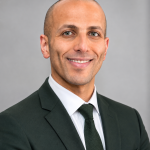
Meet the researcher: Professor David Adler

Professor David Adler is Chief Scientific & Medical Officer of the PATHORA Institute of Pathology & Tissue Medicine. Here he gives Diana Turner an overview of his career and what he’s working on currently.
DT: Can you tell us what you do and what you’re working on at the moment?
DA: One of the recurring challenges in oncology drug development is that promising preclinical findings are not always sufficiently validated in relevant human tissue before important development decisions are made. Addressing this challenge is central to my current work as Chief Scientific & Medical Officer of the PATHORA Institute of Pathology & Tissue Medicine. In this capacity, I am leading the scientific and medical development of PATHORA’s planned US organisation and its translational oncology strategy, drawing on the institute’s capabilities in pathology, tissue analysis and digital pathology. The aim is to support biotechnology and pharmaceutical companies developing oncology therapies by integrating human tissue evidence and biomarker considerations earlier in the development process, helping inform critical decisions about their oncology programmes.
In parallel, as a professor, I am leading an initiative in Israel designed to bridge the gap between academic discovery and pharmaceutical drug development. Developed in collaboration with the Hebrew University of Jerusalem and Ben-Gurion University of the Negev, the initiative includes a practical drug-development course to be delivered by senior pharmaceutical and biotechnology executives, opportunities for academic researchers to establish direct relationships with industry leaders, and a planned Pharma-Academic Strategic Task Force to evaluate promising discoveries and connect researchers with potential development partners.
The objective is to expose academic researchers to the pharmaceutical development perspective earlier, helping them understand what evidence is needed to move promising scientific discoveries toward preclinical and clinical development, and ultimately toward medicines for patients.
DT: What’s been the highlight of your career so far?
DA: I would point to two closely connected chapters in my career.
The first was moving from academic cancer research into the pharmaceutical industry and spending a decade in senior leadership within Bayer’s Global Oncology Clinical Development organisation. This gave me the opportunity to contribute to oncology programmes across the development journey, from scientific discovery and preclinical development into clinical development. What I found particularly rewarding was participating in the scientific and strategic decisions that determine how promising therapies should be developed, which patients might benefit, what additional evidence is needed and whether a programme should move forward.
The second is my current role as Chief Scientific & Medical Officer of PATHORA, where I am leading its translational oncology strategy and the scientific and medical development of its planned expansion into the United States. This represents an opportunity to apply the experience I gained within a global pharmaceutical organisation to building capabilities that support biotechnology and pharmaceutical companies in developing new oncology therapies.
I see these chapters as a natural progression from understanding cancer biology in academia, to helping guide oncology development in the pharmaceutical industry, to applying that experience in a broader scientific and medical leadership role.
DT: What drug discovery breakthrough has been most impactful to your research?
DA: I would choose the development of imatinib for BCR-ABL-positive chronic myeloid leukaemia.
Imatinib demonstrated how understanding a critical molecular driver of cancer could lead to a targeted treatment that fundamentally changes patient outcomes. Its approval in 2001 became a landmark in oncology drug development and helped establish the importance of molecularly targeted therapies.
What has particularly influenced my thinking is the connection between the underlying biology and the development strategy. The identification of BCR-ABL as a central driver of chronic myeloid leukaemia provided a clear therapeutic rationale, identified a molecularly defined patient population and helped guide the clinical development of imatinib.
Its significance extends well beyond one drug or one disease. It demonstrated the value of connecting molecular biology, biomarkers, patient selection and clinical development rather than treating them as separate activities. That principle has profoundly influenced modern oncology and continues to shape how I think about the journey from scientific discovery to a medicine.
DT: What has been the best piece of career-related advice you have received?
DA: The most valuable advice I have received is never to let the progress already made become the reason for continuing in the same direction. This is particularly relevant in pharmaceutical R&D, where reaching an important development milestone does not necessarily mean that the next investment is justified.
Drug development requires persistence, but as programmes advance, years of research, encouraging results and substantial organisational commitment can make it increasingly difficult to reconsider the original strategy. At the same time, new scientific and clinical evidence, emerging competitors and changes in the standard of care can fundamentally alter the potential of a therapy. What matters is not simply how far a programme has progressed, but whether the next development step remains justified in light of what is known today.
Depending on the circumstances, the right decision may be to continue with the existing strategy, explore a different patient population, modify the development approach or generate additional evidence to resolve critical uncertainties. In some cases, it may be necessary to discontinue a programme and redirect resources toward opportunities with greater potential to benefit patients.
The lesson that has stayed with me is that effective R&D leadership requires both scientific conviction and the willingness to challenge established strategies. Persistence is essential to developing innovative medicines, but it must be accompanied by the judgment to recognise when continuing, changing direction or stopping represents the most responsible decision.
DT: What advice would you offer to someone hoping to follow in your footsteps?
DA: My advice would be to develop a strong foundation in your area of expertise while actively seeking to understand how other disciplines contribute to the broader scientific and development process.
For someone pursuing academic basic research, developing a strong scientific foundation and the ability to ask important biological questions is essential. But if your goal is to translate discoveries into potential treatments, it is equally important to understand what happens beyond the laboratory.
When I moved from academic cancer research into the pharmaceutical industry, one of the most important changes in perspective was learning to evaluate scientific findings in terms of the evidence needed to advance them toward clinical development. A discovery can be scientifically exciting while still leaving major questions about its relevance to human disease, the appropriate patient population or the feasibility of developing a medicine.
For those entering the pharmaceutical or biotechnology industry, I would emphasisze the importance of understanding how different disciplines contribute to development decisions. Scientific expertise is essential, but so are judgment, collaboration and the ability to evaluate evidence beyond your own area of specialisation.
Above all, learn to distinguish between generating more data and generating the evidence needed to make the next important decision. That distinction can be critical in determining whether a promising discovery ultimately progresses toward becoming a medicine.
DT: If you could make everyone read one book, article or academic paper, what would it be and why?
DA: I would choose The Emperor of All Maladies by Siddhartha Mukherjee.
What I find particularly valuable about the book is that it places today’s advances in cancer research and treatment within a much broader historical perspective. It shows how progress has emerged through generations of scientific discoveries, clinical observations, unsuccessful approaches, unexpected findings and fundamental changes in our understanding of cancer.
For someone involved in oncology research and drug development, it is a powerful reminder that the medicines available to patients today are the result of many contributions extending far beyond any individual laboratory, company or clinical trial.
It also reminds us that progress has been uneven. While some cancers have seen remarkable improvements in treatment outcomes, others remain exceptionally difficult to treat despite decades of research.
I think the book provides an important perspective on both how far oncology has progressed and how much work remains. It reinforces the importance of scientific persistence, collaboration and humility in the continuing effort to develop better treatments for patients.
Biography
Professor David Adler is Chief Scientific & Medical Officer of the PATHORA Institute of Pathology & Tissue Medicine. He is a senior pharmaceutical leader in oncology drug development and translational medicine with over 15 years of experience, including a decade in senior leadership at Bayer AG’s Global Oncology Clinical Development organisation.