
Unravelling the modes of action of microbiome therapies
Tim Sharpington, Chief Executive Officer at Microbiotica, and Matthew Robinson, SVP Research, Microbiotica, discuss the opportunities for precision-based microbiome therapeutics and which diseases could benefit the most from this approach.
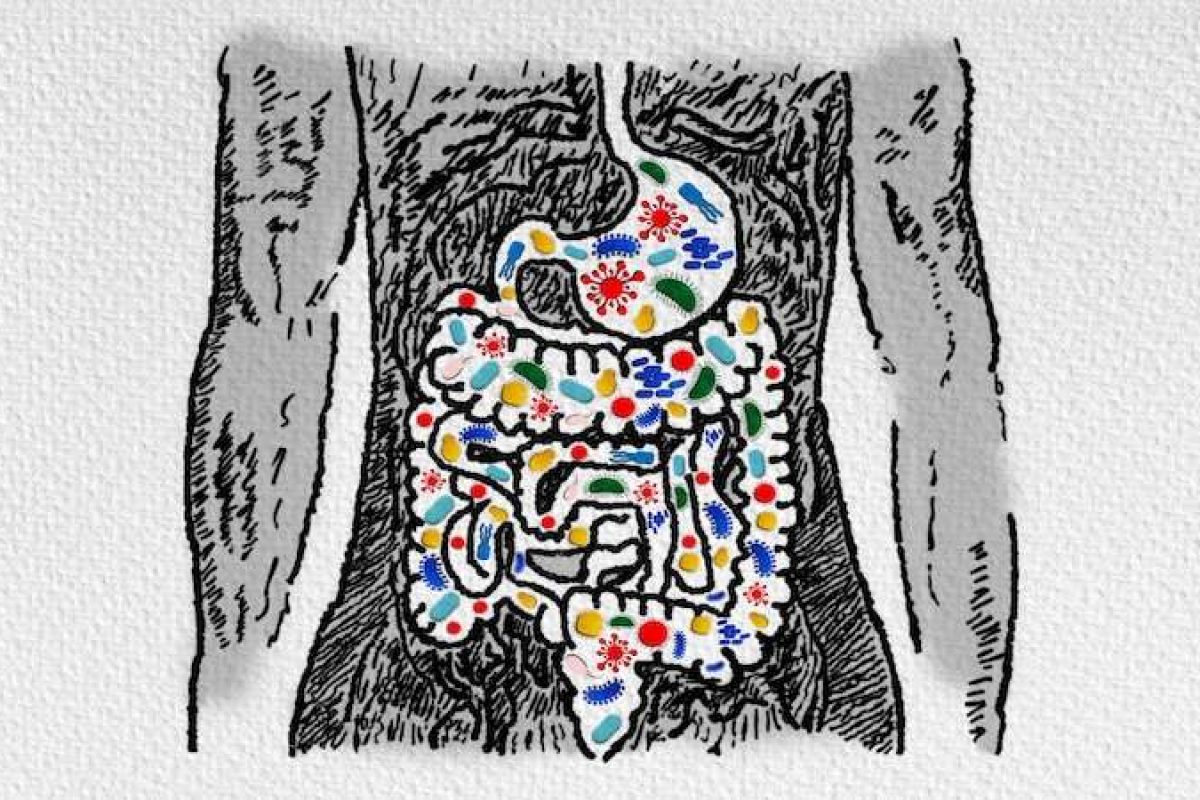
The development of genetic techniques to analyse the microbiome has triggered a massive expansion of research into our relationship with our resident microorganisms, which are similar in number to the total amount of cells in the body. We now appreciate that our microbiome influences health by impacting multiple wide ranging biological systems such as the immune system, metabolism and mental health1. This has led to the holobiont concept that considers a host and its microbiome to be a single ecological and evolutionary unit.
There has also been an increasing focus on understanding the mechanisms by which the human host and the microbiome interact. Scientists are now starting to unravel the multiple modes of actions of bacteria, enabling the potential of more precisely targeted, scalable defined Live Biotherapeutic Products (LBPs).
This research has provided overwhelming evidence that the human microbiome, and the intestinal commensal bacteria in particular, interacts with multiple biological systems to impact health, disease and treatment response in many therapeutic areas. The microbiome therefore has the potential to be a new modality to treat a wide variety of diseases (1). Encouraging data from multiple clinical trials of Faecal Microbiota Transplants (FMT) have been reported in areas ranging from gut infection, inflammatory bowel disease, as adjunctive therapy to immune checkpoint inhibition in cancer, autism and Parkinson’s disease amongst others.
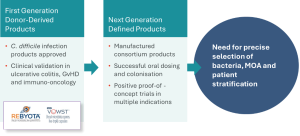
Inspired by the success of FMT, first-generation, donor-derived products delivered either via enema or freeze dried for oral delivery, have been shown to be effective in settings in which the “normal” gut microbiome has been depleted or overgrown by pathogens, such as recurrent Clostridium difficile infection and are approved for use in the US (2).
Next generation in microbiome therapies
A number of companies worldwide are now building on the microbiome-research to develop the next generation of LBPs consisting of a small number of defined gut bacteria targeting specific mechanisms or patient populations. This approach means that products can be reproducibly manufactured at scale from master cell banks to contain precise doses of defined bacterial strains to match required specifications (2).
A key question for the development of defined LBPs is how to select the bacterial strains to include and which patient populations and therapeutic areas to target.
Precision microbiome approaches
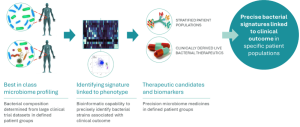
One approach is to study the microbiome of patients in multiple clinical-cohorts of specific patient populations to identify robust and reproducible gut-bacterial signatures which are associated with clinical benefit. This clinic-led discovery model is being taken at Microbiotica enabled by its proprietary platform which can precisely analyse microbiome signatures from large clinical-trial datasets to strain level resolution.
A decade’s worth of research at the UK’s Wellcome Sanger Institute has been industrialised by Microbiotica to establish a vast collection of human gut commensals which act as repository of potential therapeutic strains. The collection was used to build a physically assembled reference genome database, which provides a uniquely comprehensive blueprint for the genetic analysis of the human gut microbiome. When combined with a suite of proprietary informatics and machine learning tools, a new level of microbiome precision analysis is enabled.
Unravelling modes of action of microbiome-based cancer therapies
There are now multiple studies showing that a patient’s microbiome significantly impacts their ability to respond to immune checkpoint inhibitor (ICI) therapy. There is, however, a lack of consensus about which bacteria are associated with such response. Having analysed data from four independent clinical trials of advanced melanoma patients, from different geographical locations, Microbiotica has identified a common baseline bacterial signature reproducibly and significantly raised in abundance in patients who responded to ICI treatment. From this signature, 9-bacterial strains, including 4-novel species, were included in its product, MB097, which is an adjunctive therapy designed to boost a patient’s ability to respond to ICI treatment, currently in a Phase I clinical trial in melanoma as a co-therapy with Keytruda.
Microbiotica’s clinic-led approach to LBP strain identification is, in the first-instance, mechanism agnostic. Despite the huge increase in microbiome research, there is still much to learn and understand about the mechanistic nature of the human host/microbiome interaction.
To understand more about the mechanisms underpinning the benefit to patients, a series of in vivo studies have confirmed the therapeutic promise of MB097. In terms of mechanism however, in vitro studies utilising primary human cells assays and organoid systems have provided the exciting results in elucidating potential mechanisms some of which are entirely novel.
Recently reported studies indicate that some of the bacterial strains within MB097 interact directly with cells in the lumen of the gut and others produce metabolites which can act locally within the gut or systemically.
Dendritic cells (DCs) are known to sample the lumen of the gut and also interact with immune cells within the lamina propria. DCs play a crucial role in initiating and controlling immune responses. In a series of experiments the bacterial strains within the bacteria in MB097 were incubated with DCs and the subsequent cellular messaging was then assessed.
DCs incubated with MB097 demonstrated pro-immune polarisation, activating cytotoxic T lymphocytes (CTLs) and natural killer (NK) cells, key immune cells in ICI response, via an IL-12 mediated pathway. These activated CTLs and NK cells had profound tumour cell killing potential. Unlike DCs, CTLs and NK cell recirculate around the body, so we have hypothesised that this local activation could lead to a great anti-tumoral immune response especially in the presence of ICIs (3).
In addition to the direct activation of DCs, four of the MB097 bacteria produce bioactive metabolites which can enhance CTLs activation and tumour cell killing. Gut bacterial metabolites can be carried in the blood and influence cellular response all over the body. Therefore, these could act systemically and even within the tumour (4). Research is continuing to further explore these metabolites.
Multiple modes of action of microbiome-based ulcerative colitis therapy
Studies of inflammatory bowel disease have shown that ulcerative colitis (UC) is associated with microbial dysbiosis. Multiple randomised, placebo-controlled trials have shown that FMT can correct the dysbiosis and successfully treat UC. An FMT clinical study in UC patients conducted at the University of Adelaide, Australia comprehensively profiled the bacteria within the donor FMT, making it possible to track which strains successfully engrafted in patients and were associated with clinical benefit. These studies underpinned the development of Microbiotica’s MB310, which contains eight such strains and is now in a Phase I clinical study.
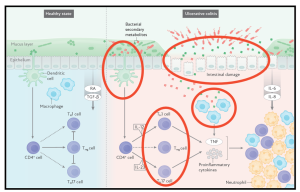
Dendritic cells (DC) and inflammatory macrophages incubated with bacterial strains from the UC product MB310 showed anti-inflammatory profile with strong induction of Il-10, especially in relation to TNF. This indicates that the strains can skew an inflammatory innate immune response to an anti-inflammatory profile. In addition, some MB310 also produced bioactive metabolites that induced regulatory T cells, which limit an immune response and are less abundant in UC patients. Therefore, MB310 strains interacted with both innate and adaptive immune systems to provide an anti-inflammatory effect
In addition to the immune modulatory effects, three bacterial strains within MB310 have been shown to have significant activity in repairing damaged epithelial in a LPS Caco-2 cell model. Interestingly, each of the three strains achieves this effect via different cellular mediators. Disruption of the colonic epithelial barrier is a key feature of UC and contributes to the disease (5) .
The bacterial strains within MB310 therefore demonstrate beneficial effects on the three key drivers of UC pathology, anti-inflammatory effects via the innate and adaptive immune responses and a protective and repairing effect on the epithelial barrier. It is hoped that this multi-mechanistic approach will translate into broad efficacy in UC patients.
Summary
Microbiotica’s approach of clinic-led microbiome discovery has identified defined groups of bacteria from specific patient populations with multiple mechanisms which offer great therapeutic potential in those specific groups. MB097 provides direct and indirect activation of immune cells key to ICI response. MB310 produces an anti-inflammatory response via both innate and adaptive immune systems as well epithelial barrier repairing properties.
Both products have been successfully manufactured, with the lyophilised stains dosed orally in enteric coated capsules and Phase Ib clinical trials are underway.
MB097 is being administered as a co-therapy with pembrolizimub in advanced melanoma patients who did not respond to initial anti-PD1 checkpoint therapy. MB310 is being tested in a placebo-controlled study in UC patients.
Results from these studies will indicate whether these promising mechanistic insights translate into clinical benefits for patients.
References
- Hou K, Wu ZX, Chen XY, Wang JQ, Zhang D, Xiao C, Zhu D, Koya JB, Wei L, Li J, Chen ZS. Microbiota in health and diseases. Signal Transduct Target Ther. 2022 Apr 23;7(1):135.
- Pribyl AL, Hugenholtz P, Cooper MA. A decade of advances in human gut microbiome-derived biotherapeutics. Nat Microbiol. 2025 10(2):301-312.
- Bakdash G, Popple A, Klisko D, Hudson R, Castan L, Villemin C, Schreiber F, Berlato C, Corrie P, Sharpington T, Lawley TD, Robinson MJ; Clinical response to checkpoint inhibitors is associated with distinct gut bacteria that promote anti-tumor immunity through different mechanisms. Poster presented at: Annual Meeting of the American Association for Cancer Research April 2025. Cancer Immunol Res 2025 13 (2_Supplement): Abstract B102
- Robinson MJ, Castan L, Schreiber F, Villemin C, Berlato C, Adams DJ, Corrie P, Sharpington T, Lawley TD, Bakdash G; Clinical response to immune checkpoint inhibitors in melanoma is associated with distinct gut bacterial species that promote anti-tumor immunity by different mechanisms. Poster presented at: AAACR IO February 2025. Cancer Res 2025; 85 (8_Supplement_1): Abstract 2219.
- Robinson MJ, Schreiber F, Rimington O, Whitehead I, Sharpington T, Lawley TD, Bakdash G: Abstract Sa1769: Gut commensal bacteria, associated with clinical remission in ulcerative colitis, protect and heal gut epithelial barrier through three novel pathways. Poster presented at: Digestion Disease Week May 2025
About the authors
Tim Sharpington PhD, Chief Executive Officer, Microbiotica, has a track record of leading, developing and executing company strategy, with experience in product development, fundraising, M&A and licensing. He brings over 30 years’ experience in leadership roles in pharma, biotech and CROs across Europe and the US. Prior companies include Pfizer, Vectura, Arakis , ICON and Sequus.

Matthew Robinson PhD, SVP Research, Microbiotica, is responsible for understanding how the microbes interact with and impact the host, as well as the company’s immuno-oncology programme. He brings more than 20 years’ research experience across academic and industry. Robinson previously led pre-clinical programmes and teams in many disease areas in the Oncology and RIA (Respiratory, Inflammation and Autoimmune) departments at MedImmune/AstraZeneca.

From DDW Volume 26 – Issue 4, Fall 2025 – Read the digital issue