
Regenerate, rewire, recover: Exosome-based therapy regenerates nerves
NurExone Biologics has been named a finalist in Falling Walls Venture 2025, a global platform that showcases the world’s most promising science-based start-ups. With plans to move into clinical trials next year with an exosome therapy for spinal cord injuries, Diana Turner caught up Dr Lior Shaltiel, CEO and Director.
DT: What are the unique benefits of exosome-loaded nanodrugs? Are there any downsides?
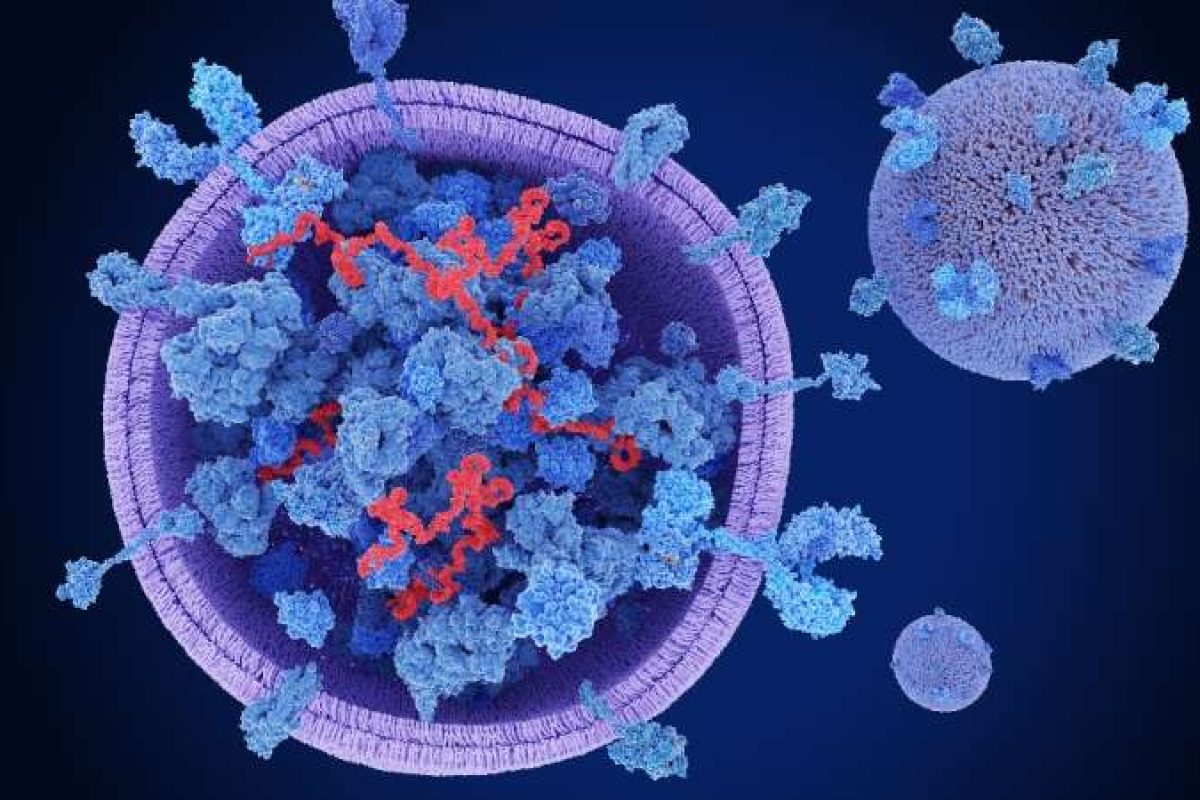
LS: Exosomes are emerging as nature’s own nanocarriers—small lipid-bilayer vesicles on a nanoscale that healthy cells constantly secrete to communicate cell-to-cell. These vesicles contain RNA, proteins, and metabolites. Yet they do far more than deliver: they arrive pre-loaded with growth factors, anti-inflammatory lipids, and pro-regenerative microRNAs that engulf cells into the damaged tissue and promote regenerative activity. They are not immunogenic, therefore they circulate without provoking the immune alarms or insertion-mutagenesis worries that shadow viral vectors; yet they can still slip through biological barricades such as the blood-brain barrier and infiltrate inflamed or injured tissue. Their spacious interior may accept everything from siRNA and CRISPR guides to small-molecule drugs, making them well-suited for drug delivery. Crucially, they are a cell-free therapy: once the cargo is delivered, the vesicle biodegrades, side-stepping the tumour-formation and engraftment risks associated with live‐cell transplants.
NurExone has taken these intrinsic advantages of exosomes a step further with its ExoTherapy platform, a proprietary process to load naive exosomes post-production, packing mesenchymal-stem-cell derived exosomes with therapeutic molecules without damaging the vesicle or stripping its targeting proteins. The result is a combined effect, leveraging both the exosome’s natural healing ability and the therapeutic effect of the loaded molecules.
Downsides: Large-scale, GMP-grade manufacture of exosomes is technically demanding, and programmes tend to stumble on inconsistent supply, batch heterogeneity and analytic complexity. This risk is being mitigated by our January 2025 acquisition of a GMP master cell bank (MCB), which gives us a renewable, quality-controlled source of exosome-producing cells and streamlines scale-up for clinical and commercial demand.
DT: You are targeting spinal cord injury (SCI) with your first product. What are the challenges in treating these injuries?
LS: Acute spinal-cord injury unleashes a cascade that the adult central nervous system, unlike skin, bone, or peripheral nerves, cannot mend on its own. When spinal axons are damaged or severed, they almost never regrow, leading to permanent loss of function and often lifelong paralysis. The initial mechanical injury kills neurons and glia within minutes; over the next hours and days, ischaemia, excitotoxicity and inflammation carve out a fluid-filled cavity and seal it with a dense glial scar. Any axons that survive are then hemmed in by both this physical barrier and a chemical field of intrinsic growth inhibitors such as PTEN. Drug delivery remains difficult because the blood-spinal-cord barrier, though damaged, still limits access and scar tissue is formed. These multiple roadblocks—no innate regeneration, hostile micro-environment, and delivery hurdles—help explain both why the spinal cord doesn’t heal naturally and why no approved therapy yet reverses the neurological and functional losses that follow injury.
Because mesenchymal-stem-cell-derived exosomes naturally home to inflamed or damaged neural tissue, they can be administered minimally invasively and accumulate at the injury site with their therapeutic cargo, overcoming the well-known delivery hurdle in CNS repair and providing cells at the injury site with a direct pathway to regeneration.
DT: PTEN is a molecular inhibitor of neural regeneration through the mTOR pathway. Has it been successfully targeted as a treatment before? If not, why not?
LS: PTEN is a well-known molecular inhibitor of neural regeneration, acting through the mTOR pathway. While PTEN has historically been targeted in oncology to suppress tumourigenesis, our approach flips the paradigm. ExoPTEN temporarily downregulates PTEN to unlock the body’s inherent regenerative potential in a highly localised and time-limited manner.
ExoPTEN has been designed to clear previous hurdles and address PTEN in a unique way: a transient siRNA payload, packaged in naturally homing, mesenchymal-derived exosomes, aims to confine PTEN down-regulation to injured neurons while avoiding the systemic exposure and permanence that may have derailed previous approaches.
DT: ExoPTEN is based on mesenchymal-stem-cell-derived exosomes loaded with siRNA targeting PTEN. What have been the pre-clinical results so far?
LS: ExoPTEN loads a short interfering RNA against PTEN inside NurExone’s naïve MSC-exosomes. Intranasal delivery in a complete-transection rat model restored motor function, sensation and bladder control in 75% of animals, an effect now replicated and even improved upon with higher, single doses that produced measurable gait recovery in 100% of treated rats (n=9). In optic-nerve-crush glaucoma models, the formulation rescued retinal signalling and preserved ganglion-cell survival. In a separate facial nerve injury model, ExoPTEN promoted functional recovery and nerve regeneration, further supporting its multi-target neuroregenerative potential. This data suggest the ExoPTEN nanodrug both protects neurons and yields axonal regrowth.
DT: How does the therapy reduce cell death and promote axonal regrowth?
LS: ExoPTEN helps damaged nerves regenerate, rewire, and recover by acting both inside injured neurons and in the surrounding tissue, rescuing cells from death and reigniting the growth of damaged axons.
Inside the neuron, exosomes deliver a short interfering RNA that temporarily silences the PTEN gene, the regulator of regeneration on a cellular level, thereby turning on the PI3K-Akt-mTOR pathway. With mTOR active, the neuron shuts down its self-destruct programme, fuels its mitochondria, and begins making the surge of new proteins needed to rebuild a growth cone and extend a fresh axon toward its targets.
Outside the neuron, the exosome’s own lipids and microRNAs soothe local inflammation and coax nearby immune cells into a repair-friendly mode; the supportive environment protects surviving neurons and reshapes the extracellular matrix, giving the newly sprouting axon a clear path to follow.
Typically, inflammation and regeneration are opposing forces with regenerative growth rare in an inflamed environment. ExoPTEN uniquely combines both anti-inflammatory and regenerative actions and controls them through two distinct mechanisms: intracellular PTEN suppression and extracellular immune modulation. By pairing these complementary effects, ExoPTEN creates the conditions required for meaningful neurological repair—allowing injured nerves to regenerate, rewire connections, and recover function.
DT: How has Orphan Drug Designation (ODD) from the FDA and EMA boosted development?
Securing orphan-drug designation for ExoPTEN for acute Spinal Cord Injury from both the US. Food and Drug Administration and the European Medicines Agency has provided a set of concrete, measurable advantages without relaxing efficacy or safety standards.
In the United States, an approved orphan product enjoys seven years of post-approval market exclusivity, exemption from the FDA marketing-application user fee, and eligibility for tax credits and grant programmes that help offset clinical-trial costs. In the European Union, the designation confers ten years of exclusivity and substantially reduced fees for scientific advice and protocol-assistance meetings.
Since both agencies review the biological rationale, key pre-clinical findings and the absence of adequate treatments; a positive decision signals that the programme addresses a genuine unmet need and has a medically plausible mechanism. Equally important, the fee-reduced scientific-advice pathway lets NurExone engage regulators early on trial design, endpoints and manufacturing controls, guidance that could prevent costly rework later. Together, these incentives lower development expenses, clarify the regulatory roadmap and, by extension, tend to make an orphan-designated asset more attractive to prospective partners and investors.
DT: You plan to take ExoPTEN into clinical trials next year. Do you expect a successful translation to humans?
LS: The translational outlook is encouraging but not guaranteed. With a validated MCB, a US GMP-compliant exosome-manufacturing facility in build-out, and an established, minimally invasive delivery route, ExoPTEN is on the path to meet key CMC and regulatory check-boxes. Remaining challenges include ensuring lot-to-lot potency analytics and scaling dosing for the human spinal cord, but the robust, reproducible animal data and favourable safety profile justify optimism for first-in-human studies next year.
DS: What other conditions could be treated with ExoPTEN or similar technology? What is the potential?
NurExone’s pre-clinical work points to a wider clinical horizon for ExoPTEN in high-impact conditions as follows
- Optic-nerve damage (glaucoma model). In a rat optic-nerve-crush study conducted with Sheba Medical Center, eyes treated with ExoPTEN regained electrophysiological function that approached healthy baselines, and 75% of the animals showed measurable restoration of vision-linked signals and structural healing of the nerve.
- Facial-nerve injury. ExoPTEN has produced functional recovery in a rodent facial-nerve model, extending the regeneration concept to the peripheral nervous system.
These results suggest that silencing PTEN with ExoPTEN could be applied in places where damaged neurons need to regenerate, rewire and recover, with acute spinal cord, optic-nerve and peripheral-nerve injuries already demonstrating proof-of-concept in the preclinical phase.
Since the underlying ExoTherapy platform is designed to be payload-agnostic, its naïve exosomes have the potential to be loaded with other siRNAs, mRNAs or recombinant proteins aimed at different inhibitory checkpoints. That flexibility opens the door to conditions where promising molecules have been sidelined by systemic toxicity or by an inability to cross the blood–brain barrier. By shielding such payloads and guiding them directly to diseased tissue, exosome delivery may turn previously ‘undruggable’ targets into tractable ones, extending NurExone’s reach well beyond the current PTEN program.
Biography
 Dr Lior Shaltiel is an awarded executive and scientist with a wealth of multidisciplinary international experience, specialising in innovative drug delivery systems. Since 2021 he has served as the CEO and Director at NurExone Biologic, a Canadian-Israeli biopharmaceutical company at the forefront of utilising advanced exosome technologies for the treatment of spinal cord injury and CNS indications through minimally invasive administration.