
Latest DB-OTO results confirm hearing improvements
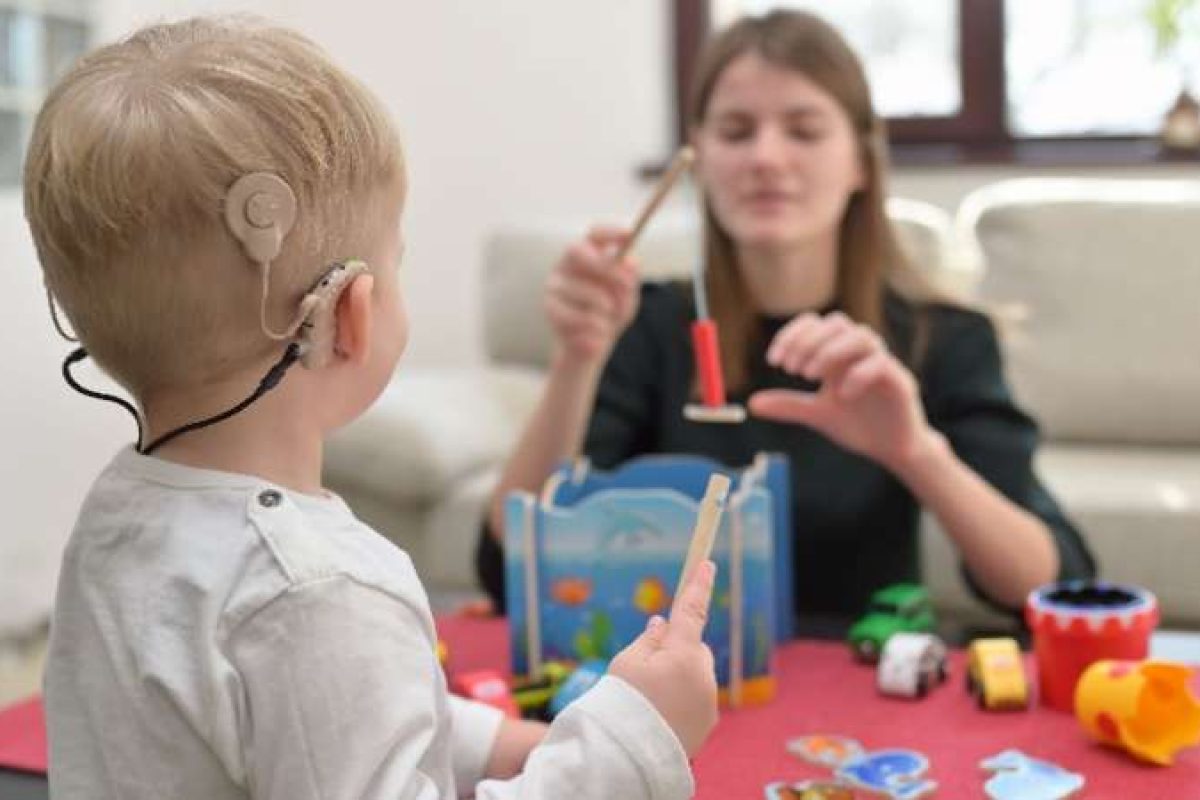
Regeneron Pharmaceuticals has revealed updated data for the investigational gene therapy DB-OTO from the Phase I/II CHORD trial in 12 children who have profound genetic hearing loss due to variants of the otoferlin (OTOF) gene.
These include 72-week results showing speech and development progress in the first child dosed at 10 months of age, as well as initial results in 11 children (aged 10 months to 16 years old) – three of whom received DB-OTO bilaterally (in both ears).
The latest results were presented in an oral presentation at the Association for Research in Otolaryngology’s (ARO) 48th Annual MidWinter Meeting.
Jay Rubinstein, Virginia Merrill Bloedel Professor of Otolaryngology and Bioengineering and Director, Bloedel Hearing Research Center, University of Washington School of Medicine, and a CHORD clinical trial investigator, said: “A year after treatment in one ear with DB-OTO, a child born profoundly deaf was able to enjoy music, engage in imaginative play and participate in bedtime reading when the cochlear implant on their other ear was removed.
“These seemingly small interactions are life-changing for these children as well as their families and these results continue to underscore the revolutionary promise of DB-OTO as a potential treatment for otoferlin-related hearing loss.”
Improvement of hearing to near-normal levels
In the trial, 12 participants have received DB-OTO to date – of whom nine were administered an intracochlear injection in one ear and three received it bilaterally.
The surgical procedure to administer DB-OTO leverages an approach similar to cochlear implantation, which enables use in young infants.
As presented at ARO, 48-week results from the first participant dosed in the trial showed improvement of hearing to near-normal levels across key speech frequencies. This included hearing thresholds that were within normal limits (0.25-2.0kHz) in most speech-relevant frequencies and corroborated with positive auditory brainstem responses (ABRs).
Particularly encouraging were results from formal speech perception tests in which the child demonstrated improvement from week 48 to week 72 and correctly identified words – such as mommy, cookies and airplane – that were presented at a conversational level without any visual cues.
Among the 11 participants with at least one post-treatment assessment, 10 demonstrated a notable response, with improved hearing at various decibel hearing levels (dBHL). Additionally, among five participants with 24-week assessments, three experienced improvements in average hearing thresholds to “nearly normal” or normal hearing levels.
One participant has not experienced a change from their baseline hearing at 24 weeks post-dosing.
Across all 12 participants, both the surgical procedure and DB-OTO were well tolerated, and there were no adverse events or serious adverse events considered related to DB-OTO.
Diana Spencer, Senior Digital Content Editor, DDW